How to vet a deck builder
Check the basics first: license, insurance, permits, contract, and the builder’s recent deck work. A good deck builder should answer direct questions without getting vague, pushy, or defensive.
Start with license and insurance
Before you talk about style, ask for the builder’s license number and proof of insurance. If they say they are licensed and insured, verify it yourself with your state or local licensing board and ask for a current certificate of insurance.
You want to know they carry general liability coverage and workers’ compensation if required in your state. That matters if there is damage, a fall, or an injury on the job. If a builder hesitates, sends blurry paperwork, or tells you not to worry about it, move on.
OutDeckly is a free matching service, so we connect homeowners with licensed, insured deck builders near them. You still need to do the same checks on your own before hiring anyone.
Ask about permits, inspections, and code
A solid deck builder should know when a permit is needed and who is responsible for pulling it. Permit rules vary by city and state, and some projects need more than one approval depending on height, size, setbacks, stairs, or attachment to the house.
Ask who will handle permits, how inspections are scheduled, and what happens if the inspector asks for changes. If the builder brushes off permits or says they are “not necessary” without checking your local rules, that is a red flag.
Good builders can also talk in plain terms about common code items like footings below frost line, joist spacing, ledger board attachment, guardrails, stair width, and baluster spacing. They do not need to overwhelm you — just show that they know what they are doing.

Get a detailed written scope
Never rely on a handshake quote or a text message with one total number. Ask for the full scope in writing before you pay a deposit. The contract should spell out the deck size, materials, framing, railings, stairs, footings, demolition if needed, cleanup, and any finish work.
It should also say who buys the materials, what brand or grade is included, who handles permits, the payment schedule, the estimated start and finish window, and what happens if site conditions change. If the price changes based on hidden extras later, you want that spelled out now.
For budget planning, see our deck cost guide. Costs are only estimates and the real price depends on size, material, height, footings, railings, stairs, site conditions, and your area.
Compare more than one bid
Get at least two or three written quotes from different licensed, insured deck builders. The lowest price is not always the best deal if the scope is thin, the materials are lower grade, or the builder has no clear timeline.
Compare apples to apples: same size, same material, same railing type, same stair count, same permit responsibility, same cleanup, and same warranty terms. A cheaper bid that leaves out footings, flashing, or inspection support can cost more later.
If you are still early in planning, you can get matched with local deck builders and then compare their written quotes yourself.
Check recent deck work and references
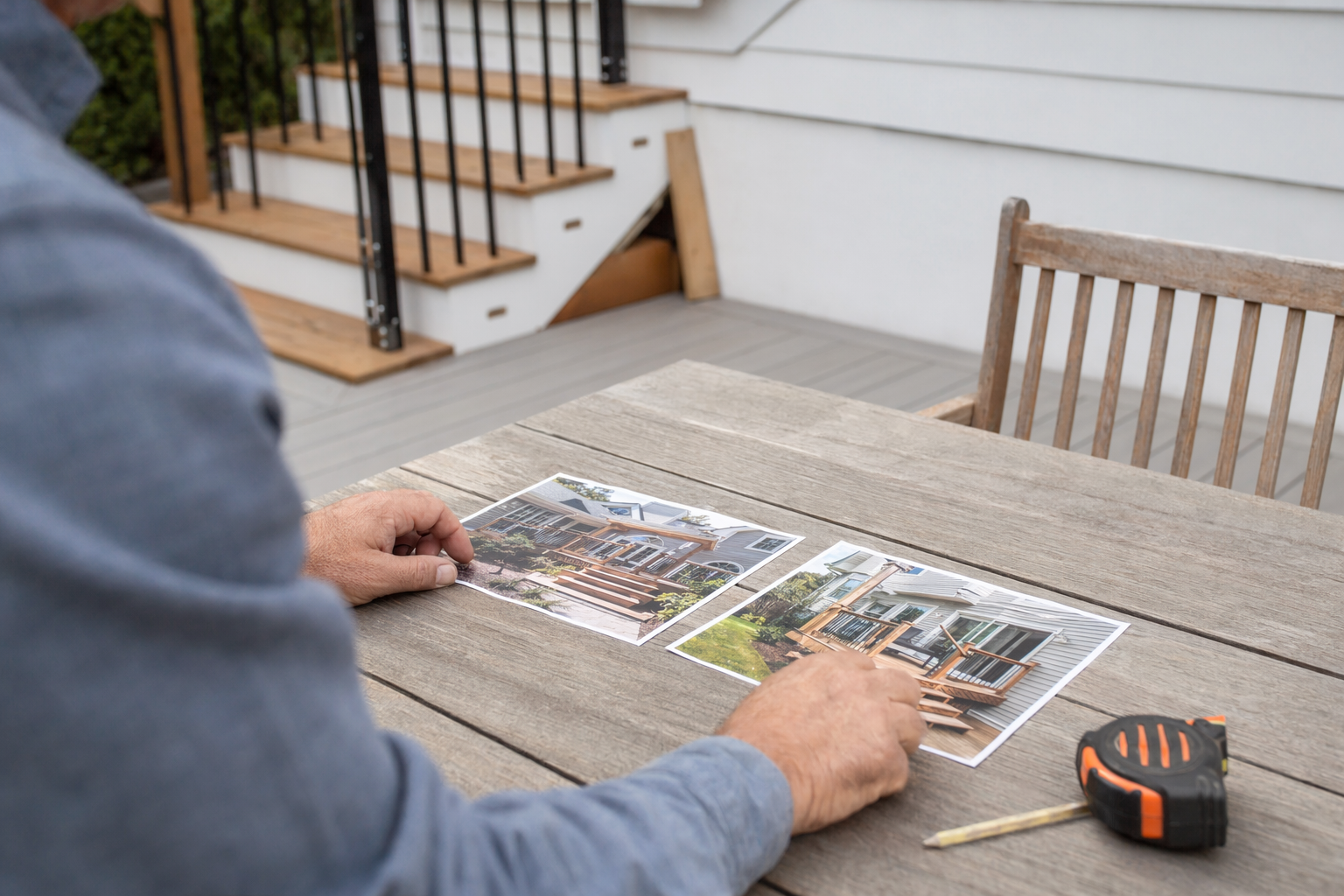
Ask for recent deck projects that are similar to yours, not just random photos. A builder who mostly does fences or general handyman work may not be the right fit for a load-bearing deck with stairs, railings, and code checks.
Call a few references and ask simple questions: Did the crew show up on time? Was the site kept clean? Did the final price stay close to the written scope? Did they pass inspection without a lot of back-and-forth?
Photos help, but they are not enough. If possible, ask whether you can see a finished deck in person or at least review close-up photos of framing, ledger attachment, posts, and railings. That tells you more than a polished social media gallery.
Know the red flags
Walk away if the builder asks for a large cash deposit with no written contract, refuses to provide license or insurance proof, or pressures you to sign the same day. A real professional should be comfortable putting everything in writing.
Be careful if they will not discuss permits, cannot explain material choices, or keep changing the price without a clear reason. Another warning sign is a builder who promises a timeline that sounds unrealistically fast for the size of the job.
A few material questions are normal. For example, pressure-treated wood is usually the cheapest upfront but needs sealing over time. Cedar costs more than pressure-treated wood but can look better and still needs upkeep. Composite usually costs more upfront, but it often means less maintenance. PVC is typically the most weatherproof and the priciest. A good builder should explain those trade-offs honestly, not push one option as “the best” for everyone. If you want to compare material types, our composite deck guide can help you think through the options.
Verify the license, insurance, permits, contract, and references before you hire any deck builder, and walk away if anything feels vague or pushy.