Wood vs composite decking
Not sure whether to choose pressure-treated wood, cedar, or composite? This guide breaks down the real-world trade-offs—price, lifespan, upkeep, and how each option feels—so you can compare options with the licensed deck builders we match you with.
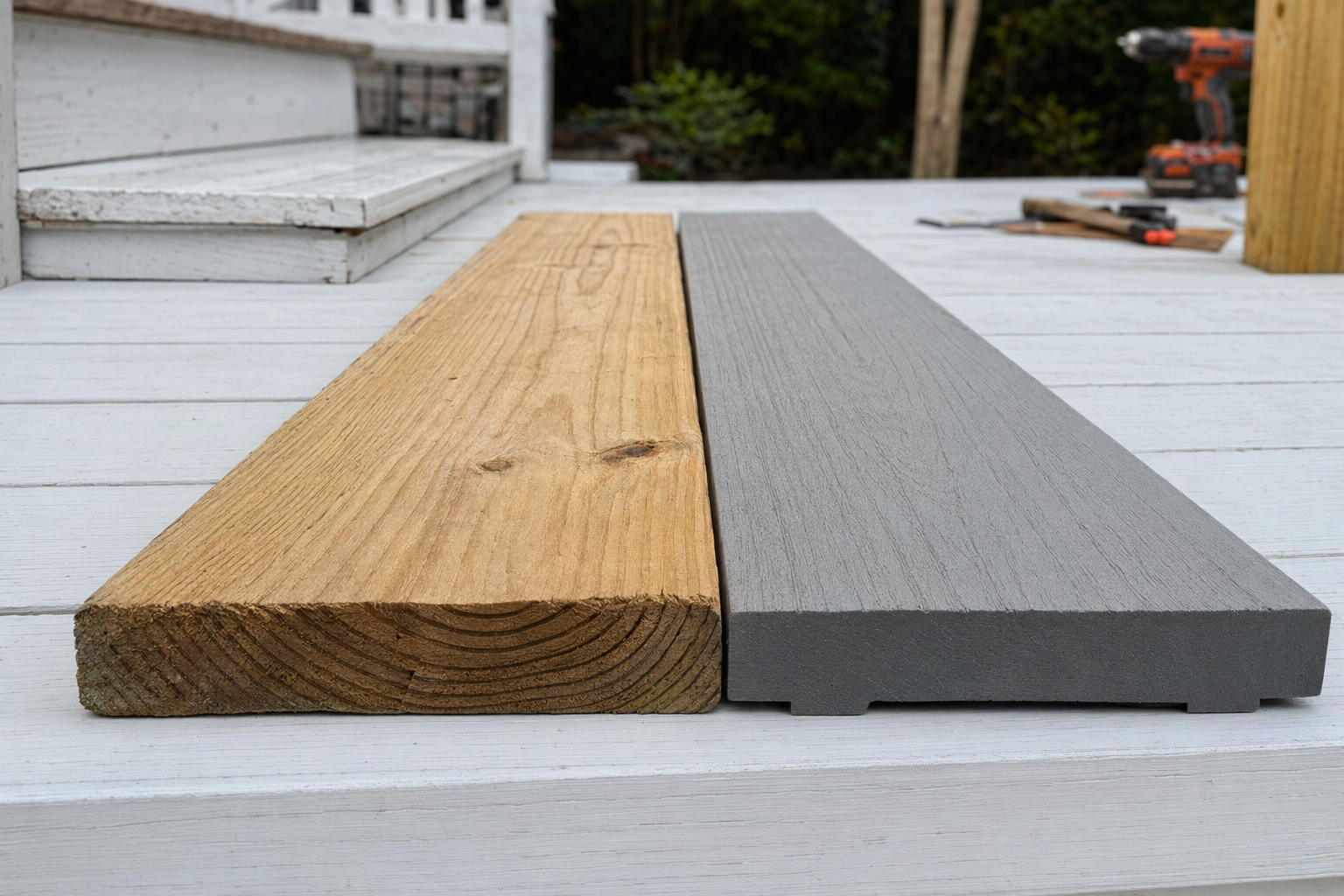
Quick comparison (what you’ll notice day to day)
Pressure-treated wood is usually the lowest-cost option upfront. It needs regular maintenance, especially sealing and periodic washing, to keep it from fading and getting rough.
Cedar costs more than pressure-treated wood, and it looks great for a long time if you maintain it. It can still weather, and in many climates you’ll want a plan for cleaning and re-sealing/staining.
Composite typically costs the most upfront. The upside is usually lower upkeep—less staining and scrubbing—and a longer “set it and forget it” feel. Composite boards also often come with color options that stay more consistent over time.
Material basics: what makes each option different
Pressure-treated wood is designed to resist rot and insects. It’s typically kiln-dried after treatment, but it can still shrink/warp a bit as it acclimates. That means good installation practices (proper fasteners, spacing, and drainage) really matter.
Cedar is naturally decay-resistant and has a warmer color and grain. It’s often used for a “real wood” feel, but it can still turn gray from sun and moisture if you don’t treat it. Cedar also can be softer than some composite surfaces, which matters if you expect heavy foot traffic or rolling patio furniture.
Composite decking is made from wood fibers and plastic (and often other ingredients). Many products are designed to handle water and weather better, with less need for re-staining. Most composites still need periodic cleaning, especially in shaded areas where algae and dirt build up.

Cost expectations: typical ranges, and what changes the number
It’s tempting to compare “cost per square foot,” but decking prices swing based on more than material. Final cost depends on the deck’s size (square feet), height, whether you need stairs, how complex the shape is, and what’s required for footings and supports.
For materials alone, many homeowners see broad estimates like these: pressure-treated wood is commonly the lowest upfront; cedar is usually mid-range; composite is commonly the highest upfront. In the real world, the spread between options can shrink or grow depending on how many boards, whether you want a hidden fastener system, and the type of railings (stairs and railings can be a big part of the budget).
To get closer to your real number, ask the licensed deck builders we connect you with to break down the scope: deck framing and ledger/connection details, joist size and spacing, footings/anchors, decking boards, railing system, stairs, and any boards for stairs/landings. Those details determine the “true” cost more than the material label alone.
For a more detailed cost breakdown, see Deck costs and budget basics and Composite deck overview.
Lifespan and upkeep: the maintenance calendar you’re really signing up for
Pressure-treated wood often requires the most “hands-on” upkeep. Depending on your climate and sun exposure, many homeowners plan for periodic washing and sealing/staining to keep the surface protected and looking good. If you skip maintenance, wood can fade and the surface can roughen faster.
Cedar can hold up nicely, but it still usually benefits from regular care. Sun exposure, rainfall pattern, and airflow under the deck can all speed up weathering. In some areas, homeowners end up refreshing stain or sealant every few years to preserve color and reduce checking or drying.
Composite generally aims for lower maintenance. You’ll still want routine cleaning (especially in wet climates or shaded locations). Composite surfaces can also show scuffs, and darker colors can get hotter in direct sun. The “lifespan” difference often shows up because composite may keep its look longer with less effort, not because it’s totally maintenance-free.
A good question to ask builders: “What maintenance plan do you recommend for this exact product and color in my climate?” The answer should be practical, not vague.
Feel underfoot: slip, texture, and how each choice ages
Underfoot feel isn’t just comfort—it affects safety. Wood can get slick when wet, especially if mildew or algae forms in shaded spots. Proper drainage, airflow under the deck, and regular cleaning help all materials.
Pressure-treated wood tends to feel “warmer” and natural underfoot, but aging can change texture. As it weathers, it may become rougher. Cedar often keeps a smoother feel longer with maintenance, but it can gray over time.
Composite is designed for consistent feel across seasons. Many composites have textured surfaces for traction. Over time, composite can still accumulate dirt and discolor in shaded areas, but cleaning usually restores the appearance better than older, weathered wood.
If you expect frequent rain, snow melt, or pool-side use, ask how the deck surface and any grooves/textures are designed for traction. Then compare that to your local climate and how you plan to use the space.
Installation and code reality: why material choice isn’t the whole story
Good decking performance depends on the whole system: framing, footings, joists, ledger connections (when attached to a house), and how fasteners and gaps are handled. Two decks with the same material can age very differently if the installation details are off.
Footings and support details are also not one-size-fits-all. Builders typically consider load requirements, soil conditions, and local code requirements such as frost depth. Railings, stair design, and baluster spacing must meet local safety rules, which vary by city and state.
If you’re hiring a builder, don’t skip the basics: confirm they’re licensed and insured, confirm which permits are required for your project, and make sure the work will pass inspection. Get the price and scope in writing before you pay any deposit.
If you want to compare options with local pros, you can start by sharing your project details with the licensed deck builders we match you with: Get matched.
Pressure-treated wood, cedar, and composite all work—but they differ a lot in upfront cost, maintenance, and how they age, so compare materials using a written scope with licensed, insured deck builders we match you with.