Composite decks
Composite decking gives you a lower-maintenance deck surface with a higher upfront price than pressure-treated wood. OutDeckly helps you compare licensed, insured deck builders and get a feel for costs, timelines, and what to ask before you hire.
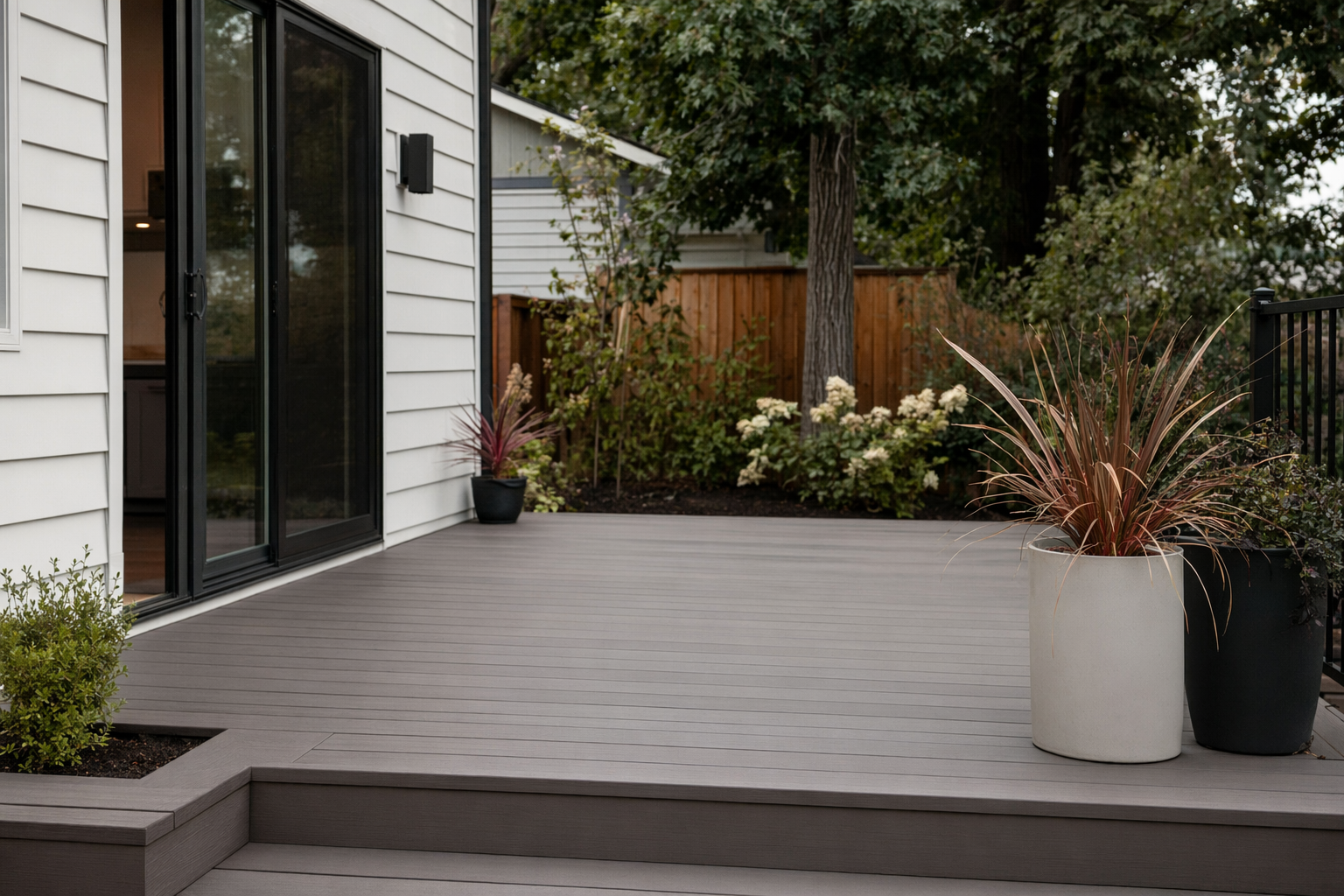
What composite decking is
Composite decking is made from a mix of wood fibers and plastic, then formed into boards that are meant to handle weather better than plain wood. Homeowners usually choose it for the easier upkeep: no annual staining, less warping, and fewer splinters than many natural-wood options.
You’ll still see differences from brand to brand. Some boards are capped for better moisture and stain resistance. Some look more like painted wood, while others have a smoother, more modern finish. Grades also vary, so it’s worth asking the licensed deck builders we match you with which product line they recommend and why.
Composite is usually a surface choice, not a shortcut around good framing. The deck still needs proper joists, footings, ledger attachment, railing support, and stairs where required. That’s why permits and inspections matter, and why the builder’s installation quality matters just as much as the board brand.
Typical cost range and what changes the price
Composite decks usually cost more upfront than pressure-treated wood, but less ongoing maintenance can make the total feel more manageable over time. A rough U.S. estimate for a composite deck is often about $35 to $70+ per square foot installed, but real pricing can fall outside that range depending on your site and project details.
The biggest price drivers are deck size, board brand, frame material, height above grade, railing length, stair count, footings, and site access. A low, simple platform in a flat backyard is a very different job from a raised deck with multiple stair runs, skirting, or tricky soil conditions.
For a plain-English breakdown of deck pricing, see our cost guide. Remember: estimates are not bids. The only number that matters for your project is the written quote from a licensed, insured builder after they’ve seen the site.
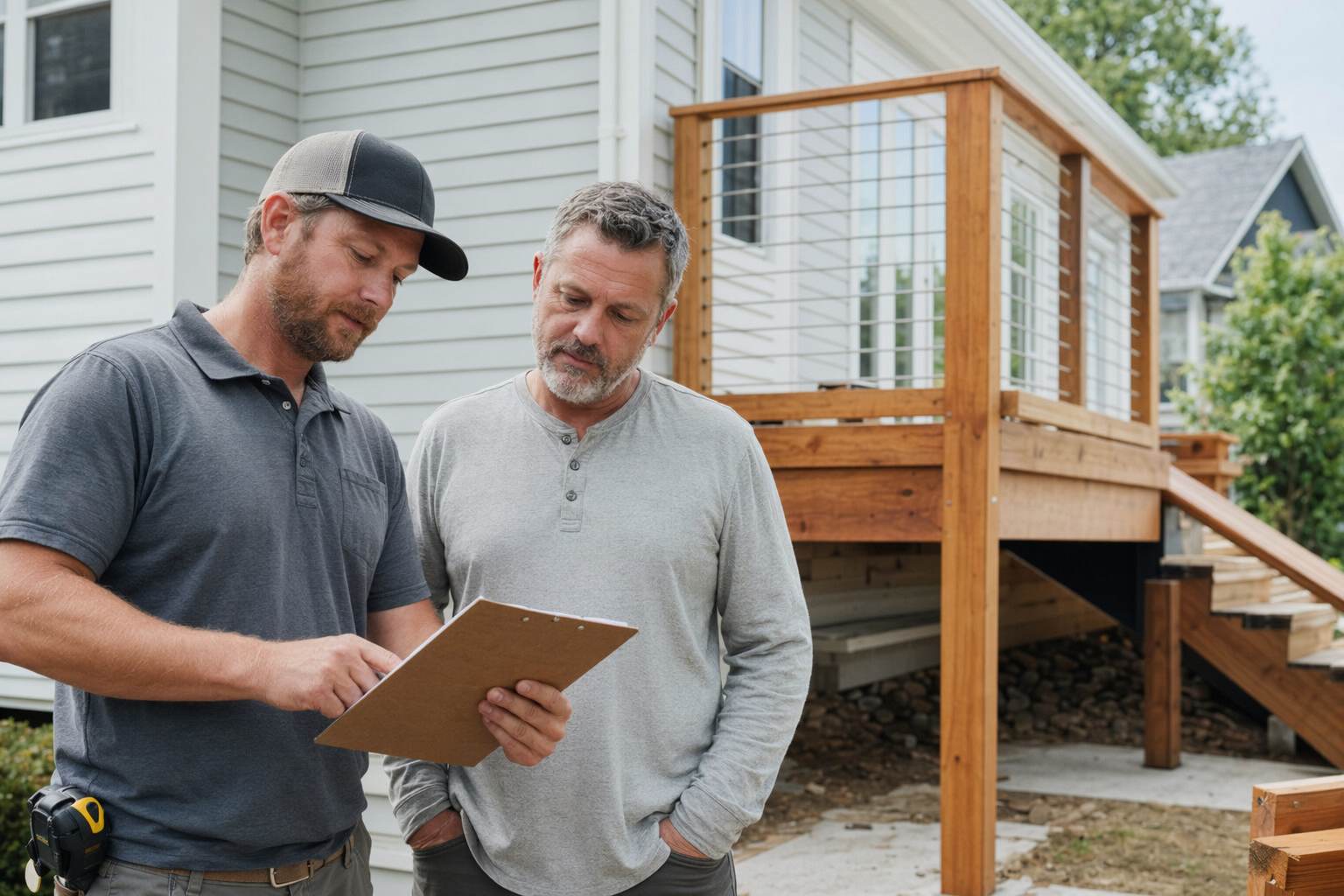
How composite compares with wood, cedar, and PVC
Pressure-treated wood is usually the cheapest upfront, but it needs sealing or staining and more regular upkeep. Cedar usually costs more than pressure-treated wood and less than many composite options, with a warmer natural look and moderate maintenance.
Composite sits in the middle-to-high range on price, but it’s a popular choice because upkeep is lower. PVC is usually the most weather-resistant and the priciest, especially for homeowners who want the lowest maintenance and are willing to pay more for it.
A good builder should explain the trade-offs honestly. If you want the look of wood and don’t mind maintenance, wood may make sense. If you want fewer chores and better long-term weather performance, composite is often the practical middle ground.
Timeline: planning to build
A simple composite deck project may move from first call to build day in a few weeks. Larger or more complex projects can take longer, especially if the builder has to wait on materials, permits, inspections, or weather.
A basic timeline often looks like this: first contact and site visit, written estimate, permit prep if needed, material ordering, then construction. After framing and decking go in, the builder may need a final inspection before the project can be closed out.
Permit rules vary by city and state, and some jobs need approvals even when the deck is small. Ask the builder who will pull the permit, what inspection steps are expected, and whether the work will be scheduled around those checks.
Pros and cons to weigh before you choose
Composite boards are popular for a reason. They usually need less routine care than wood, resist rot better, and can hold up well in harsh weather when installed correctly. That makes them a strong pick for busy homeowners or anyone who does not want to sand, stain, or seal often.
The trade-offs are real, though. Composite costs more upfront, can get hotter in direct sun, and some products scratch or fade more than buyers expect if they choose a lower grade. It also still depends on good framing and drainage underneath.
In short: composite is not “maintenance free,” and it is not automatically better than wood. It’s a material choice with a real upfront cost, and the right answer depends on your budget, climate, and how much upkeep you want to do later.
What to ask a builder before you sign
Before you pay a deposit, get the scope and price in writing. Make sure the quote spells out the board brand and grade, framing material, railing style, stair count, demolition if needed, and any extras like skirting or lighting.
Ask these questions:
- Are you licensed and insured, and can I verify it myself?
- Who pulls the permit, and what inspections are required?
- What is included in the written price, and what is not?
- What deck board brand and grade are you using?
- Will you inspect the ledger, footings, and framing conditions before starting?
- What deposit do you require, and when are payments due?
A written scope protects both sides. If something is vague now, it usually becomes expensive later.
How OutDeckly helps you compare builders
OutDeckly is a free matching and information service. We do not build decks, design structures, or pull permits. We connect homeowners with licensed, insured deck builders near them so they can compare quotes and choose who to hire.
If you’re just starting out, use Get matched to share your project details. We collect contact and project information only — never financial account numbers or financial records. The lead form includes a TCPA consent checkbox, and you can opt out where offered.
Before you hire anyone, use our vet-a-builder guide to check license, insurance, scope, permits, and inspection plans. That step matters just as much as the deck material itself.
Composite decks cost more upfront than wood, but they’re popular because they’re easier to care for and can last longer when installed by a licensed, insured builder.