Where your deck budget actually goes
A deck quote is more than boards and nails. The big costs are usually the frame, footings, railings, stairs, and labor — and the small line items can add up fast.
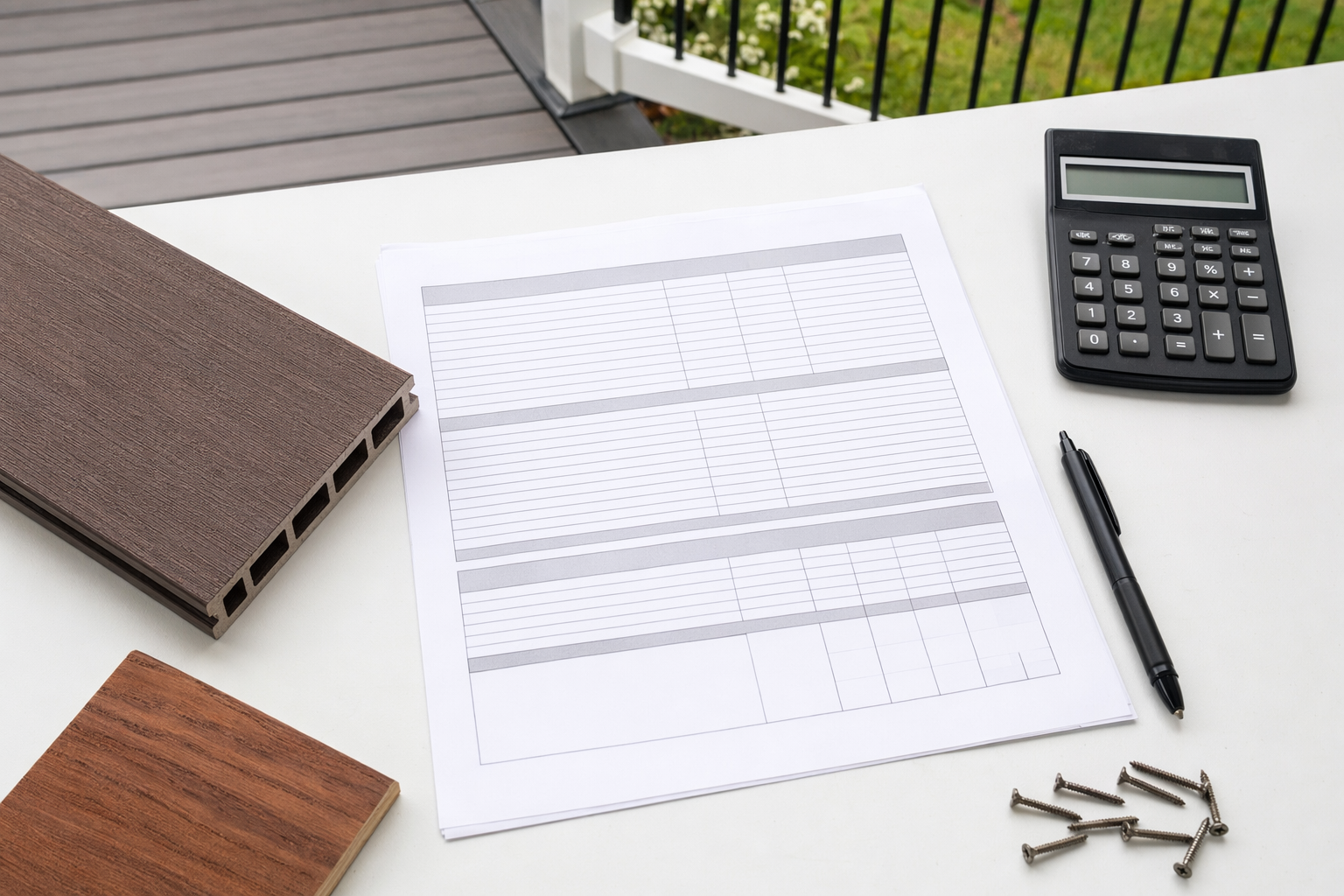
The main buckets on a deck quote
Most deck budgets break into a few pieces: materials, labor, hardware, and the site work needed to make the deck safe and code-ready. A simple low, ground-level deck is usually cheaper than a raised deck with stairs, railings, and deeper footings.
The surface boards are the part people see first, but they are rarely the whole bill. The hidden work is often the frame underneath, especially joists, beams, posts, connectors, and ledger-board attachment if the deck is tied to the house.
If you want a ballpark, deck projects in the US often land somewhere from the low thousands for small, simple builds to much more for larger or elevated decks. The real price depends on size, material, height, footings, railings, stairs, site conditions, and your area. For a broader breakdown, see deck cost basics.
What the decking boards really cost
The top boards are often where homeowners first compare prices, but the material choice changes both upfront cost and long-term upkeep. Pressure-treated wood is usually the cheapest at the start, but it needs sealing and more regular care. Cedar is often a middle option with a warmer look. Composite usually costs more upfront, but it is popular because it needs less routine maintenance. PVC is generally the most weather-resistant and the priciest.
That trade-off matters. A lower material price does not always mean a lower lifetime cost if the deck needs more staining, sealing, or repairs over time. On the other hand, paying more for composite or PVC only makes sense if the budget can handle the higher upfront total.
If you're comparing surface options, this composite deck guide can help you understand what you are actually paying for.

The frame underneath can move the number a lot
A lot of quote surprises come from the structure below the boards. The frame includes joists, beams, posts, hangers, fasteners, blocking, and sometimes extra support to handle the span or height. If the deck is attached to the house, the ledger board and its connection details matter a lot.
A taller deck usually needs more structure, stronger support, and more labor. A sloped yard can also raise the price because it may need more digging, leveling, or taller posts. If the existing ground is uneven or soft, the deck builder may need to do more prep before they can even start framing.
That is why two decks with the same square footage can have very different prices. A low, simple platform is one thing. A raised deck with a staircase and extra support is another.
Footings, permits, and inspection costs are easy to miss
Footings are the parts below the ground that help support the deck. Their cost can change with soil conditions, frost depth, deck height, and local code. In colder areas, footings may need to go below the frost line, which can add digging and concrete work.
Permits and inspections can also affect the budget. Rules vary by city and state, and some projects need plan review, permit fees, or multiple inspections. A licensed deck builder should know what your local area requires, but you should still confirm that the right permits are pulled and that the finished work passes inspection.
Do not assume a low quote includes everything. Ask what is included in writing before you pay any deposit.
Railings, stairs, and details that quietly add up
Railings can change the total fast, especially on elevated decks. Material, height, length, and code requirements all matter. Stairs do too. A deck with one short step is not the same as a long stair run with landings, handrails, and extra framing.
Small extras can add real cost as well: skirting, lighting, fascia boards, trim, built-in benches, privacy screens, and upgraded hardware. Even disposal of old materials can show up as a separate line item.
These items are not fluff. They are part of the finished project, and they should be spelled out clearly so you can compare quotes apples to apples.
How to read a quote without getting burned
The best quote is specific. It should list the deck size, material, frame type, footings, railings, stairs, permit handling, cleanup, and what is excluded. If the quote is vague, it is hard to know what you are actually buying.
Before you hire anyone, verify the deck builder is licensed and insured, confirm the permits are pulled, and ask what inspection step is included. Get the scope and price in writing before any deposit. That protects you if the job changes later.
OutDeckly is a free matching service, so we connect homeowners with licensed, insured deck builders near them. You can compare estimates and choose who to hire through get matched.
Deck prices go up because of structure, footings, railings, stairs, labor, and local permit rules — not just the boards you see on top.