Attaching a Deck to the House — Ledger Basics
The ledger board is the part that ties a deck to the house, so it has to be done right. A bad connection can lead to water damage, sagging, or a failed inspection.
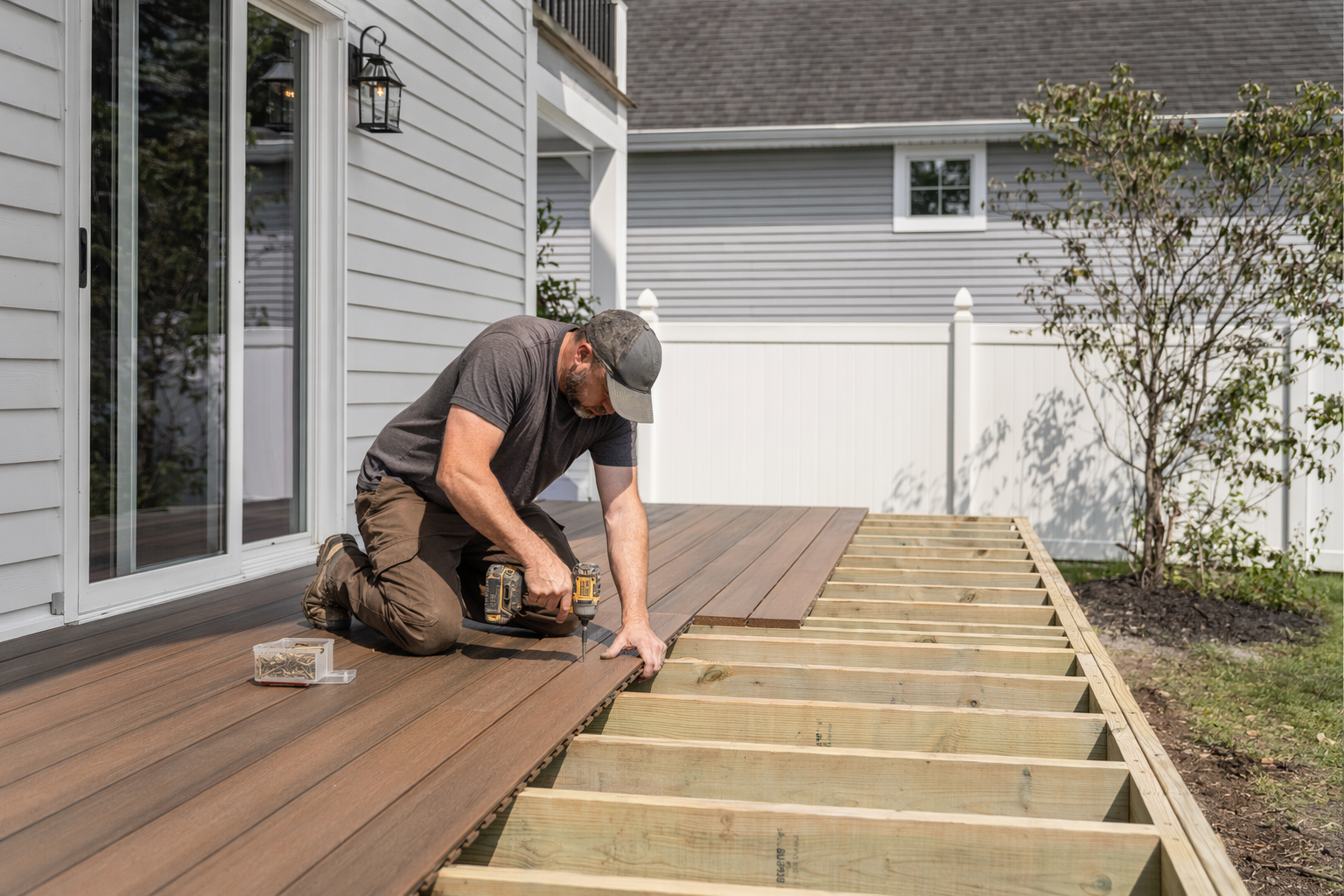
What a ledger board does
A ledger board is a horizontal board fastened to the house framing. It helps support one side of an attached deck, while the posts and footings carry the rest of the load.
This is not the place to improvise. The ledger has to be attached to solid framing, not just siding, trim, or brick veneer. The exact method depends on the house wall, the rim joist, flashing details, and local code.
If you are comparing deck ideas, it helps to know whether an attached deck even makes sense for your house. A free builder match can connect you with licensed, insured deck builders who can look at the structure and talk through options.
Why ledger installation matters so much
A ledger is part of the deck’s main load path. If it is fastened wrong, the deck can pull away from the house over time. That risk goes up with snow load, big spans, heavy railings, and poorly attached stairs or beams.
Water is the other big issue. Any place where the ledger meets the wall needs proper flashing and drainage so moisture does not get trapped behind the board. That is where rot usually starts.
Good builders also pay attention to the connection hardware, bolt spacing, joist hangers, and the condition of the house framing. If the rim joist is damaged or the wall is not suitable for attachment, a freestanding deck may be a better choice.

Common parts of a proper ledger connection
A lot happens in a few inches of wall space. The details matter more than the board itself.
A typical ledger setup may include structural bolts or lag screws sized for the job, metal flashing above the ledger, corrosion-resistant hardware, and joist hangers where the deck joists meet the ledger. In some homes, the builder also needs to remove siding in the attachment area so the ledger bears on framing, not exterior finish.
The right fastener pattern, spacing, and flashing method depend on your house and your local code. That is why permit review and inspection matter. Ask the licensed, insured deck builders you speak with to explain exactly how they will attach the ledger and what inspection steps apply in your area.
When an attached deck is not the best option
Not every house should have a ledger-attached deck. Masonry walls, cantilevered floor systems, weak rim joists, thick stucco, some older homes, and moisture-prone walls can make attachment risky or complicated.
In those cases, builders may recommend a freestanding deck that sits close to the house but carries its own load on posts and footings. That can cost more in materials and labor, but sometimes it is the safer, cleaner build.
If you are comparing project types, use the cost page as a rough starting point only. Typical deck pricing varies a lot by size, material, height, footings, railings, stairs, and site conditions. See deck cost basics for more context.
Questions to ask before anyone starts
Get the scope in writing before you pay a deposit. Ask what part of the wall will be opened up, how the ledger will be flashed, what fasteners will be used, and who is responsible for permits and inspections.
Also ask the builder to confirm license and insurance, and verify those yourself. A licensed, insured contractor should be able to show current proof without hesitation. That protects you if something goes wrong.
Use this as a simple checklist before hiring:
- Will the ledger attach to solid framing, not siding or trim?
- What flashing method will be used to keep water out?
- Are permits required, and who pulls them?
- What inspection points apply before the deck is finished?
- Can I get the full price and scope in writing before any deposit?
How OutDeckly fits in
OutDeckly is a free matching service. We do not build decks, design structures, or pull permits. We simply connect homeowners with licensed, insured deck builders near them.
Licensed deck builders pay us a flat fee to be introduced to homeowners, and the service stays free for you. You can compare quotes, ask questions, and decide who to hire.
If you are still in the planning stage, the best next step is usually to talk with a few builders, compare their ledger plan, and make sure they understand your house type and local permit rules. You can start that process through Get Matched.
A deck ledger is the critical connection between the deck and your house, and it needs proper framing, flashing, permits, and inspection to be safe.