Composite Decking Grades, Compared
Composite decking comes in different grade levels that affect color, warranty length, and how well boards resist staining and fading. Use this guide to compare grades and ask the right questions before you hire a licensed deck builder.
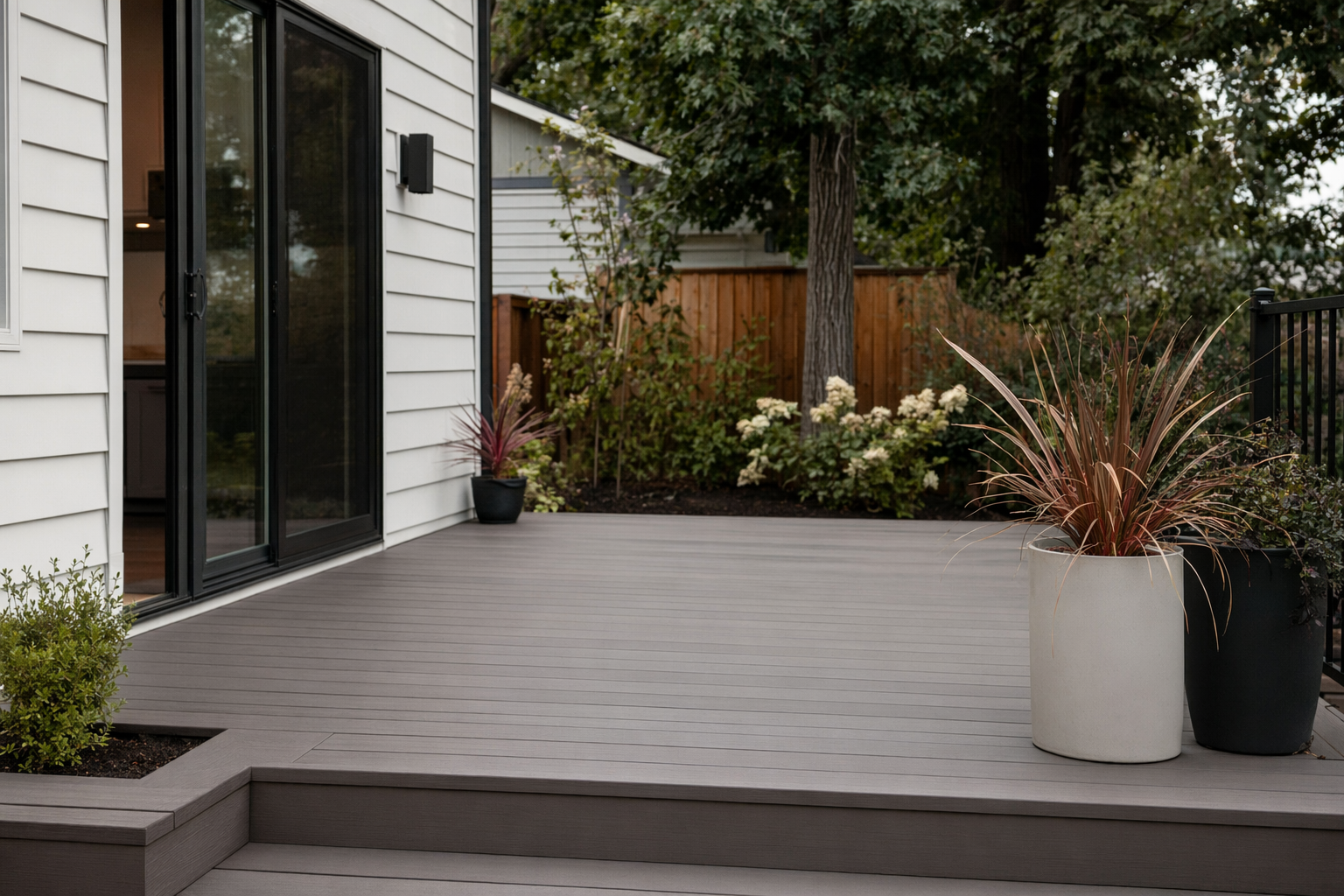
What “grade” impacts most
The biggest differences you’ll feel are usually: (1) color and fade resistance, (2) stain resistance (think grill grease, drink spills, and muddy footprints), (3) how the board looks as it weathers, and (4) the warranty length and conditions.
Less obvious factors matter too, like whether the board has a capped shell (often called “capped” composite), what the warranty requires for cleaning/maintenance, and how the system handles fasteners and board expansion.
Before you choose, decide what you care about most. A “best looking” deck in year one may not be the best value if you’re in intense sun or you expect heavy use with frequent spills.
Common composite “tiers” homeowners compare
You’ll often see composite boards grouped into tiers like standard/budget, mid-range, and premium. The exact names differ, but the pattern is usually: lower tiers have fewer surface protections or shorter warranties, while higher tiers offer stronger fade/stain coverage and sturdier surfaces.
Some manufacturers also offer a “limited” warranty category for certain lines or thinner profiles. A slimmer board can be fine structurally when installed correctly, but it may affect how the board tolerates impact and surface wear over time.
Rather than guessing, ask builders to quote the specific product line numbers and show you the warranty sheet for that exact deck system (boards plus rails and fasteners).

How to compare fade, stain, and surface wear (the real-world test)
Most composite warranties are written around specific conditions. For example, “fade” coverage might refer to color change beyond a certain threshold, while “stain” coverage might require approved cleaners and correct maintenance intervals.
A deck that looks great in winter can look very different after long summer sun exposure. If you’re in a high-sun area, prioritize fade language and UV resistance. If your deck sits under trees or stays humid, check for mold/mildew-related warranty terms and recommended cleaning methods.
For stain resistance, think about your lifestyle: Are you hosting with kids who spill juice? Do you use patio furniture with rubber feet? Do you grill directly on the deck or keep food/drinks on it? These details help you compare “stain-resistant” claims vs what the warranty requires when something happens.
Board construction features that separate lower vs higher grades
Composite board construction is usually described by features like a capped surface (a protective shell), color-through design, and internal core type. Higher tiers often use a thicker, more protective cap that helps resist scuffs and staining.
Another major factor is how the board is designed to handle moisture and heat expansion. Composite expands too; what changes is how forgiving it is when installed with the right spacing and correct hardware. That’s why installation quality matters even if you buy “premium” boards.
When comparing grades, don’t just compare the board. Compare the full system: joist material, subframe spacing, fasteners, and whether the builder plans a compliant layout for your deck height and structure.
Warranty basics: what to read before you spend more
A longer warranty can be a strong sign of confidence, but only if you understand the conditions. Look for the “coverage type” (fade, stain, structural, performance), the “length” (how many years), and the “limitations” (what voids coverage).
Pay attention to maintenance requirements. Many warranties require periodic cleaning and forbid certain harsh chemicals or neglect. If the warranty says you must use a specific cleaner, plan for that now—otherwise you could end up paying for a deck “fix” without warranty help.
Also check whether the warranty covers boards only, or also includes rails, stairs components, and hardware. Deck builders can tell you what parts typically get covered for the product line they’re proposing.
Questions to ask a deck builder when comparing grades
Before you get bids, you want clarity. Ask the licensed, insured deck builders you’re considering to explain which composite product lines they’d recommend for your project and why.
You can also ask them to outline what “grade” means in that specific manufacturer’s lineup. A good builder will reference the product specs and the warranty sheet rather than relying on vague labels.
Finally, make sure permits and inspections are handled correctly. Permit rules and deck code requirements vary by city and state, and the builder should confirm what they’ll submit and how inspections will go.
A quick guide to pricing (why higher grades cost more)
Composite decks typically cost more than pressure-treated wood upfront. Higher-grade composite boards usually increase material costs due to stronger surface protection, better color stability, and longer warranty coverage.
Your final project price depends on far more than board grade: deck size (square footage), height, how many stairs you need, footings and ledger board details, railing style and code requirements, and site conditions. That’s why any “cost per square foot” should be treated as a broad estimate, not a quote.
If you want a feel for budget ranges, see our guide on composite deck costs and what drives price and then use our get-matched service to compare options with licensed, insured builders.
Compare composite decking grades by reading the exact warranty terms and product specs—not the label—then ask licensed, insured builders to confirm the right installation, permits, and maintenance for your deck.