Composite vs Wood Deck Cost Compared
Want a deck that looks good and needs less maintenance? This guide compares typical upfront and long-term costs of composite vs wood, plus the real factors that change price—then helps you get matched with licensed, insured builders.
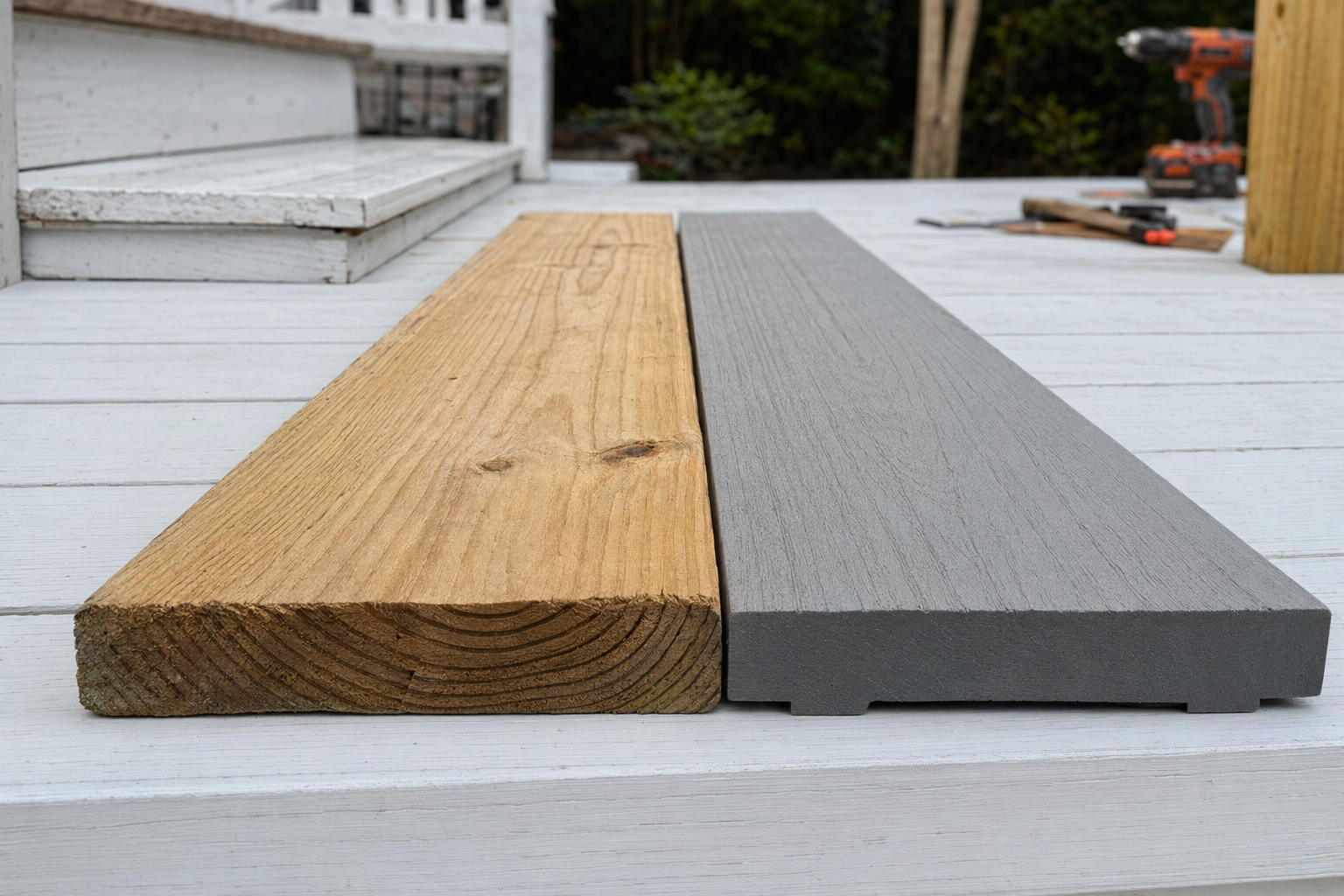
Composite vs wood: the cost difference in plain terms
Most homeowners notice the same pattern: composite decking costs more up front, while wood is usually cheaper at the start but takes more upkeep over time.
Composite typically uses a blend of plastic and wood fibers. It resists moisture, rot, and insect damage better than standard wood. Wood (pressure-treated or cedar) is a more natural material, but it needs regular sealing/staining and can wear faster depending on your climate and how the deck is used.
For both materials, your total deck cost depends on more than just the boards. Footings, the structure (joists and beams), railings, stairs, and permits often drive a big part of the budget. If your deck is higher off the ground, you’ll also pay more for code-required height details and sturdier support.
Typical cost ranges (estimates), plus what makes them change
Below are common U.S. price ranges homeowners run into for decking materials and rough installed totals. These are estimates, not quotes. Your price can move up or down based on deck size, height, soil conditions, local labor rates, and how complex the design is.
Material costs (just the boards) generally follow this order: pressure-treated wood is the lowest upfront, cedar is mid, and composite is usually highest. PVC is often the most weatherproof but is typically more expensive than composite.
Installed deck cost depends heavily on site and scope. Decks with stairs, multiple levels, wrapped fascia, decorative balusters, built-in benches, or larger railings can cost significantly more than a basic rectangular deck.
Key cost drivers to ask about before you compare quotes:
- Deck size (square feet) and shape (simple rectangle vs multiple angles)
- Height above grade and required railing height
- Footing type and how deep they must go (local frost line requirements matter)
- Joist spacing and span length based on the deck design
- Ledger board details and connection to the house
- Railings type and baluster spacing (code requirements apply)
- Stairs quantity and complexity
- Whether the surface is fully decked or includes landings/steps

Upfront costs: what you typically pay first
With wood, you usually buy cheaper boards, then spend more later on maintenance like sealing or staining, especially if you want it to keep looking fresh.
With composite, you often pay more for the deck boards and sometimes for accessories like fasteners and trim pieces designed for that product system. The framing structure (the joists/beams) is still usually wood or metal, so composite isn’t the only part of the cost—just the decking surface.
Two decks with the same square footage can still differ in cost because of framing layout. For example, if your deck spans longer distances between supports, the builder may need different joist sizes or spacing. That can raise framing labor and material costs.
Long-term costs: maintenance, repairs, and lifespan
Wood decks often need more attention. Pressure-treated wood typically needs sealing or staining on a schedule to help with weathering and appearance. Cedar can weather beautifully, but it still benefits from periodic maintenance depending on sun exposure and moisture.
Composite decking is built to resist rot and fading better than many traditional woods. You’ll still need basic cleaning, and some products have specific recommendations (like not using harsh chemicals). Also, composite can expand/contract with temperature changes—good installation details matter.
Even if you choose composite, you should still budget for the full deck system over time: railings, stairs components, hardware, and potentially boards that get damaged by heavy impacts. The goal is to compare the real “total cost of ownership,” not just today’s material price.
If you want a quick way to estimate long-term costs, ask builders what maintenance they recommend for each material and what typical wear looks like in your climate.
Other price factors homeowners forget (but builders won’t)
Deck pricing can feel confusing because the “deck boards” are only one line item. Builders price the whole structure.
For example, footings and foundations aren’t just paperwork—they’re where cost and safety meet. Builders must size and place footings correctly for load, drainage, and local code requirements. Soil conditions (rocky ground, poor drainage, frost depth) can change the amount of digging, concrete, and bracing.
Railings are another big swing factor. Code typically requires guardrails on decks above a certain height, and spacing rules apply (for example, to reduce openings that a child could pass through). Railings may add material and labor even if your deck surface is relatively small.
Before you compare options, read this checklist and then ask the builders you’re matched with to confirm the details in writing: deck cost factors and estimating tips.
How to compare bids (and avoid surprises) when choosing composite or wood
When you request quotes, don’t just compare the bottom-line number. Compare what’s included: decking thickness/type, railings, stairs, ledger board approach, fasteners, and whether the builder includes cleanup and hauling. A “cheaper” quote can turn expensive if it leaves out railings, post bracing, or permits.
Make sure your deck builder is licensed and insured, and verify it yourself. Confirm the right permits are pulled for your city/state and that the work will pass inspection. Also get the scope and price in writing before any deposit.
OutDeckly is a free matching service—we connect you with licensed, insured deck builders near you so you can compare apples-to-apples. Start here: get matched. If you want to vet builders before you sign anything, this guide helps: vet a deck builder.
Composite decking usually costs more up front than wood, but many homeowners save time on maintenance—your true cost depends on the deck’s size, height, footings, railings, stairs, and local permitting rules.