Decking Board Options Explained
Deck boards come in a few main types, and the best one depends on budget, upkeep, and how you want the deck to look and feel. This guide breaks down the common choices in plain English so you can compare them before you talk with licensed deck builders.
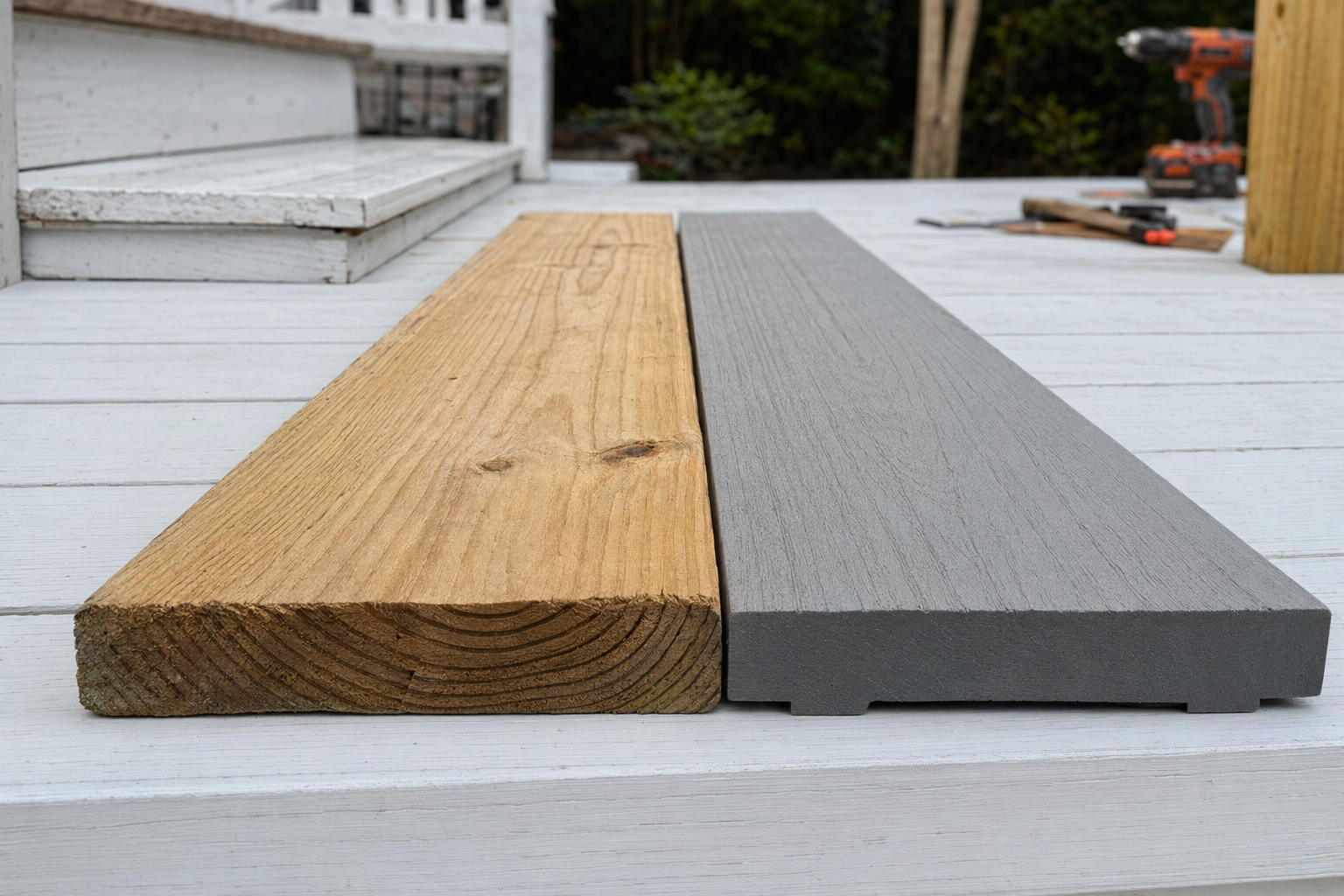
The main decking board choices
Most homeowners narrow it down to pressure-treated wood, cedar, composite, or PVC. Each one has a different upfront cost, upkeep level, and lifespan.
Pressure-treated wood is usually the cheapest to buy and install. It can work well if you want a lower starting price, but it needs regular sealing or staining and may twist, check, or split over time.
Cedar sits in the middle. It has a nicer natural look than basic pressure-treated lumber and usually costs more upfront, but it still needs upkeep to stay in good shape.
Composite boards cost more at the start, but they are popular with homeowners who want less maintenance. PVC is usually the most weather-resistant and the priciest option, with very low upkeep and a more uniform look.
Pressure-treated wood: low cost, more upkeep
Pressure-treated wood is often the budget pick for deck boards. Typical installed cost ranges vary a lot by area and deck details, but the material itself is usually the least expensive option upfront.
The trade-off is maintenance. Wood decks should be sealed or stained on a regular schedule, and the boards can move with moisture and sun exposure. If you like the feel of real wood and plan to stay on top of upkeep, it can be a practical choice.
It is smart to ask the licensed deck builders you compare how they handle board spacing, fasteners, and drainage. Even a lower-cost board choice still needs good installation to hold up well.

Cedar: a natural look with mid-range cost
Cedar gives you a warmer, more attractive wood look than many basic treated boards. It is often chosen for homeowners who want something that feels a little nicer without jumping straight to composite.
It usually costs more than pressure-treated wood but less than composite or PVC. Like other wood products, cedar needs care. Without sealing or staining, it can fade, weather, and show wear faster.
Cedar can be a good fit if you want a classic wood deck and you do not mind periodic maintenance. Ask for the board grade and finish details in writing so you know what you are paying for.
Composite: higher upfront price, lower upkeep
Composite decking is made from a mix of wood fibers and plastic. It usually costs more than wood boards upfront, but many homeowners like it because it needs less ongoing care.
Composite does not need routine staining like wood, and it resists many common problems such as rot and insect damage. That said, not all composite boards are the same. Some handle heat, fading, and scratching better than others, and the quality can vary by brand and product line.
If you are comparing total cost over time, composite can make sense even though the first price is higher. For a quick overview of budget planning, see our deck cost guide.
PVC: the priciest, most weather-resistant option
PVC decking is usually the highest-priced board option, but it is also one of the most weather-resistant. It has very low upkeep and is a common choice where moisture, rain, or humidity are big concerns.
PVC does not behave exactly like wood, so some homeowners prefer the look and feel of natural boards or even composite. It can also get hotter in full sun, depending on the color and product.
If you want the least maintenance and are willing to pay more upfront, PVC may be worth comparing. A licensed deck builder can explain how different board lines perform in your climate and sun exposure.
How to compare board options the right way
Price per square foot is only one part of the decision. Real cost also depends on deck size, height, railings, stairs, footings, site conditions, and local labor rates. A simple low deck costs less than a raised deck with more framing and code requirements.
Also compare the frame, not just the surface boards. A composite deck board on a weak frame is still a weak deck. Good builders look at joists, ledger boards, fasteners, flashing, drainage, and whether the structure meets local code and frost-line requirements.
Before you pay any deposit, get the scope and price in writing, confirm the licensed and insured builder status yourself, and make sure the right permits are pulled and the work passes inspection. If you want help finding builders to compare, you can get matched here.
Cheap wood saves money upfront, composite and PVC cost more but need less upkeep, and the right choice depends on your budget, climate, and how much maintenance you want.