Deck footings & framing basics
A deck is only as strong as what’s under it: footings, posts, beams, and joists. If any of those are undersized or set wrong, the deck can settle, sway, or fail early.
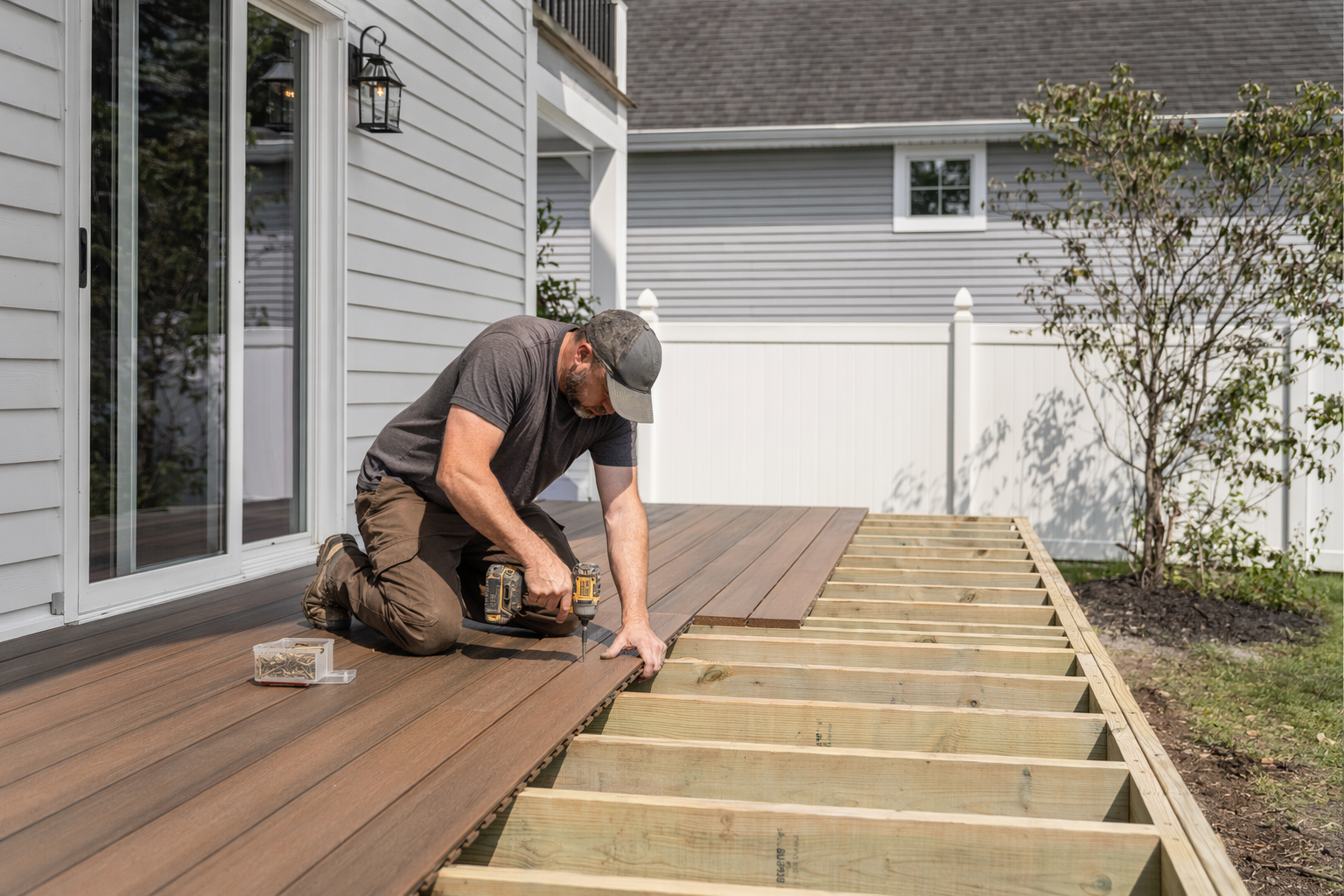
What each part does
Footings are the base. They sit in soil and spread the load so the deck doesn’t sink. Posts rise from the footings and carry the weight up to the beams. Beams support the joists, and the joists hold the deck boards and move the load back to the beams.
A ledger board is often used where the deck attaches to the house. It must be fastened correctly and flashed so water doesn’t get into the wall. That connection is one of the most important parts of the whole structure.
If any piece is too small, too far apart, or attached the wrong way, the deck can flex more than it should. That is why licensed, insured deck builders look at the whole system, not just the boards you see on top.
Why footing depth matters
Footings usually need to go below the frost line in colder areas so freezing soil does not push them up. In warmer places, the required depth may be different, but the local code still matters. City and state rules vary, so there is no single depth that fits every project.
Soil type matters too. Loose or wet soil may need larger footings or a different support plan than firm soil. A good builder will check the site and size the footing for the deck load, height, and ground conditions.
If you compare bids, ask each builder how deep the footings will go, what size they will be, and whether they included inspection-ready work. The real price depends on depth, excavation, access to the yard, and whether the site needs extra prep.

Posts, beams, and joists: the frame you don’t see
Posts and beams do most of the heavy lifting. Their size and spacing depend on the deck span, height, and how much weight the structure needs to carry. Taller decks usually need more careful framing because the load path and lateral bracing matter more.
Joists are the repeating members under the deck boards. Their spacing affects how stiff the deck feels and what kind of surface you can use. Composite boards often need tighter joist spacing than some wood boards, so the framing plan should match the decking material.
That is one reason the framing choice and the decking choice should be discussed together. A lower upfront framing cost can get erased later if the structure has to be rebuilt for a different board type.
How framing choices affect cost
For cost planning, framing is not one single line item. Footing depth, post count, beam size, joist spacing, hardware, stairs, railings, and ledger details all change the total. A small ground-level deck may be much simpler than a raised deck with multiple footings and a long stair run.
As a rough guide, pressure-treated wood is usually the cheapest upfront framing and decking option, but it needs regular sealing and inspection for rot. Cedar costs more than pressure-treated wood but less than many composite setups. Composite decking costs more upfront, while PVC is usually the priciest and most weather-resistant. The right choice depends on budget, upkeep, and climate.
If you want a clearer range for your own project, see the deck cost guide and the composite deck guide. Those pages explain how material choice changes the total in real-world terms.
What to ask before you sign
Before you give any deposit, get the scope and price in writing. Ask whether the builder is licensed and insured, and verify that yourself. Ask who is pulling the permits, what inspections are required, and whether the project includes the right hardware, flashing, and fasteners.
Also ask what is excluded. Footing excavation, demolition, hidden rot at the house, code-required upgrades, and stair changes can all affect the final bill. A clear written scope helps prevent surprises.
OutDeckly can connect you with licensed, insured deck builders near you so you can compare quotes and choose who to hire. The service is free for homeowners, and you stay in control of the decision.
A simple homeowner checklist
Use this when you talk to builders or review a bid:
- Footings: depth, diameter, and whether they go below frost line
- Posts and beams: sizes, spacing, and hardware
- Joists: spacing and whether it matches the decking material
- Ledger attachment: flashing and fastener details
- Permits and inspections: who handles them and when
- License and insurance: verify both yourself
- Written scope: exact work, materials, and deposit terms
A deck’s strength comes from good footings, solid framing, and the right local permits—not just nice-looking boards.