Decking materials compared
Pressure-treated wood, cedar, composite, and PVC each solve a different problem. The best pick depends on your budget, how much upkeep you can tolerate, and how long you want the deck to hold up.
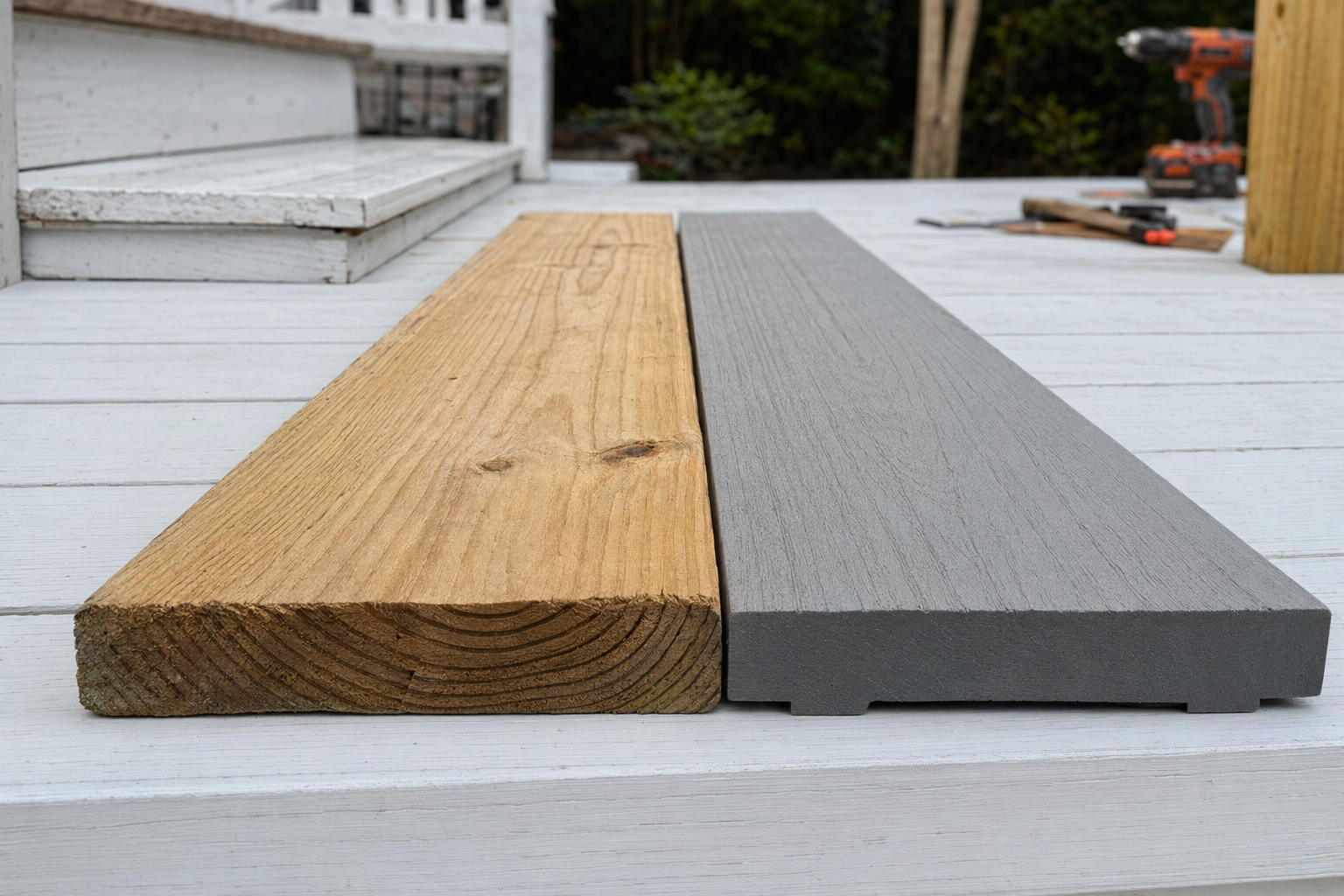
The quick comparison
If you want the lowest upfront cost, pressure-treated wood is usually the cheapest. Cedar costs more but looks warmer and has natural rot resistance. Composite and PVC cost more at the start, but they cut back on staining, sealing, and day-to-day upkeep.
Here’s the honest trade-off: cheaper materials often mean more maintenance. Higher-cost materials often mean less maintenance, not zero maintenance. Your final price also depends on deck size, height, railings, stairs, footings, and local labor rates.
If you want help comparing builders for your project, you can get matched with licensed deck builders and ask them to price the same scope in writing.
Pressure-treated wood: lowest upfront cost
Pressure-treated lumber is the budget option for many decks. Typical installed pricing is often around the lower end of the market, but it varies a lot by region and project details. It is common to see estimates in the rough range of about $15 to $30 per square foot for simple builds, with more complex decks costing more.
The upside is price. The downside is upkeep. Pressure-treated wood usually needs sealing or staining over time, and boards can split, twist, or check as they dry. If you skip maintenance, the deck may age faster.
It can still be a smart choice if you plan to keep costs down and you are okay doing periodic care. Ask the licensed, insured deck builders you contact how they handle fasteners, joist spacing, and flashing at the ledger board, since those details matter just as much as the lumber itself.

Cedar: mid-range look and feel
Cedar usually sits in the middle on price. It often costs more than pressure-treated wood and less than many composite or PVC options. A rough installed range may be about $20 to $40 per square foot, depending on size and layout.
People like cedar because it has a natural look and a nice smell when it is new. It also has better natural resistance to rot than many softwoods. But it is still a wood deck, so it can weather, fade, and require sealing or staining if you want to keep the color and slow wear.
Cedar is a good fit if you want a warmer look without jumping all the way to composite. Just make sure the builder explains how they will protect cut ends, manage drainage, and separate wood from concrete or other moisture-prone surfaces.
Composite: higher upfront, less upkeep
Composite decking is made from a mix of wood fibers and plastic. It usually costs more upfront than pressure-treated wood or cedar, but it can save time because it does not need regular staining and is easier to keep looking clean. Installed pricing often lands around $25 to $60 per square foot, sometimes more for premium lines or complicated projects.
The big value is lower maintenance, not a maintenance-free deck. Composite can still scratch, fade, or hold heat in direct sun. Some products also need specific spacing and fastening systems, so the installer needs to follow the manufacturer’s instructions carefully.
If you want a deeper breakdown of composite options, see composite deck basics. For a full project budget, compare the decking material with the frame, railings, stairs, and permit costs on our cost guide.
PVC: the priciest, most weather-resistant option
PVC decking is usually the most expensive of the common residential options. It can run roughly $30 to $70+ per square foot installed, depending on brand, color, and project complexity. Like other price ranges here, that is only an estimate.
PVC does well in wet climates because it is highly moisture resistant and very low upkeep. It is often chosen for owners who want the least maintenance and are willing to pay more at the start. The trade-off is cost, and in some cases more expansion and contraction with temperature changes, which means the installer has to follow the product rules closely.
If your deck gets a lot of rain, snow, or shade, PVC may be worth asking about. A licensed, insured builder should explain how the product handles movement, drainage, and stair details before you sign anything.
How to choose without overpaying
Start with three questions: How long do I plan to stay in the home? How much upkeep will I actually do? What is my real budget after railings, stairs, and permits?
If you want the lowest initial spend, pressure-treated wood is often the practical answer. If you want a natural look and can handle some maintenance, cedar is a solid middle ground. If you want less upkeep, composite or PVC may make more sense even though the upfront cost is higher.
No matter which material you choose, get the scope in writing before you pay a deposit. Confirm the builder is licensed and insured, ask who is pulling the permit, and make sure the work will pass inspection under your local rules. Permit and code requirements vary by city and state, so the same deck can cost different amounts in different places.
Pressure-treated wood costs the least upfront, cedar is the middle ground, and composite or PVC cost more but usually mean less upkeep — and you should always compare licensed, insured builders, permits, and written scope before you pay.