Deck Railing Options and What They Cost
Deck railings change safety, style, and total deck cost. Use this guide to compare common railing types and typical price ranges (estimates), then get matched with licensed, insured deck builders to price your project.
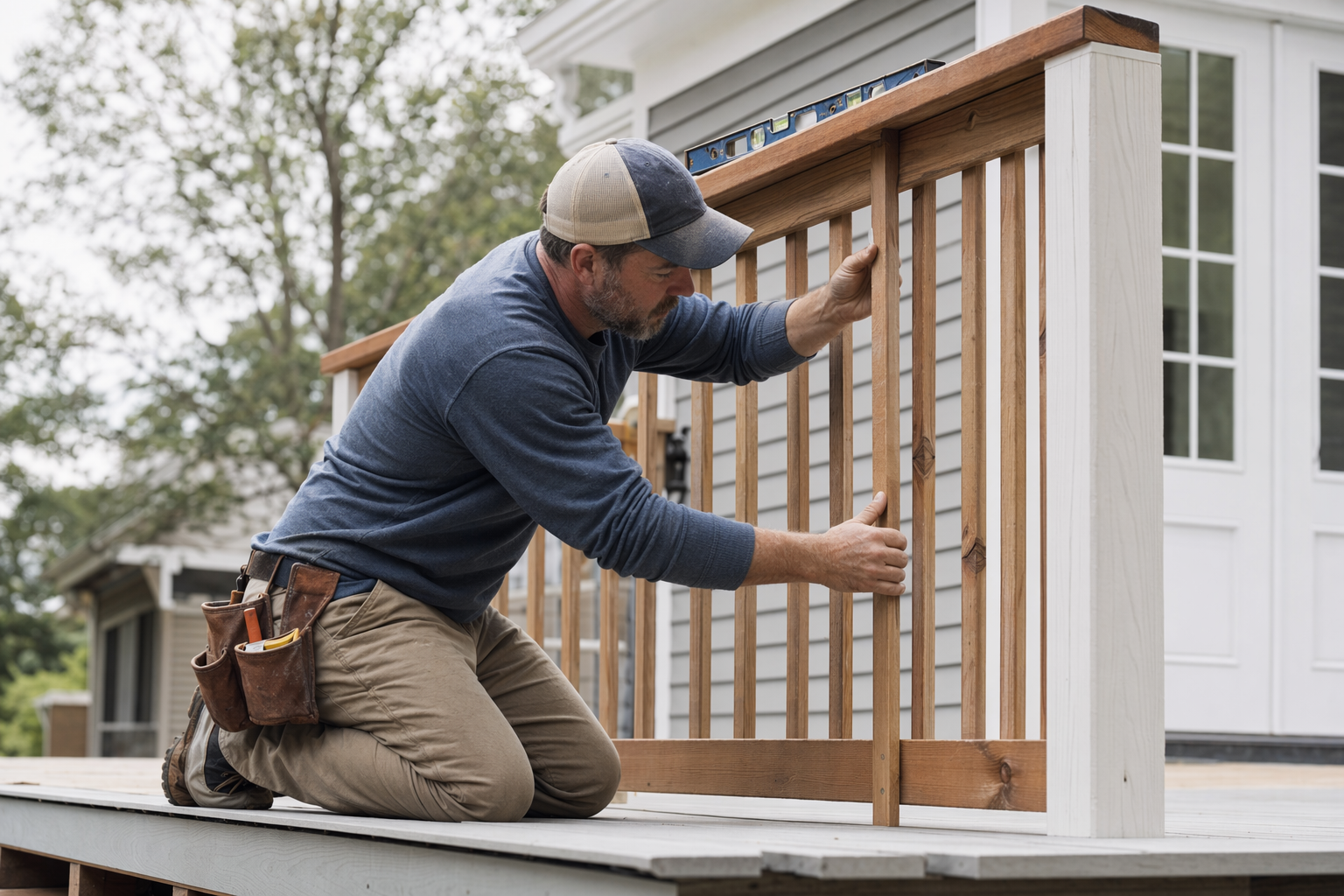
Why railing choice affects both safety and cost
Deck railings aren’t just decoration. They must meet local building code rules for height and strength, and they affect how much labor and framing material your deck needs.
Most decks require a guard/railing height around 36 inches for residential use, and stair guards follow similar code concepts. Many jurisdictions also require openings between balusters (the vertical posts) to be small enough to prevent a child from passing through—exact spacing varies by code.
Because railing systems add posts, top rails, intermediate rails, and blocking/furring for attachment, the railing type you pick can move the job from “simple” to “custom.” If your deck is elevated, has stairs, or needs a lot of corner angles, expect the cost to rise versus a flat, straightforward run.
Quick price overview (typical railing cost ranges)
Railing costs vary a lot by region, deck height, and how long the railing runs. Most contractors price railings by linear foot (or by the whole railing system plus labor), and they’ll factor in posts, infill material, top rails, stair rails, and any special layout.
Below are typical estimates homeowners see in the US. Treat these as ballparks—not bids. Your final price depends on your deck size, railing height, number of stairs, footing/structure conditions, and the materials and finishes you choose.
If you want to compare bids later, it helps to ask builders to break pricing into: railing system material, posts/framework, labor, stairs/stair railings, and any permits/inspection included or required.

Common railing options and what they usually cost
Here are the most common deck railing types and where they tend to land in cost. Exact numbers differ by brand, thickness, and installation complexity, but these ranges are useful for planning.
In many projects, you’ll see wood railings as the lowest upfront option, while composite/cable/glass/vinyl styles can cost more due to materials, hardware, and specialized installation.
Wood (pressure-treated or cedar) railings
Wood railings are popular because they’re familiar, easy to modify, and usually the most budget-friendly upfront. Pressure-treated (PT) railings are typically cheapest, while cedar costs more but has a naturally weather-resistant look.
In many areas, wood railings require sealing/staining/finishing to look good and to reduce moisture issues. Even “outdoor-rated” wood products need ongoing upkeep, and paint or stain timelines can vary based on sun exposure and humidity.
Typical estimate: wood railings often fall in the lower cost range per linear foot, with pressure-treated generally cheapest upfront and cedar somewhat higher.
Composite railings (low-maintenance look, higher upfront)
Composite railings are built to resist rot and splintering and usually need less staining than wood. Many homeowners choose composite when they want a consistent look for years with simpler maintenance.
Composite systems still involve posts, top rails, and infill. Installation quality matters: the way posts are attached to the deck frame and how the system handles expansion/contraction can affect how long it looks good.
Typical estimate: composite railings usually cost more per linear foot than wood, but less long-term upkeep in many climates can be the trade-off.
Vinyl/PVC railings (most weatherproof, premium pricing)
Vinyl or PVC railings are known for being very weather resistant. They don’t require sealing like wood and don’t rot. Many systems also keep a uniform color and shape over time.
The cost is usually higher, especially for complete railing kits that include posts, rails, and balusters. That higher material cost, plus the need for proper fastening and alignment, is part of why vinyl/PVC tends to be a premium option.
Typical estimate: vinyl/PVC railings are often the highest cost per linear foot compared with wood and many composite options, with stair sections and long runs increasing the total.
Aluminum railings (lightweight, durable, often mid-to-high)
Aluminum railings can be a great balance: durable, generally low maintenance, and available in many styles (vertical pickets, horizontal rails, and glass or cable infill systems). Because aluminum is lightweight, it can be easier to transport and install than heavier materials.
Cost depends heavily on the style and whether you add glass or cable. The powder-coated finish usually helps resist corrosion, but the overall pricing still reflects hardware and design complexity.
Typical estimate: aluminum railings commonly land in the middle-to-higher range per linear foot, often influenced by whether you choose a simple baluster style or a more modern system with special infill.
Cable railings (clean look, hardware-driven cost)
Cable railings give a modern, open look, and they can work well when you want views without heavy visual barriers. But they rely on precise tensioning and the right hardware layout.
Because cable systems use specialized components (cable, tensioners, end posts, and often additional bracing), they can cost more than wood or basic composite balusters.
Typical estimate: cable railings often cost in the mid-to-higher range per linear foot, with the most impact on pricing for corners and longer railing runs.
Glass railings (premium look, premium cost)
Glass railings (often with aluminum framing) create a sleek look and maximize visibility. The trade-off is cost: the panels and fastening hardware add up, and installation must be done carefully to keep panels aligned and secure.
Glass railings can also be more sensitive to layout. Posts, framing reinforcement, and panel sizing affect labor time. Some systems use tempered glass panels with specific thickness ranges for railing use.
Typical estimate: glass railings are usually one of the highest cost options per linear foot, particularly with custom panel sizes and stair sections.
Stairs and gates: why they cost more
Most railing quotes are easiest to think about as linear feet, but stairs and landings change the math. Stair railings require angled top rails, additional posts, and sometimes different baluster spacing patterns to fit the slope.
If your deck has a gate (for pets or accessibility), that adds hardware and labor. Even small gates can increase cost due to latch systems and framing strength.
Typical estimate impact: stair railings and gates usually raise the per-project total more than you’d expect from the linear footage alone, because the labor is more detailed and the layout is less repetitive.
Things that change railing cost on your project
Two decks with the same size can have different railing costs depending on details. Here are common cost drivers you can spot early.
First: railing length and layout. More corners, transitions, and angles means more posts and more labor time.
Second: attachment and structure. Railings must be attached to the deck framing in a way that meets code. If your deck framing needs reinforcement or you’re building over an existing structure that’s not ideal, the builder may adjust the framing plan.
Third: site conditions and deck height. Higher decks often have more intensive safety measures and can require careful planning for inspection.
Finally: finishes. Powder coating (for aluminum), stain/paint systems (for wood), and any specialty hardware can change the price.
How to compare builder quotes for railings (without getting stuck)
When you get matched with licensed, insured deck builders, ask for pricing and scope in writing before any deposit. A good scope clarifies what’s included so you can compare options fairly.
Use a short checklist for railing pricing: confirm the railing type, measure total linear feet, list stair railings separately, and ask whether the price includes posts and any required reinforcement/blocking.
Also ask about permits and inspections. Deck permit rules vary by city and state, and your builder should confirm what’s required in your area, then make sure the work passes inspection.
Get matched to price your railing options
If you’re planning your deck and want railing costs to make sense for your layout, OutDeckly is a free matching service. We connect you with the licensed, insured deck builders near you so you can compare railing options and get pricing for your specific project.
To get accurate estimates, builders need details like your deck size, approximate height, railing length/layout, whether you have stairs, and your preferred railing type (wood, composite, aluminum, cable, glass, vinyl/PVC, or a mix).
Start by sharing your project details—then compare written scopes and pricing from the builders you choose. You control who you hire.
Railing styles (wood, composite, aluminum, cable, glass, or PVC/vinyl) can change your deck’s total cost a lot—use the typical ranges here to plan, then get matched with licensed, insured builders for written pricing and proper permits.