Eco-Friendly Decking Options
Want a deck that’s easier on the planet? Here are practical, eco-friendlier decking choices (and trade-offs) so you can talk to the licensed deck builders we match you with.
Start with what “eco-friendly” really means for decks
Decking material is only part of the impact. The bigger picture is how long it lasts, how much maintenance it needs, and whether it can be repaired without replacing the whole deck.
When people say “eco-friendly decking,” they usually mean one (or more) of these: long lifespan, low chemical use, responsible sourcing, and less landfill waste because the deck can be re-used or parts can be replaced.
Because building codes and permit rules vary by city/state, the most eco-friendly plan is also the one that will be built correctly the first time—proper footings, correct spacing, and railings/stairs that pass inspection. A long-lasting deck starts with the structure, not just the boards.
If you want help comparing options with real local pricing, you can get matched with licensed deck builders and ask for estimates and a clear scope in writing (not just verbal promises).
Wood options: natural look, but expect maintenance
Pressure-treated (PT) wood is the most budget-friendly way to get a real-wood deck. It typically costs less upfront, but it usually needs periodic sealing/staining to look good and resist weathering. If you want PT, plan for upkeep rather than “set it and forget it.”
Cedar is a popular “more natural” choice. It’s often a middle-of-the-road cost compared with composites, and many homeowners like its appearance and smell. Cedar still needs sealing or staining, though, and it’s not as uniform as some manufactured options.
Eco-friendliness improves when wood is responsibly sourced and the deck lasts a long time. That means correct installation details: good drainage, proper flashing at the ledger board, and not letting water sit on surfaces.
Typical material costs vary by region and board thickness. For broader budget guidance, see deck costs and typical price ranges.

Composite decking: low upkeep, often higher upfront cost
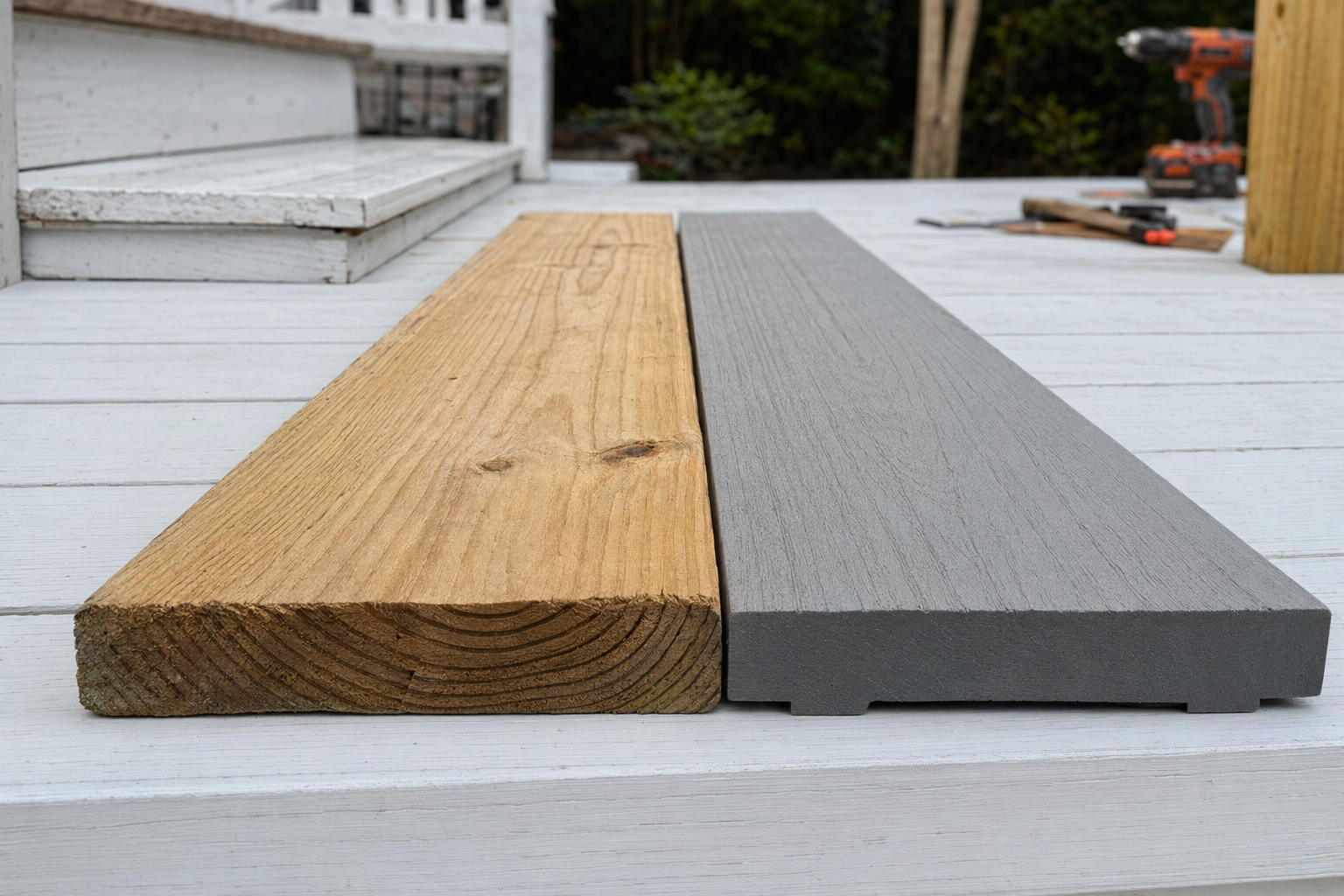
Composite decking is made from wood fiber and plastic (sometimes with other materials). The main eco benefit for many homeowners is less maintenance—usually no sealing or staining—plus strong resistance to rot and splintering. That can reduce repeat purchases and waste over time.
The trade-off is cost. Composite usually costs more upfront than pressure-treated or cedar. Also, “composite” isn’t one exact product—different blends perform differently in heat, fade, and moisture. Ask your deck builder about the specific line they recommend and expected lifespan in your local weather.
Eco-minded homeowners sometimes also consider whether the deck framing and other components are being chosen thoughtfully (for example, using appropriate joist spacing and fasteners so boards last instead of cupping or warping).
If you’re comparing bids, focus on the full build system—not just “$ per square foot of boards.” Ask what’s included for joists, footings, stairs, and railings.
PVC and “fully capped” boards: maximum weather resistance
PVC decking (and some capped products) is designed to be highly weather-resistant. That can be great in rainy climates, snowy regions, or anywhere your deck gets hard sun and freeze-thaw cycles.
The downside is price—PVC is often the highest upfront decking option. It also can feel different underfoot than wood, and some homeowners find color fade or heat retention preferences matter.
Eco-friendliness here is mainly about durability and low maintenance. If the boards don’t need frequent refinishing, you avoid repeated staining and cleaning products.
Because local code and permit needs vary, a durable surface isn’t enough. Your builder still needs to size the structure correctly (joists, ledger, blocking, and post bases), and build to pass inspection.
Lower-impact decisions beyond the boards
Your deck’s carbon footprint isn’t only about the surface boards. Footings, joists, railings, and stairs all affect the amount of material used. A good builder can often help you reduce waste by optimizing layout and standardizing cuts.
Choose a plan that avoids unnecessary height and complexity. More stairs, more railings, and more complicated angles usually mean more materials and labor.
Think about moisture management. Good drainage and proper flashing near any ledger attachment can prevent premature rot in framing members—saving you from major repairs later.
Also ask about waste handling. Many licensed builders have jobsite procedures that reduce scrap and recycle where possible.
Want a checklist for choosing a builder responsibly? Use How to vet a deck builder before you sign or pay a deposit.
How to compare eco-friendly options with real numbers
Start with a clear scope: deck size (square feet), height, whether it’s attached to the house or freestanding, railings type, and whether you’re adding stairs. Those details strongly affect total cost and longevity.
Then compare materials honestly. PT wood is typically cheapest upfront but needs sealing. Cedar is mid-range and still needs staining. Composite costs more upfront but often needs less upkeep. PVC is usually priciest with strong weather performance.
Don’t shop only for “lowest price per square foot of decking.” Ask your matched deck builders what’s included for the whole system (framing, footings, stairs, railings, and any surface work) so you can compare apples to apples.
For cost planning and what drives price, read deck costs and typical ranges.
Eco-friendly deck options usually come down to choosing a material that lasts in your climate with low upkeep—then building it correctly with licensed, insured builders and the right permits.