Your First Deck — Where to Start
Starting a first deck is mostly about size, budget, and who you hire. OutDeckly is a free service that connects you with licensed, insured deck builders so you can compare quotes and move forward with confidence.
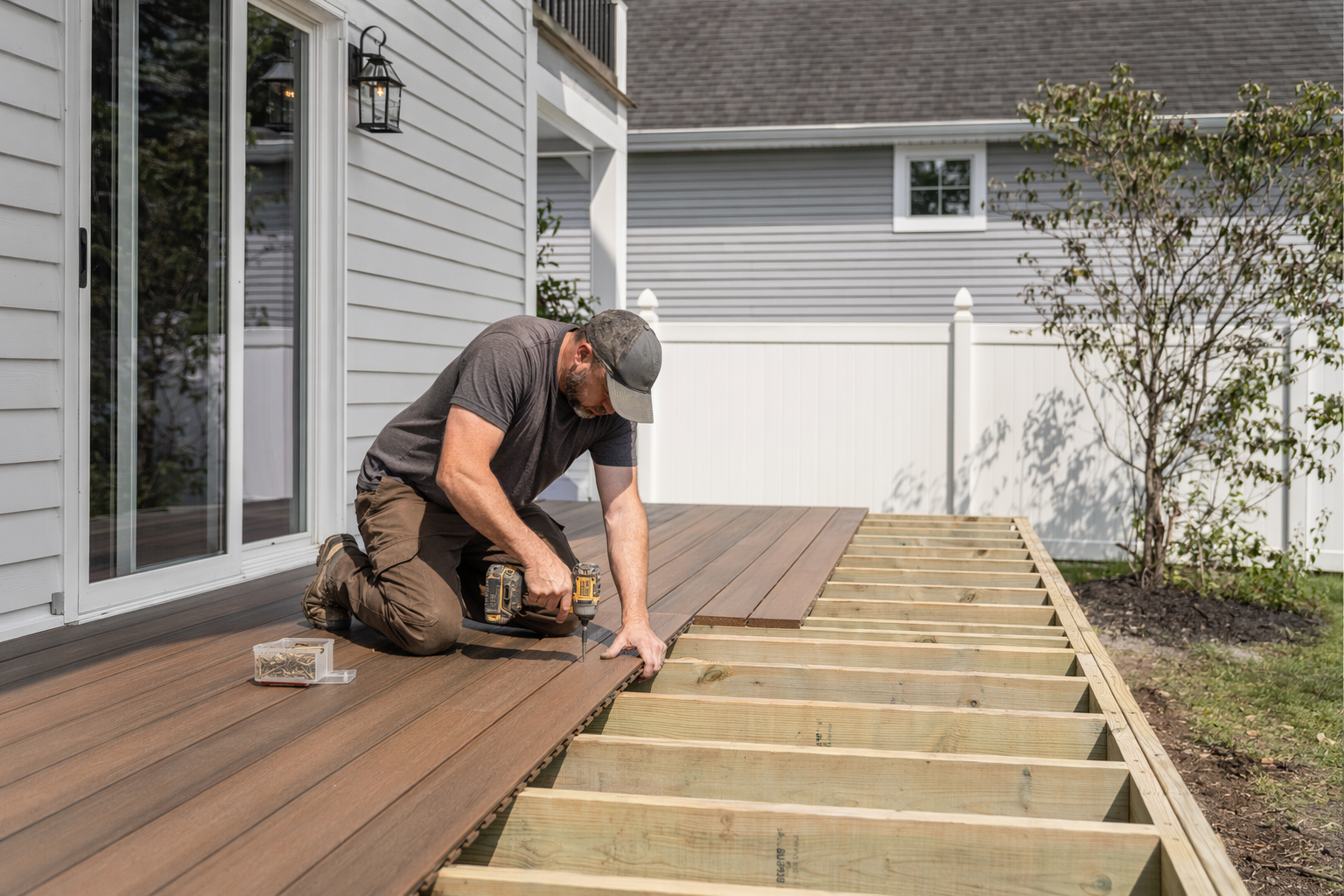
Start with the job you want the deck to do
Before you think about boards or railings, decide how you plan to use the space. A small grilling deck, a spot for two chairs, and a family hangout all lead to different sizes and layouts.
Write down the basics: how many people should fit, whether you want stairs to the yard, and whether the deck needs to connect to a door, patio, or uneven ground. That simple list helps the licensed deck builders we match you with give you a more realistic estimate.
If you already know your rough budget, say that early. It helps builders suggest a pressure-treated wood, cedar, composite, or PVC option that fits your goals without guessing.
Know the main cost drivers before you compare prices
Most first-time homeowners focus on square feet, but the real price depends on more than size. Height above grade, the number of footings, railings, stairs, ledger board work, and site access can all change the estimate.
As a rough guide, pressure-treated wood is usually the lowest upfront cost. Cedar usually sits in the middle. Composite costs more at the start but can mean less upkeep over time. PVC is typically the most weather-resistant and also the priciest.
Those are cost ranges, not quotes. The exact price depends on your site, local labor rates, permit needs, and how much framing is needed under the surface boards.

Check the basics of structure and safety
A good deck is more than boards on top. It usually starts with a frame, posts, beams, joists, and footings sized for the load and the local frost line. If the deck attaches to the house, the ledger board and flashing matter a lot because water control affects long-term safety.
Railings and stairs also add cost and complexity. Spacing on balusters, stair rise and run, and guard height are code items that can vary by city and state. That is why a real site visit matters more than an online guess.
You do not need to become a builder, but it helps to know the words. It makes it easier to ask better questions and spot vague answers.
Get permits, insurance, and scope in writing
Do not hire on price alone. Ask each company to confirm they are licensed and insured, and verify that yourself with your state or local licensing office. Ask who will pull the permit, what inspection steps are needed, and whether the work will pass final inspection before you pay the balance.
Get the scope in writing before any deposit. That should include materials, stain or finish if any, railing type, stair count, demolition if needed, permit handling, and the expected timeline.
If a builder is vague about permits or tries to skip them, that is a red flag. Code rules vary by city and state, but a real pro should be used to working with them.
Use matching to save time, not to skip due diligence
OutDeckly is free for homeowners. Licensed deck builders pay a flat fee to be introduced, and you can compare the quotes they send you before choosing who to hire.
That can be a useful shortcut if you are new to the process or if English is not your first language. You still want to read the details, ask questions, and confirm the builder’s license and insurance on your own.
A good next step is to get matched and then review how to vet a deck builder. If you are still shaping the budget, the cost guide can help you understand what usually drives the price.
Start with size, budget, and safety, then compare written quotes from licensed, insured deck builders who will handle the right permits and inspections.