How Big Should a Deck Be?
A deck should fit how you live, not just the backyard. The right size depends on what you want on it, your lot, setbacks, and how much maintenance you’re willing to handle.
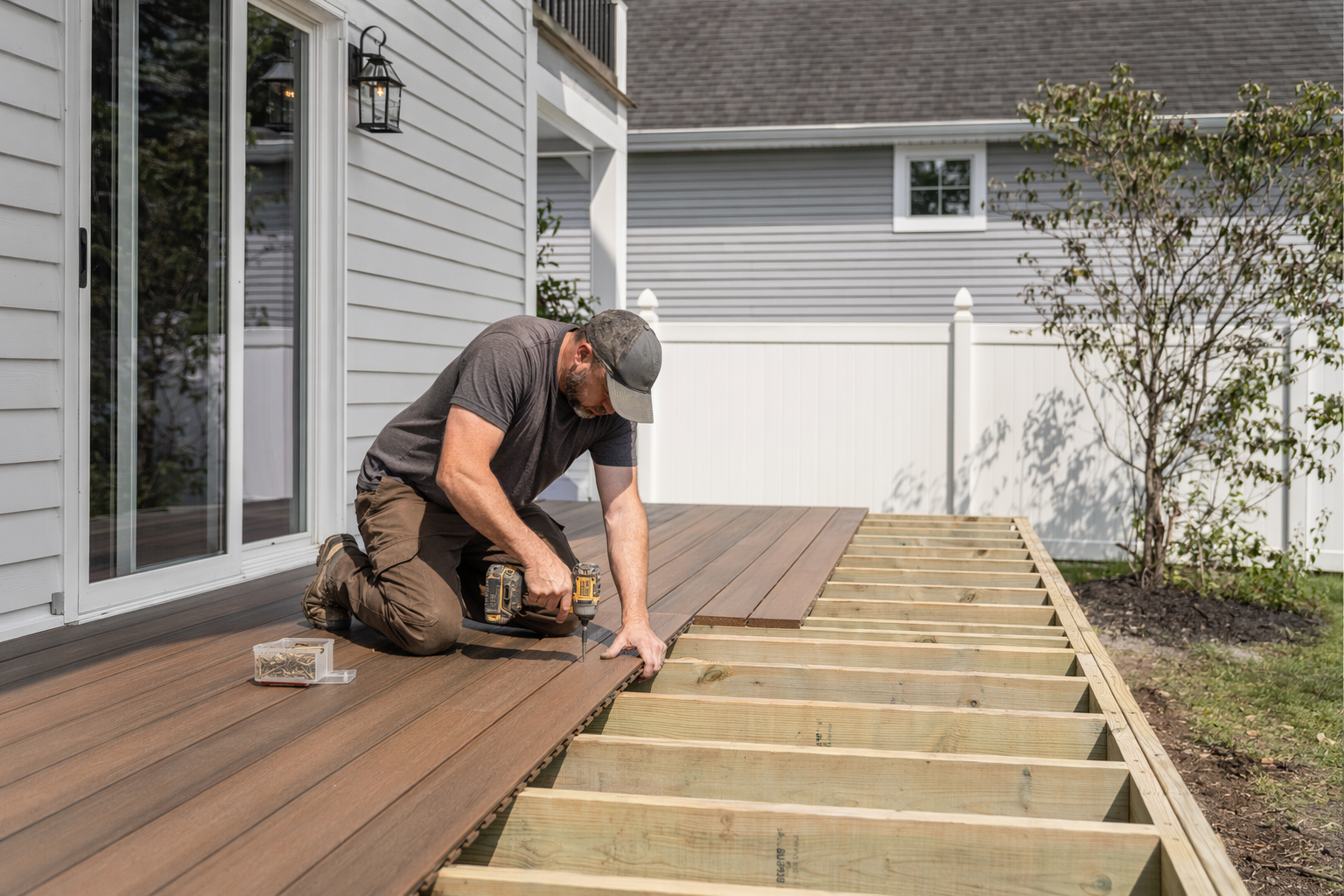
Start with how you’ll use the deck
The quickest way to size a deck is to list the things it has to hold. Two chairs and a grill need far less space than a dining table, a sectional, and a path to the door. If you want room for people to move around without bumping elbows, plan for that from the start.
A simple coffee spot can work in about 8x10 feet. A small dining deck often lands around 10x12 or 12x12 feet. If you want a grill, table, and a few seats with open walking space, many homeowners end up closer to 12x16 feet or larger.
These are just starting points, not rules. The licensed deck builders we match you with can help you compare realistic layouts and explain how the final size affects stairs, footings, railings, and cost.
Common deck sizes and what they usually fit
There’s no single “right” size, but a few rough patterns come up often. Smaller decks can feel cozy and save money. Bigger decks are more flexible, but they cost more because you need more framing, decking boards, posts, footings, railings, and labor.
A 10x10 deck is about 100 square feet. That may fit a bistro set or a couple of chairs, but it can feel tight for dining. A 12x12 deck is 144 square feet and gives you more room for a table and walkway space. A 12x16 deck is 192 square feet and is a common size for families who want separate zones for eating and sitting.
If you’re comparing budget ideas, check deck cost basics. Just remember that the final price depends on size, material, height, stair count, railing length, joist spacing, site access, and local labor rates.

Think about the shape of your yard and house
A deck does not need to be a perfect rectangle. A simple rectangle is usually the cheapest to frame and build, but an L-shape, wraparound section, or bump-out can make the space work better with doors, windows, trees, or a slope.
If the deck is attached to the house, the height matters. A low deck may need fewer stairs and less railing. A taller deck can need deeper footings, stronger posts, more railings, and sometimes more permits or inspections. Code and permit rules vary by city and state, so the licensed, insured deck builders you talk to should confirm what applies in your area.
Also look at the yard itself. A narrow lot may fit a long, shallow deck better than a square one. A sloped yard may need extra support work. If you want the builders to quote the same job, give them the same measurements and photos up front.
Size and material both affect the real cost
Deck size drives cost, but material choice changes the budget a lot too. Pressure-treated wood is usually the cheapest upfront, but it needs regular sealing and maintenance. Cedar usually costs more than pressure-treated wood and offers a warmer look. Composite costs more at the start, but it usually holds up with less upkeep. PVC is the most weather-resistant of the common options and also tends to be the priciest.
That trade-off matters. A larger pressure-treated deck may cost less upfront than a smaller composite one. Frame choices matter too: wood framing is common and often lower-cost, while some builders offer composite or higher-end framing systems that can raise the price.
For a real estimate, ask for the scope in writing before you pay any deposit. The price should spell out the deck size, material, stairs, railings, footings, permits, and any demolition or site prep.
A practical way to choose the right size
Walk your yard with tape, chalk, or painter’s tape and mark the footprint on the ground. Then place patio chairs, a small table, or a grill inside that outline. Leave space to open doors and move around each item. If it feels crowded on the ground, it will feel crowded in the finished deck.
Try to separate the deck into zones if you want more than one activity. A dining zone, a grill zone, and a sitting zone can each need different amounts of room. Even a small deck can work better if it has one clear purpose.
If you’re unsure, get two or three quotes from licensed, insured deck builders and compare the proposed sizes. Use our free matching service to start, then verify each builder’s license and insurance yourself and make sure the permit and inspection plan is clear.
Before you hire anyone
A good deck size on paper can still fail if the build is not handled right. Ask for license and insurance proof. Confirm that the right permits will be pulled and that the work will pass inspection. Get the price and scope in writing before any deposit changes hands.
If you’re comparing builders, this vetting guide can help you ask better questions. OutDeckly is free for homeowners; licensed deck builders pay us a flat fee to be introduced to homeowners. We do not build decks or pull permits ourselves.
Pick the smallest deck that fits your furniture, walking room, and yard layout, then compare written quotes from licensed, insured builders who will handle the right permits and inspection.