Painting vs Staining a Deck
Paint gives solid color and stronger coverage; stain keeps the wood look and is usually easier to refresh. The better choice depends on the deck material, sun exposure, and how much upkeep you want.
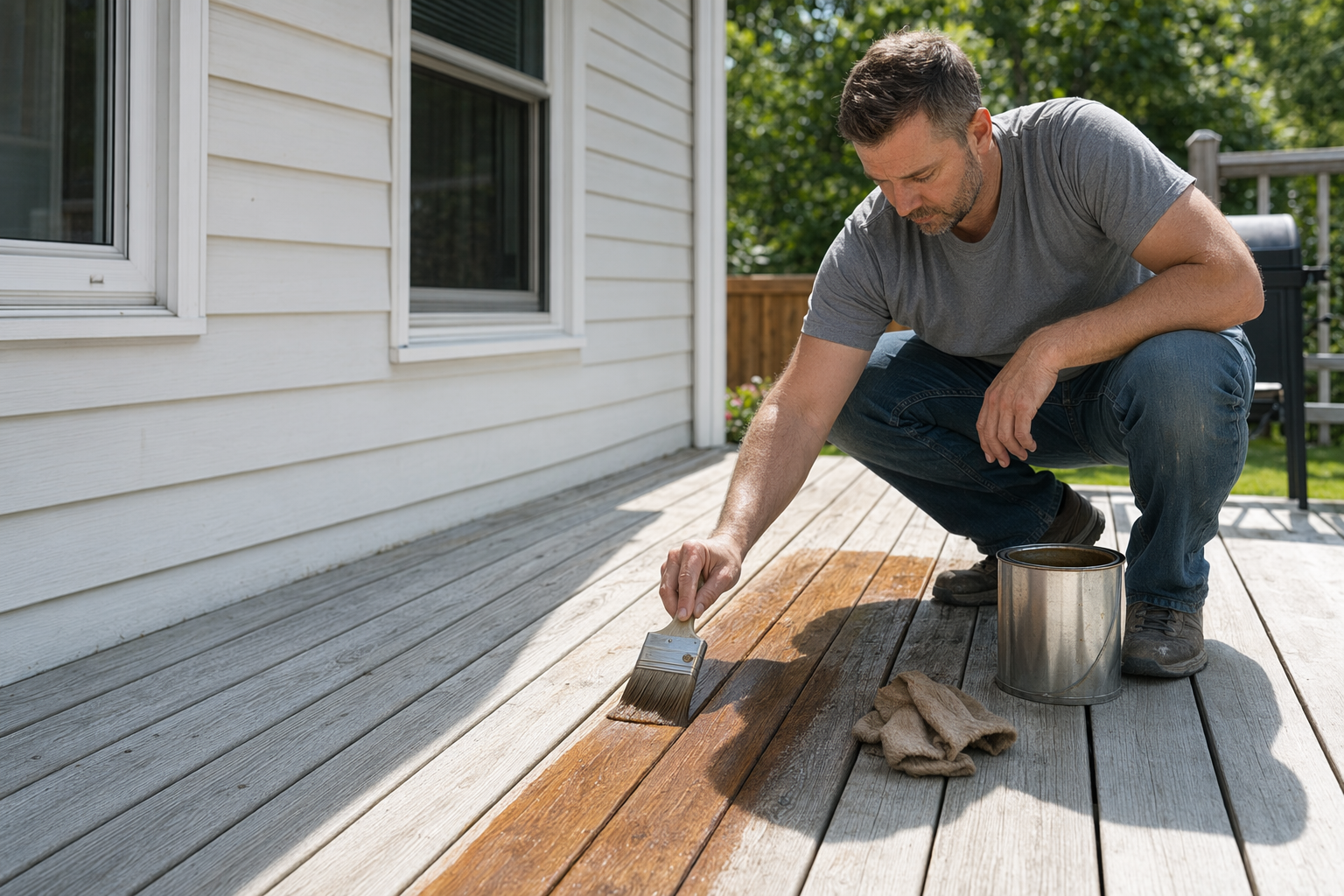
Paint and stain do different jobs
Paint sits on top of the wood and forms an opaque layer. It can hide color changes, old patches, and minor surface flaws better than stain.
Stain soaks into the wood or bonds more lightly to the surface. It lets the grain show through, which is why many homeowners like the natural look.
For a new deck, pressure-treated lumber often starts rough and can move as it dries. A licensed, insured deck builder can tell you whether the boards are ready for finish work and what prep is needed before coating.
Durability, upkeep, and how the deck will age
Paint can last a long time if the prep is done right, but when it fails it often peels or chips. Repairs usually take more work because loose paint has to be scraped or sanded before recoating.
Stain usually wears more gradually. Instead of peeling, it tends to fade, dull, or wear thin in high-traffic spots. That makes touch-ups and re-coating simpler.
Sun, rain, snow, and shade all matter. A south-facing deck in a hot climate may need refinishing sooner than a covered deck in a milder area. Local climate and wood movement can change the timing a lot.

Cost and material trade-offs
Painting and staining costs are usually quoted by square foot, but real pricing depends on deck size, prep work, railings, stairs, height, and whether repairs are needed first. These are only typical ranges, not quotes.
As a rough planning guide, basic staining is often cheaper up front than full paint prep and paint, because paint usually needs more sanding, priming, and masking. A larger or older deck can push labor costs up fast if there is peeling finish, mildew, or damaged boards.
If you want to compare finish choices with the rest of your budget, start with the big picture on deck costs. If the deck is being built or rebuilt, the framing and surface material can matter just as much as the finish.
How the deck material changes the answer
Pressure-treated wood is usually the cheapest option up front, but it needs sealing or finishing to help it last. Many homeowners choose stain because it is easier to maintain and still shows some wood grain.
Cedar often takes stain well and can look good with a clear or semi-transparent finish. Paint can cover cedar too, but once you paint it, you are committing to more surface prep later if it starts to peel.
Composite and PVC deck boards are different. They are not usually finished with standard paint or stain the way natural wood is. If your deck has composite or PVC surfaces, ask the licensed deck builders we match you with what products are approved by the manufacturer.
When paint makes more sense than stain
Paint can be the better pick if you want a uniform color, want to cover mixed wood tones, or need to hide older repairs. It can also work well when the deck is part of a very specific exterior color scheme.
Stain usually makes more sense if you want lower-maintenance touch-ups and prefer the look of natural wood. It is often the more forgiving choice on decks that get a lot of sun and weather.
There is no universal winner. The right answer depends on the surface condition, the wood species, and how long you want the finish to hold up before another round of maintenance.
Before you hire anyone
Use licensed, insured deck builders and verify both the license and insurance yourself. Ask who is responsible for pulling permits, and make sure the work will pass inspection in your city or county.
Get the scope, finish type, prep steps, and total price in writing before any deposit. If a builder is also suggesting repairs, replacement boards, or framing changes, have them spell out exactly what is included.
If you want help finding local pros, get matched with licensed, insured deck builders. For a simple checklist of questions to ask, see how to vet a deck builder.
What a homeowner should ask first
The best first question is: is my deck a good candidate for paint, stain, or neither right now?
If boards are cupping, splitting, or holding moisture, finishing may not solve the real problem. A builder should look at the deck surface, fasteners, flashing, railings, and any soft or damaged wood before recommending a finish.
Permits and code rules vary by city and state, so do not assume the same process applies everywhere. A local licensed builder will know what is typical in your area.
Paint covers more and stain looks more natural; both can work, but the right choice depends on your deck’s material, condition, climate, and how much upkeep you want.