Pressure-Treated Wood, Explained
Pressure-treated wood is the most common “budget” deck material in the US. Here’s how it’s made, what to expect for maintenance, and the real cost drivers—so you can plan your deck and compare builders with confidence.
What “pressure-treated” means (in plain terms)
Pressure-treated (PT) lumber is wood that’s soaked under pressure with preservatives to help it resist rot and insect damage. That treatment is why it’s often used for parts of a deck that see more moisture—like posts, rim/beam framing, and ledger-adjacent components.
In most deck builds, PT lumber is used for the structural “frame” (the parts that carry loads), not just the surface boards. Many homeowners choose PT boards for the walking surface because it’s usually the cheapest upfront.
The key point: PT is designed to last, but it’s not maintenance-free. Deck performance depends on how it’s installed (proper spacing and drainage), and how often you seal or stain after it weathers.
Where PT wood works best on a deck
PT lumber is often a strong fit for the deck’s structure. That includes beams and joists, and often the posts that connect down to footings. Using treated lumber in the frame can help you avoid premature rot where moisture and contact with soil or damp air are more likely.
For the walking surface, PT boards can work well too. You’ll typically see it in areas where homeowners want a reliable, lower-cost option and don’t mind basic upkeep like sealing/staining.
Where you should pay extra attention is at “wet zones” and transition points: areas near downspouts, where sprinklers hit, around stairs landings, and anywhere water can get trapped between boards or against the house.

Treatment types and what “use / don’t use” might mean
Deck builders may refer to PT lumber by category or intended use (for example, what it’s rated for). The right choice depends on your local building requirements and the parts of the deck being built.
If you’re comparing quotes, ask how the builder plans to specify PT for each deck component: posts, beams, joists, rim boards, and deck boards. Good builders don’t treat everything the same—they choose the right material for the right job.
Also ask about moisture and drying conditions. Some PT lumber arrives wetter than others. When boards are very wet at installation, they can shrink and warp more as they dry. That usually shows up as gaps or slight movement in the first season, even if the deck is built correctly.
Maintenance: the part many homeowners underestimate
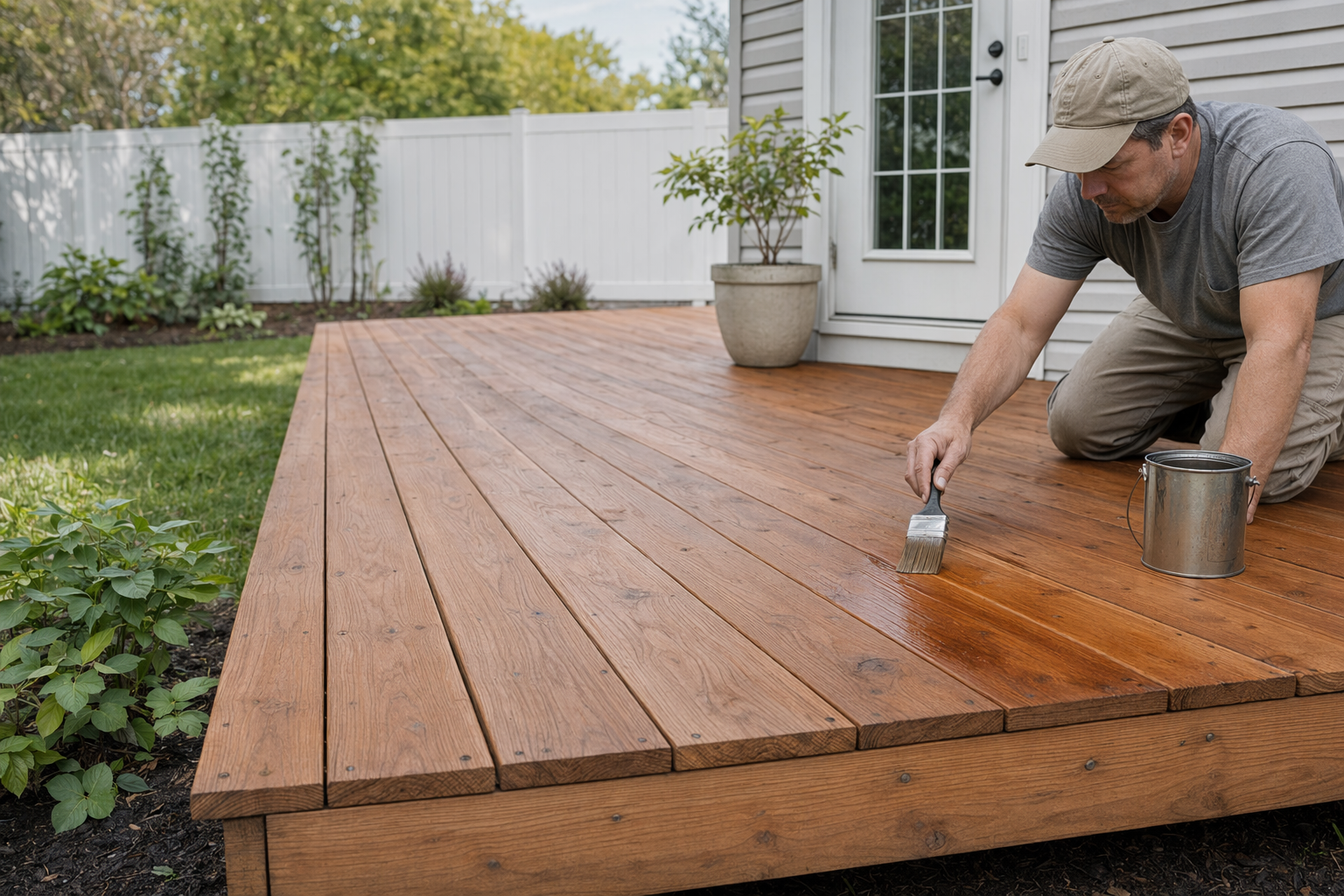
With PT decking, the “maintenance” is usually about finishing—sealing or staining—and keeping water from sitting on top of the wood. You don’t want a deck that stays damp for days after rain.
Many homeowners choose a quality deck sealant or stain and reapply on a schedule. How often? It depends on sun exposure, rainfall, and whether the finish is holding up. In high-UV areas, you’ll often need refinishing sooner.
Even with treatment, you still need to maintain proper deck design details: ventilation under the deck, good drainage away from the house, and stairs/trim that prevent trapped moisture. A finish can help, but it can’t fix poor water flow.
If you plan to keep PT boards looking good, budgeting time for cleanup (removing debris that traps moisture) is part of the deal.
Cost reality: PT wood vs other deck materials
PT wood is often the lowest-cost option up front. But “cheapest” can change once you include ongoing maintenance and the way labor is affected by material choice.
A common way people think about pricing is cost per square foot. Typical estimates for deck projects can range widely based on size and site conditions, but PT decks are usually on the lower end compared to cedar and composite. The exact price depends on things like deck height, railings, stairs, the number of ledger connections, the condition of the landing area, and required footings.
Here’s the practical trade-off:
- PT wood: lower upfront cost, but you’ll plan on sealing/staining and periodic upkeep
- Cedar: mid-range cost, with a natural look and also benefits from regular staining
- Composite (and similar low-upkeep materials): higher upfront material cost, but often less routine maintenance
OutDeckly doesn’t provide quotes—licensed, insured deck builders you’re matched with will price your project based on your deck plan. Still, if you understand the trade-offs, it’s easier to compare bids fairly.
Key building details to ask about (so PT lasts)
If you’re choosing PT wood, the details are what make it perform. Ask builders how they’ll handle the “high-moisture” areas and whether they’ll use correct spacing so water can drain.
Good questions include:
- Will the builder use proper hardware rated for treated lumber?
- How will they prevent trapped moisture at the ledger and around the house connection?
- What spacing will be used between deck boards to allow drainage and drying?
- How will they treat or seal cut ends on PT where needed?
You should also ask about the footing and support plan. Decks require foundations that meet local code, including proper footing depth (often tied to frost line) and adequate support based on height and load. A deck that’s structurally solid is also easier to maintain, because movement can loosen boards and hardware.
Finally, don’t skip the planning steps: confirm permits and that work passes inspection. Permit rules and code vary by city/state, and a legitimate deck builder should be comfortable handling that process.
Next step: match with licensed, insured deck builders
OutDeckly is a free matching and information service. We connect you with licensed, insured deck builders near you so you can compare options. We don’t build decks or pull permits ourselves.
If you want PT wood and you’re ready to get real project numbers, start by reviewing typical deck cost factors in our guide: Deck costs: what drives price. Then, learn how to vet a builder: How to vet a deck builder.
When you’re ready, use get matched to share your deck size, your location, and the kind of materials you’re considering. You’ll get matched with builders who can explain what’s needed for your site and provide a written scope and price before any deposit.
Pressure-treated wood is usually the lowest-cost deck material upfront, but it needs proper installation and regular sealing/staining—OutDeckly helps you compare licensed, insured builders to price and build it correctly in your area.