Small Deck Ideas That Work
Need a small deck that looks great and stays within budget? Here are practical layout ideas, sizing tips, and cost drivers—plus how to get matched with licensed, insured deck builders near you.
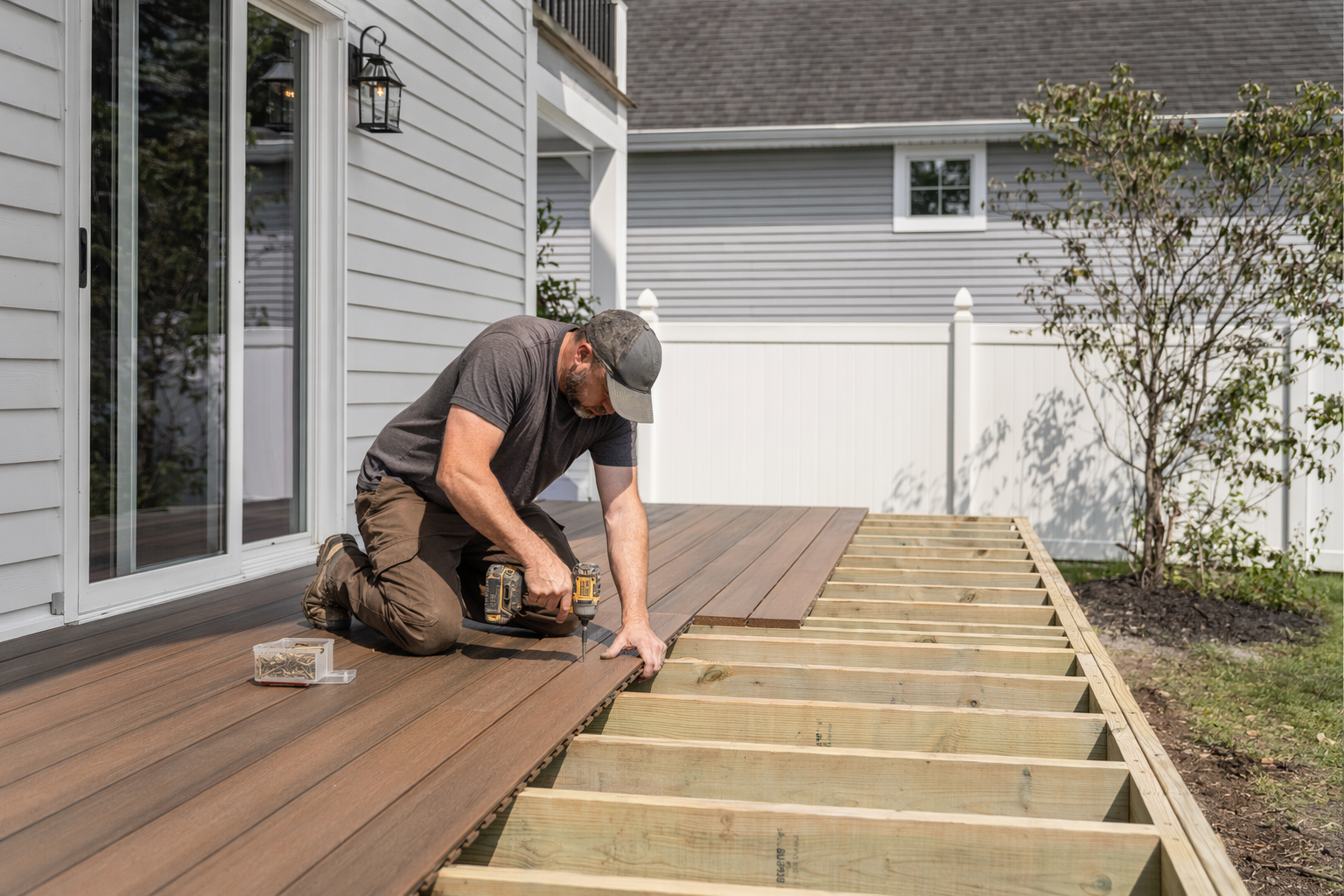
Start with what you want the deck to do (not just square feet)
Small decks work best when you pick a clear purpose first. Do you want a spot for a grill and a couple of chairs? A safe step-out from a back door? Or a small landing that makes the yard feel “finished”?
A deck that’s sized for real use will feel bigger than a bigger deck with no clear plan. For example, a 8×10 deck can feel roomy for two people with a bench and a small table, while a wider deck with wasted space can feel empty.
Before you choose a design, think about access points and how people will move. If the deck connects to a door, consider the swing direction and leaving enough room to open the door without awkward step-offs. If there’s a stair, plan where it lands so you’re not walking sideways onto the yard.
Small deck layouts that commonly work
These are proven options that fit well in typical US suburban yards. They’re also easier for builders to price because the structure stays simple.
A “platform” at the back door (often 6×10 to 8×10) can be a clean way to add outdoor living. If you want more seating, add a small corner extension instead of increasing width across the whole deck.
If your yard is tight on one side, consider a wrap-style layout only where it makes sense—like a short side run along the house rather than a full wrap. That keeps costs down while improving the feel.
Idea checklist:
- Simple rectangle for easiest framing
- Built-in bench against the railing (or a railing-adjacent wall) to save floor space
- A single stair run rather than multiple landings when site allows
- Railings only where needed by height and local code (your builder will confirm requirements)

Sizing rules of thumb (so it feels right)
If you’re starting from scratch, small deck sizes can still feel comfortable when the plan includes usable walking space and proper seating dimensions.
Common “small but usable” sizes:
- 6×8: Good for a door landing with two chairs or a small bistro set
- 8×10: Popular for a grill + 2–4 seat setup
- 10×10: Adds more flexibility for a table, corner seating, or a compact lounge
Think about clearances, too. Stairs need safe tread depth and consistent risers, and they should land where you can step off naturally. Railings matter for safety. Even with a small deck, the railing layout can affect the overall plan because balusters and post spacing must meet code.
If your deck will be raised, footings and height drives a lot of the budget. Ask your builder how high the finished deck will be and how that changes footing depth and beam sizes (local frost line requirements vary by area).
Design details that make a small deck look bigger
Small decks can look larger with a few smart choices that don’t require a huge footprint.
Use the house as a “frame.” A deck aligned straight with the main door or primary sightline from the kitchen usually feels more intentional. If the deck is angled or broken into too many corners, it can visually shrink.
A few ways to add impact:
- Choose a consistent material direction (for boards and trim) so the lines aren’t busy
- Add a built-in bench or planter along one edge instead of scattering small furniture
- Consider a simple privacy screen on one short section if you want shade or separation (screen design still needs to work with the railing system)
Lighting helps a lot. Step lights, small post caps, and deck perimeter lighting improve safety and create a “finished” look—especially if you use the same style across stairs and railings.
Cost drivers for small decks (what usually moves the price)
Small decks can still cost surprising money because many structural elements don’t scale linearly with size. The big cost drivers are the things that have to be built regardless of square feet.
Typical items that affect price:
- Height from the ground and how many stairs are needed
- Number/size of footings and beams (and whether you need deeper frost-compliant footings)
- Ledger board attachment and flashing (important for water management where the deck meets the house)
- Railings, posts, and any code-required baluster spacing
- Materials: pressure-treated wood is often the lowest upfront; cedar is mid-range; composite costs more upfront but usually needs less ongoing maintenance; PVC is often the most weatherproof and priciest
These are typical ranges—not bids. Your actual cost depends on your deck’s size, layout, local labor rates, site conditions (slope, access for materials, soil type), and code/permit requirements. If you want a real number, you’ll need a licensed, insured builder to price your exact plan.
For estimating conversations, see Deck cost basics and learn what to ask so quotes are comparable.
How to plan next steps without risking delays or surprises
A small deck project can move quickly when the plan is clear. Start by collecting a few details and sharing them with the licensed, insured deck builders you get matched with.
Before anyone builds anything, confirm the basics:
- The builder is licensed and insured (verify on your state or local licensing/insurance records)
- The builder will pull the right permits for your city/state
- The deck plan will pass inspection and meets local code (especially railings, stair design, and ledger/waterproofing details)
- You’ll receive the full scope and an itemized price in writing before any deposit
OutDeckly is a free matching service. Tell us your location and what you want for the deck, and we’ll connect you with the licensed, insured deck builders near you so you can compare options and pricing.
To vet builders the right way, use How to vet a deck builder. If you’re ready to get matched, go to Get matched.
These small deck ideas focus on practical layouts, comfort-sized dimensions, and the real cost drivers—then help you get matched with licensed, insured builders to price the project correctly.