Deck Quote Comparison Guide
Use this free PDF checklist to compare deck quotes side by side and spot missing items fast. It helps you ask the right questions before you pick a licensed, insured builder.
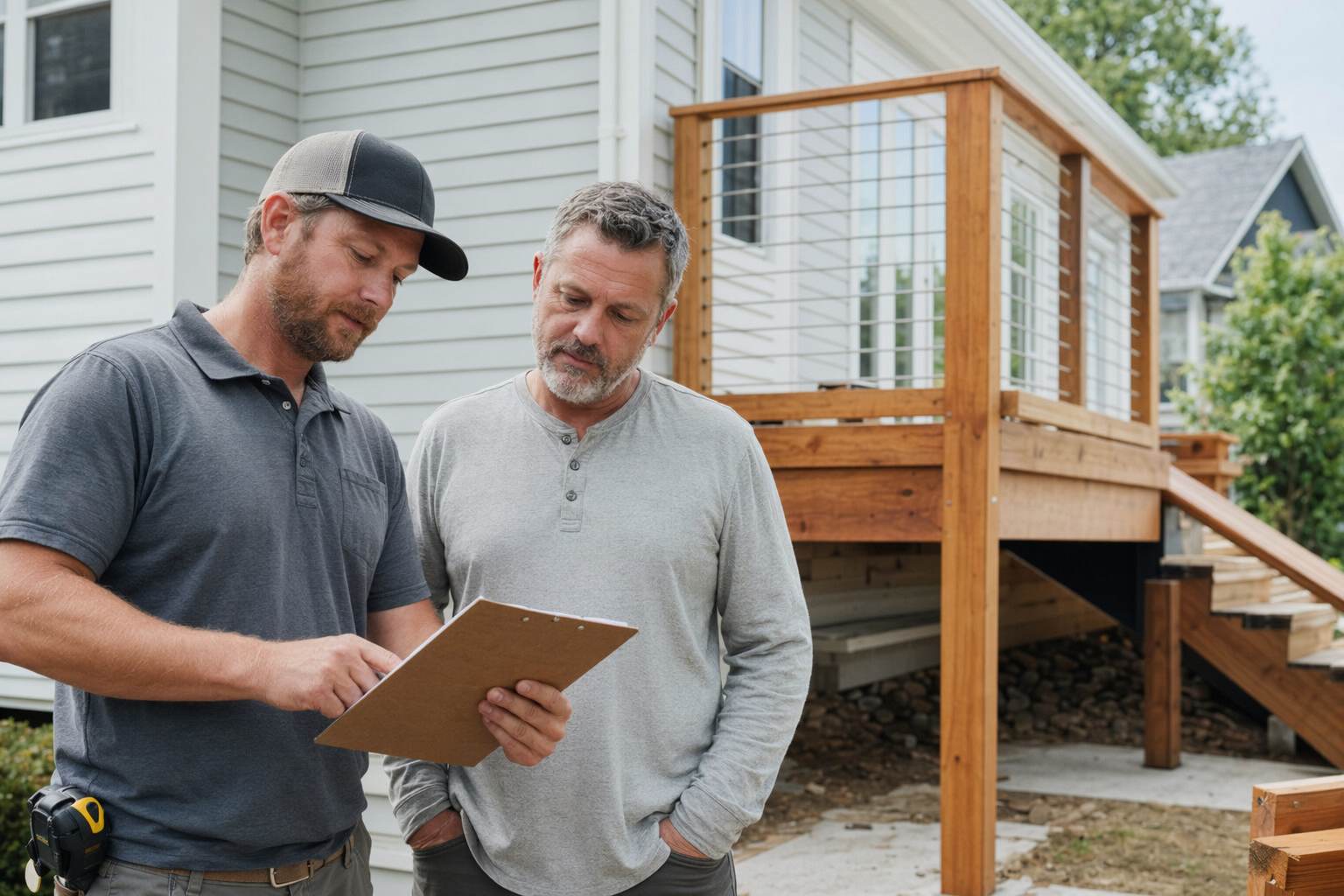
What’s in the free PDF
This download is a simple line-by-line quote checklist for homeowners. It gives you a place to compare deck size, material, framing, footings, railings, stairs, demolition, cleanup, permit handling, and warranty terms.
It also includes a short note space so you can write down what each licensed deck builder said was included, excluded, or priced as an allowance. That matters because two quotes can look close at first and still cover very different work.
Use it before you sign anything or pay a deposit. Ask for the scope in writing, and make sure the builder is licensed and insured in your area.
How to use it
Start with the same project details for every quote: approximate deck size, height off the ground, material choice, and any extras like stairs, railings, built-in benches, or old deck removal. If one builder is quoting 240 square feet and another is quoting 300, the numbers are not directly comparable.
Then check the hidden parts of the job. Footings, ledger board attachment, joists, flashing, baluster spacing, railing height, and inspection fees can change the price a lot. Permit rules and code requirements vary by city and state, so the builder should confirm what applies where you live.
The goal is not to pick the lowest number on the page. It is to see which quote is complete, clear, and realistic for your site.
What a fair deck quote should spell out
A good quote should break out materials and labor in plain language. It should say what type of wood or composite is being used, whether the frame is pressure-treated lumber or another system, and whether stairs, railings, lighting, or trim are included.
If a quote gives only one lump sum, ask for a written breakdown. That makes it easier to spot missing items like post bases, fasteners rated for exterior use, beam spans, flashing at the house connection, or final cleanup.
Cost-per-square-foot estimates can help you sanity-check the number, but they are not the whole story. Pressure-treated wood is usually the cheapest upfront, cedar sits in the middle, composite costs more at the start but needs less upkeep, and PVC is usually the most weatherproof and the priciest. Real price still depends on size, height, site conditions, and local labor.
Red flags this checklist helps you catch
Watch for vague wording like “standard deck,” “basic railings,” or “permit extra if needed.” Those phrases can hide a lot of cost. A quote should say exactly what is covered and what happens if the builder runs into rocky soil, a steep yard, or a repair needed at the house ledger.
Be careful if the builder asks for a large deposit before giving you a written scope, license details, insurance info, and a permit plan. You should verify the license and insurance yourself, and you should know who is responsible for pulling permits and getting the work inspected.
If two quotes differ a lot, ask both builders to explain why in writing. Sometimes the answer is better materials. Sometimes it is just missing work.
Your next step after comparing quotes
If you do not have quotes yet, you can use our free matching service to connect with licensed, insured deck builders near you: get matched. It is free for homeowners, and you only share contact and project details.
If you want a deeper look at what affects price, see our deck cost guide. If you are deciding how to screen builders before hiring, use our builder vetting guide.
This tool is meant to help you compare offers and feel more organized. It does not replace a site visit, code review, permit checks, or a written contract.
Download the free checklist, compare deck quotes line by line, and hire a licensed, insured builder only after the scope, permits, and price are clear in writing.