Wood decks (pressure-treated & cedar)
Compare pressure-treated wood and cedar (plus what to expect from staining and sealing). OutDeckly helps you get matched with licensed, insured deck builders and plan a realistic budget.
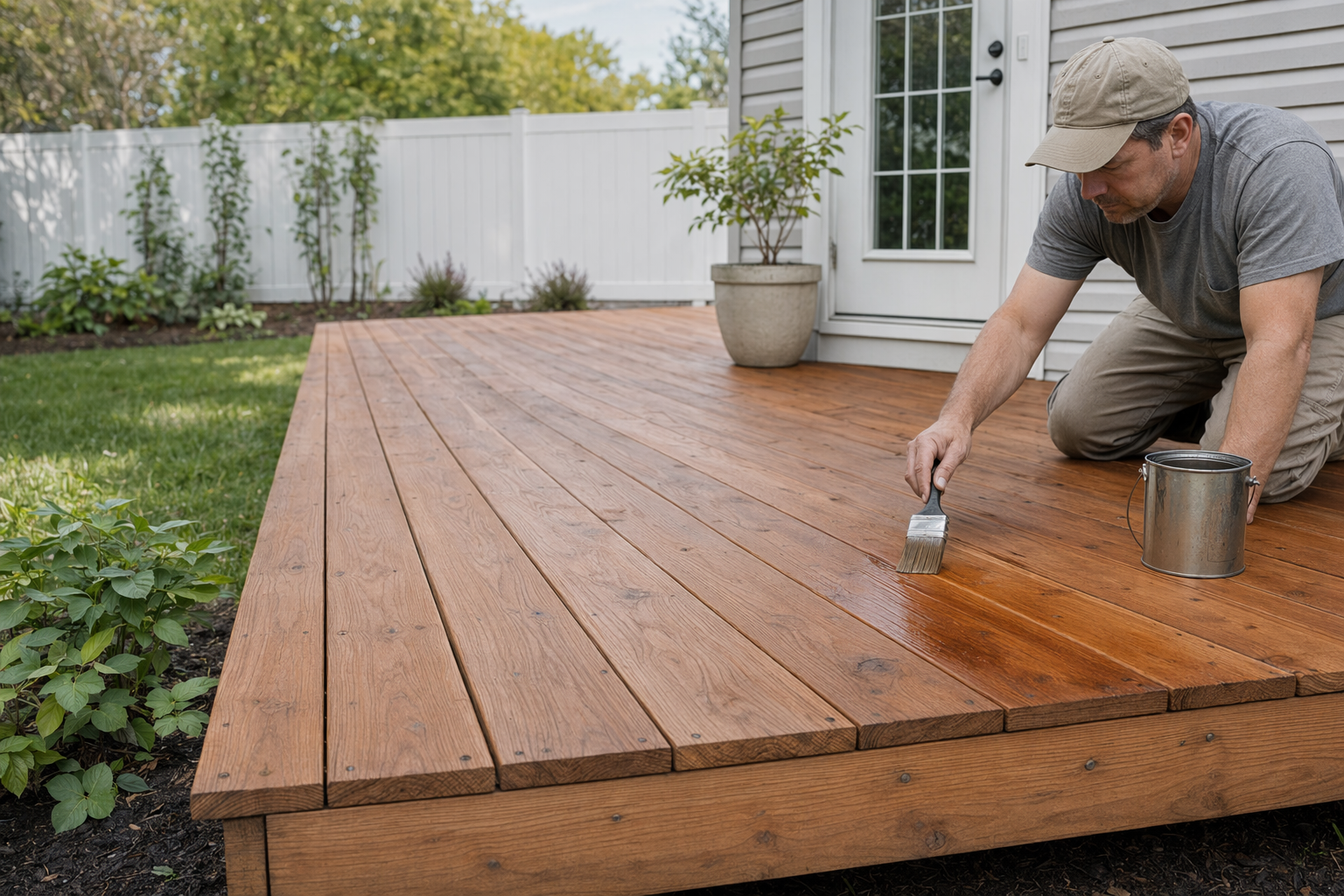
Pressure-treated vs cedar: what’s the real difference?
Wood decks usually start with pressure-treated lumber or naturally rot-resistant woods like cedar (and sometimes redwood). The big differences aren’t just “looks”—they show up in upfront cost, how much upkeep you’ll do, and how the deck ages in your climate.
Pressure-treated wood is widely available and often the lowest-cost option. You’ll typically stain or seal it after it dries enough (and then keep up with re-sealing over time). If you want a solid deck that’s easy to rebuild or extend later, pressure-treated is usually the practical choice.
Cedar has a warmer look and a lighter feel. It’s generally more expensive than pressure-treated upfront, but many homeowners like that it can weather more gracefully with proper staining. Cedar still needs regular sealing/staining, just often with a different look as it weathers.
Want a quick comparison you can take into your bids? Use the builder quotes to compare the same items: joist size, spacing, beam/ledger details, railings, stairs, footings, and the type/brand of stain or sealant they plan to use. That’s where costs usually swing.
How OutDeckly helps you (we connect you with builders, not build the deck)
OutDeckly is a free matching and information service. We connect homeowners with the licensed, insured deck builders near you so you can compare options and pricing.
Here’s the usual flow: you share a few details about your deck (approximate size, where it will attach, any stairs/railings, and your zip code). Then we send your info to matched builders to request a quote and confirm the scope.
You stay in control—compare bids, ask questions, and hire the builder you feel good about. Before any deposit, make sure the builder gives you the price and scope in writing.
If you’re planning ahead, review typical budgeting tips in our deck cost guide, then use get matched when you’re ready to start hearing back from builders.
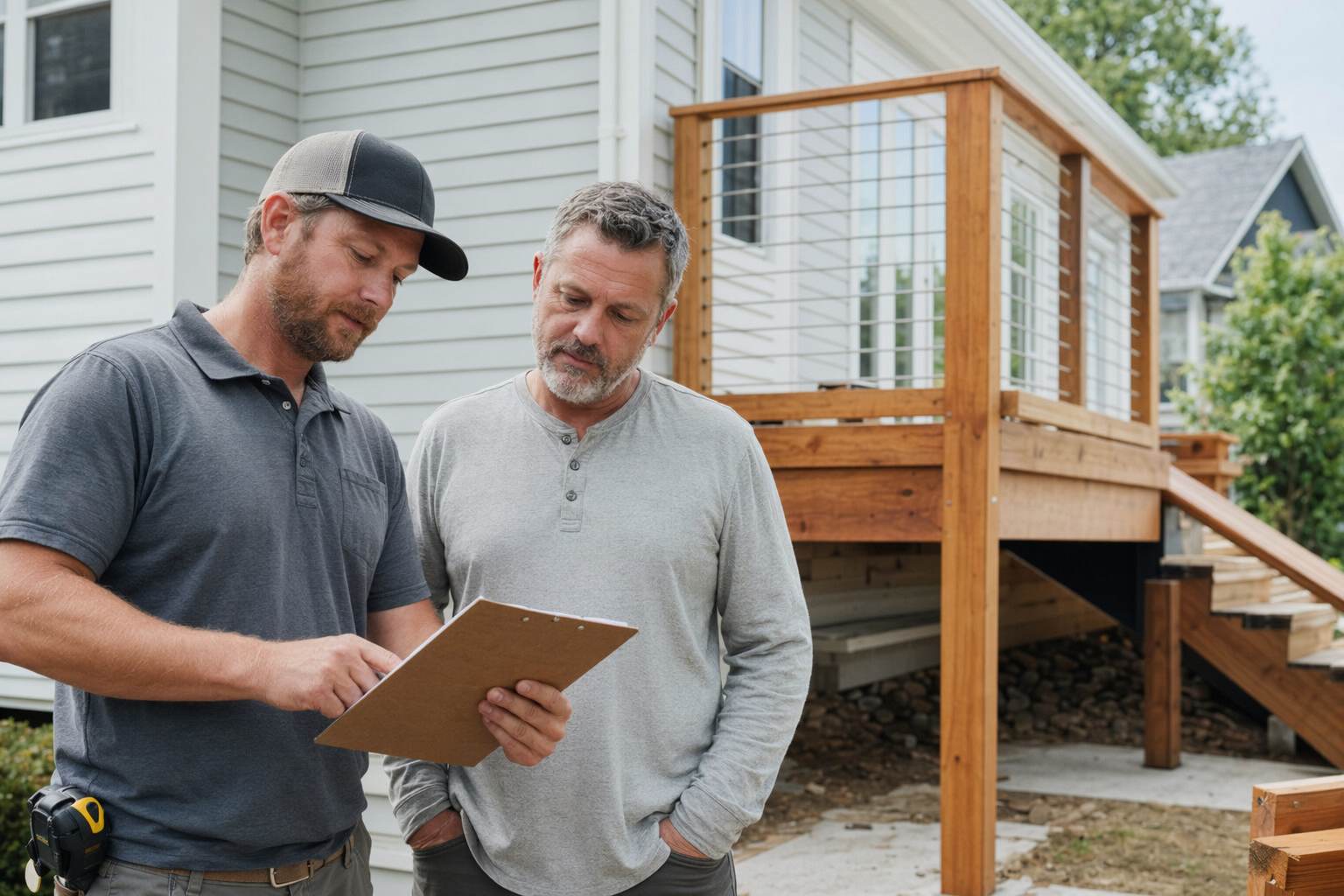
Honest cost range for wood decks (estimate, not a bid)
Typical deck costs vary a lot based on size, height off the ground, soil and frost-line conditions, footings, railing style, stairs, and how complex the layout is. Pricing can also swing based on whether the deck is attached to the house with a ledger board and what repairs are needed around that connection.
As a rough planning tool (not a quote):
- Smaller/simple wood decks (low height, basic shape): you might see costs on the lower end of the range.
- Larger decks, multi-level designs, custom railings, and decks with stairs add cost quickly.
Material trade-offs in plain terms:
- Pressure-treated: usually cheapest upfront. Budget time for sealing/staining and expect more maintenance as it weathers.
- Cedar: mid-range upfront. Many homeowners prefer the look, but you still need to stain/seal on a schedule.
To get closer to your real number, check what your builder includes: permit fees (if required), engineering for complex support, joist/beam sizes, post/footing depth, and the specific coatings they plan to use. For more detail, see costs.
Timeline: what it usually looks like from “first call” to “deck done”
A straightforward project can take just a few weeks once permits are in place, but most decks have a few waiting steps: scheduling, site prep, inspections, and material delivery. Bad weather or site access issues can also add time.
Here’s a realistic sequence:
1) Quote and site assessment (often within 1–2 weeks, depending on builder schedules)
2) Permit/plan review (varies by city/state; could be days to weeks)
3) Build phase (often 1–3+ weeks depending on size and complexity)
4) Drying and finishing (stain/seal timing matters; some products require specific conditions)
If you’re choosing between pressure-treated and cedar, ask the builder how they’ll handle dry times and coating schedule for the exact materials you’re getting. The “best looking” deck is usually the one that was coated at the right stage, not just the one with the prettiest wood.
Pros and cons: pressure-treated vs cedar (and what to plan for)
Pressure-treated wood (pros/cons)
Pros: typically lower upfront cost, widely available, and easier to match when you want to expand later. It can perform well when built correctly and maintained with sealing/staining.
Cons: needs routine sealing/staining to look good and slow weathering. If coating is skipped or applied at the wrong time, you can get faster graying, cracking, or uneven appearance.
Cedar (pros/cons)
Pros: natural warmth in color and grain; many people like how it looks even as it weathers. With the right stain/seal, it can look great for years.
Cons: higher upfront cost. Cedar still needs maintenance—“natural” doesn’t mean “no upkeep.” If the finish plan is inconsistent, the deck can fade or look blotchy over time.
Common planning point for both: your coating system matters. Ask builders what stain/sealant they recommend for your region, sun exposure, and traffic areas (stairs and high-contact edges often wear faster).
Questions to ask a wood-deck builder (and a quick vet-a-builder nudge)
When you request quotes, ask the builder to explain the parts that control safety and longevity—footings, structure, and finish schedule. A good builder won’t mind walking you through details in plain language.
Use this checklist when reviewing bids:
- Are you licensed and insured for deck work? Can you share proof of license/insurance?
- What permits are required for my address, and will you pull them? (Permit rules vary by city/state.)
- How deep will the footings/posts go relative to local code (often tied to frost line) and soil conditions?
- What’s the ledger connection plan (if the deck attaches to the house), and what flashing/waterproofing approach is included?
- What sizes and spacing are you using for joists, beams, and posts?
- What railings are included (height, baluster spacing, and whether they match code)?
- How many stairs, and what stair rise/run plan is included?
- What coating product(s) do you use for staining/sealing, and when will you apply them?
- What’s included in the price (demo, disposal, site prep, hardware, fasteners, cleanup)?
- Will you give the scope and total price in writing before any deposit?
For the full vetting step-by-step, visit vet-a-deck-builder. It’s a good way to spot red flags before you sign anything.
OutDeckly helps you compare pressure-treated and cedar wood decks, plan a realistic estimate, and get matched with licensed, insured builders who can pull permits and build what you want.