New deck build
Planning a new deck? We connect you with licensed, insured deck builders near you—so you can compare options for footings, framing, decking, railings, and stairs, with costs and timelines explained up front.
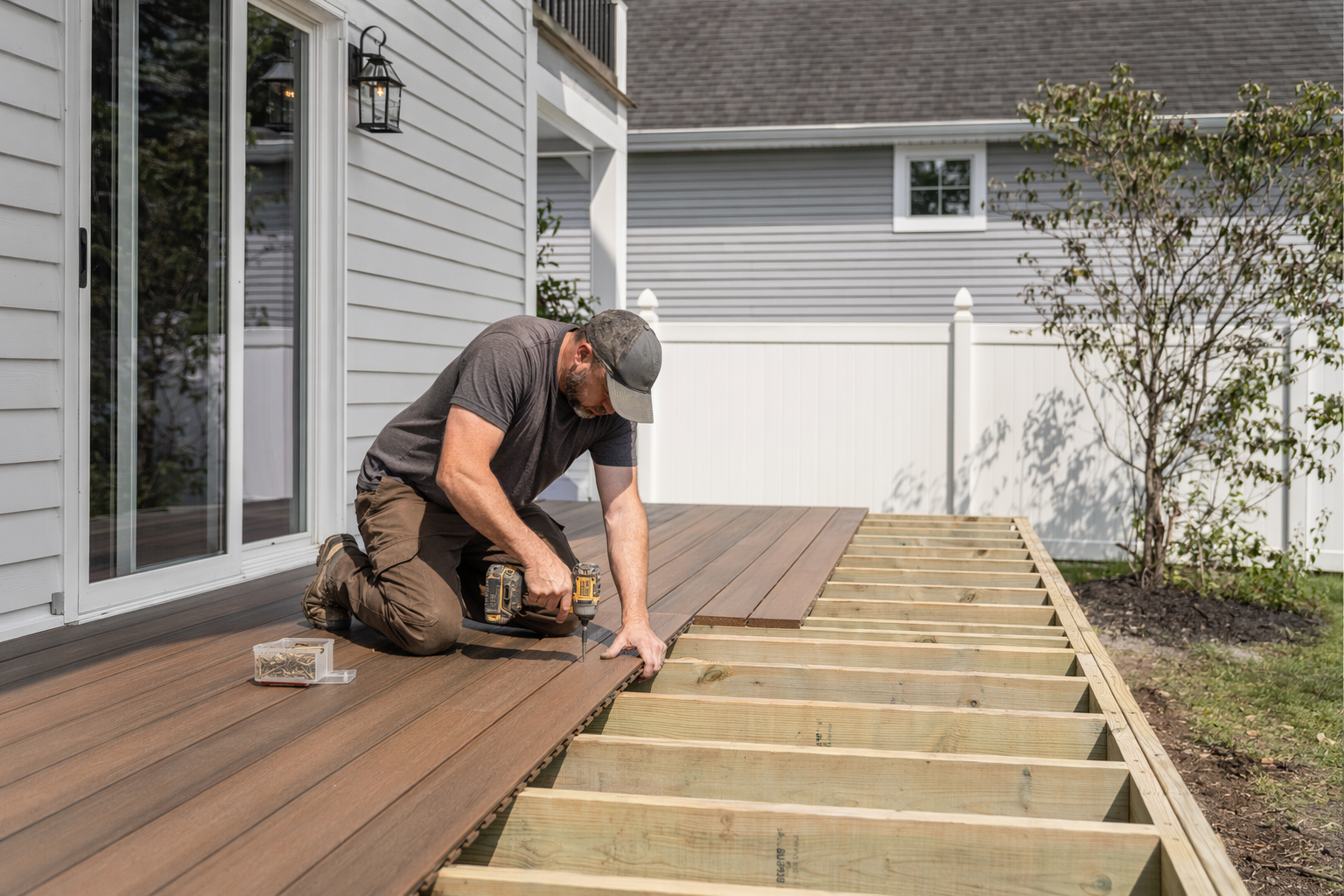
What goes into a new deck (the usual build steps)
A deck is more than boards on the ground. A solid deck starts with the structure underneath: the footings, support posts, beams, joists, and a ledger (when it attaches to the house). Then you add decking boards, stairs, and railings.
Most deck builds follow a similar sequence. Builders set or verify the layout and attachment points, then plan footings based on local requirements (including the frost line in cold areas). After that come framing, decking installation, railings, and finally steps/finishing details like flashing and proper sealing.
Your local code and site conditions matter a lot. Site prep, drainage, slopes, tree roots, soil type, and the deck height can change what’s required. That’s why it’s smart to get a written scope and price from a licensed, insured builder before any deposit.
How OutDeckly helps you get matched with the right builder
OutDeckly is a free matching and information service. We don’t build decks and we don’t pull permits. We connect you with licensed, insured deck builders near you so you can request estimates and choose who to hire.
Tell us about your project (deck size, general location, preferred materials, height, whether it attaches to your home, and any special needs like stairs or stairs to a walkout). You’ll be matched with builders who work in your area.
Then you compare written quotes and scopes directly with the builders. Before you decide, verify their license and insurance yourself, confirm what permits are needed in your city/state, and ask for a clear plan for inspection sign-off. If you want to vet your options, start with Vet a deck builder.
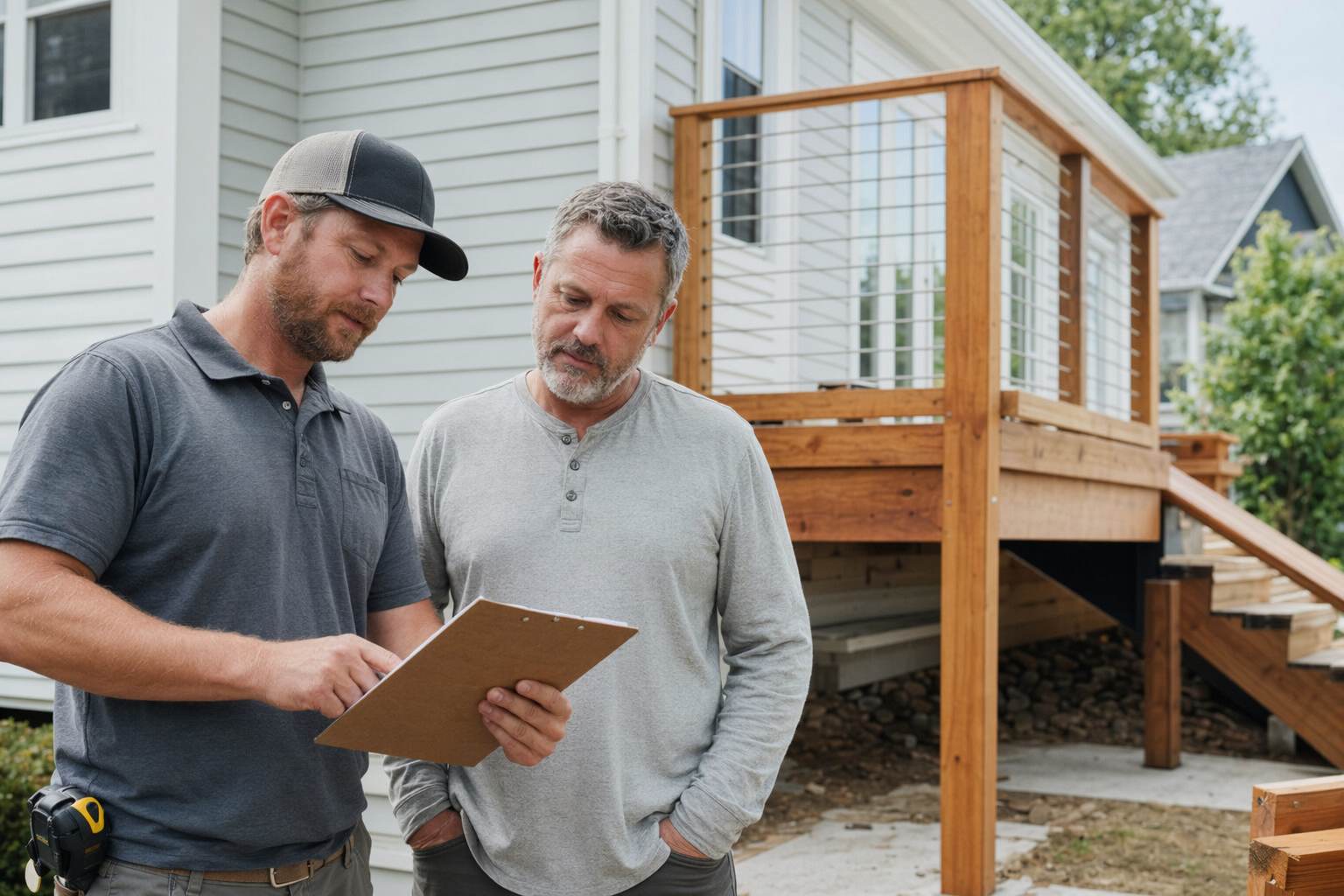
Typical deck cost range (per square foot) and what changes the price
Deck costs vary by region and by your design. A common way to budget is by square footage, but the final price depends on height, footing requirements, joist spacing, ledger details, railings, stairs, and the type of decking.
Here are broad *typical* ranges homeowners often see:
- Pressure-treated (PT) wood: often the lowest upfront, but it needs regular sealing/staining and replacement over time.
- Cedar: mid-range upfront, naturally rot-resistant but still needs maintenance.
- Composite (wood-plastic): higher upfront, usually less upkeep, and it typically resists fading and warping better.
- PVC: often the most weatherproof and highest cost, with the least maintenance.
You can also see big swings based on the structure. For example, a taller deck with more posts, stronger beams, and code-required railings will cost more than a low, small platform. Complex stairs, angled layouts, and difficult access for materials can also raise the total.
For a deeper breakdown of budgeting, see Deck costs.
Timeline: how long a new deck usually takes
Timeline depends on permitting, design complexity, material lead times, and weather. Some decks can move quickly once a site plan and permits are ready, while others take longer if footings must be adjusted for soil conditions.
In many areas, the process looks like this:
- Planning + measurements: usually a short phase after the builder reviews your site
- Permits (if required): can take days to weeks depending on your city/state
- Footings/structure: often the fastest part once materials arrive
- Decking + railings + stairs: can be several days to a couple of weeks depending on size
If you’re replacing an old deck, add time for demolition, disposal, and checking what’s left behind (especially ledger attachment points). Ask your matched builder for a simple written schedule: start date, inspection checkpoints, and when railings/stairs will be finished.
Pros and cons of common decking materials
Choosing decking material is a trade-off between upfront cost, appearance, and long-term upkeep. Frame choices also matter—PT wood frames are common because they’re often cost-effective, while composite or PVC deck boards can change installation details.
- Pressure-treated wood: Lowest upfront, but you’ll want a maintenance plan (sealing/staining, periodic cleaning, and eventual board replacement).
- Cedar: Attractive look and mid upfront cost, but it still benefits from sealing and regular care.
- Composite: More expensive at purchase, often easier to maintain, and typically a smoother long-term ownership experience.
- PVC: Very weatherproof and low maintenance, but it’s usually the priciest option.
Your builder can explain how each material affects framing, fasteners, joist requirements, and warranty terms. The best approach is to ask for options with the full scope—not just the board price.
What to ask a deck builder before you sign
A reputable builder should be comfortable answering these questions clearly. Aim for a written scope that matches what you discussed.
- Are you licensed and insured in my city/state? (Verify the license and insurance yourself.)
- What permits are required, and will you handle the permit process?
- Will you schedule the required inspections, and what must pass inspection before work continues?
- What foundation/footing approach will you use based on my soil and deck height (including frost line rules where applicable)?
- What framing details are you proposing (ledger board approach, beam size, joist spacing, support posts)?
- What railings will you install (baluster spacing, height requirements, and how you handle openings like stairs)?
- How will you build stairs safely (stringer type, tread spacing, handrail requirements where code requires)?
Also ask about cost clarity. Any estimate should explain what’s included: demo (if needed), site prep, material allowances, fasteners/hidden hangers, flashing/ledger sealing, railings, stairs, and cleanup. For a helpful checklist, see Vet a deck builder.
OutDeckly is a free service that connects you with licensed, insured builders for a new deck, so you can compare written scopes, budgets, and timelines for footings, framing, decking, railings, and stairs.