Pergolas & patio covers
Pergolas and patio covers add shade, define an outdoor space, and can make a deck or patio feel usable on more days of the year. OutDeckly connects you with licensed, insured deck builders who can quote the work, explain permit needs, and handle the install.
What pergolas and patio covers do
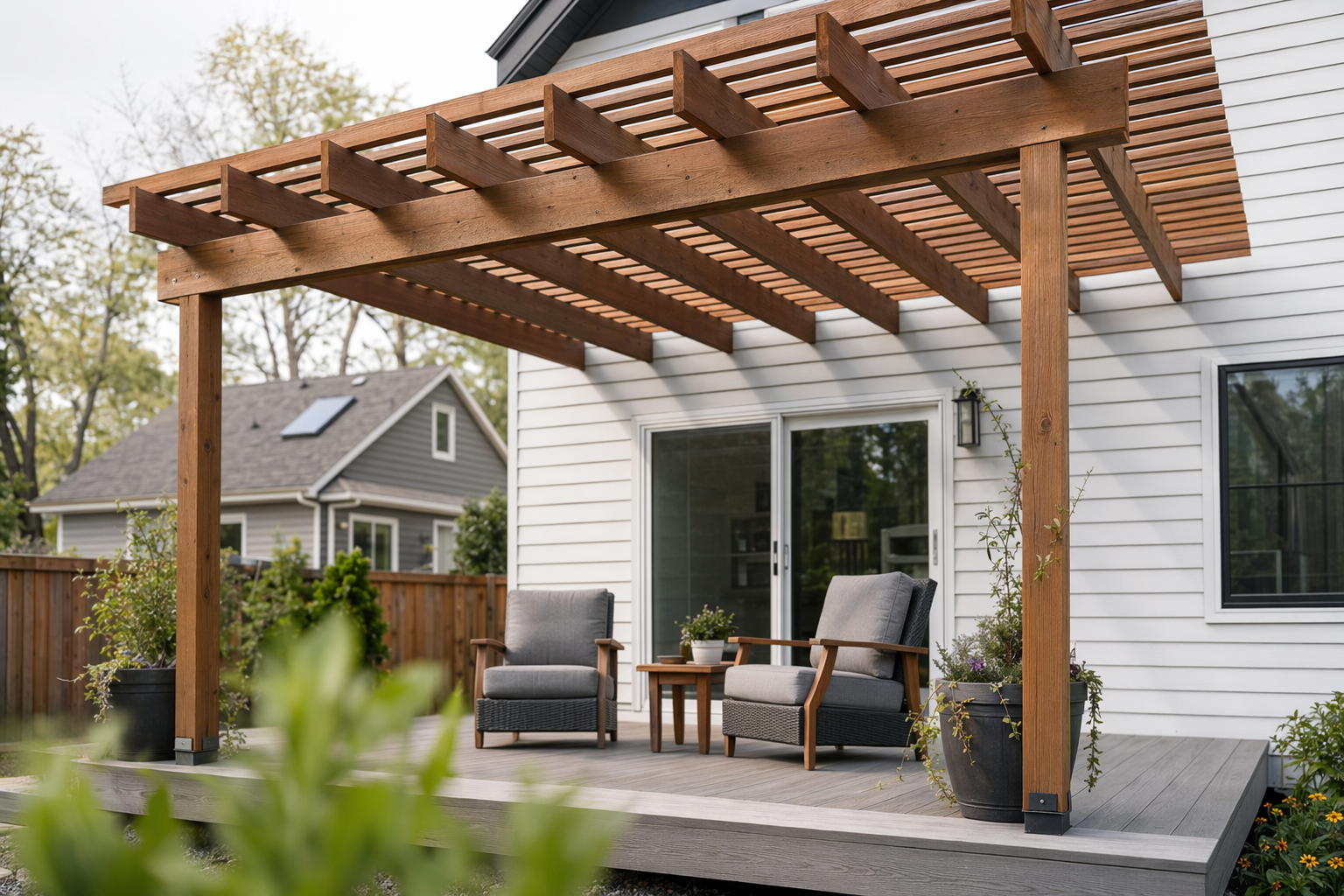
A pergola, patio cover, or other shade structure changes how a backyard gets used. Some are open-roof frames that give partial shade. Others have solid roofing that blocks more sun and rain. Many are built over a deck, patio, or seating area so the space feels finished and more comfortable.
The right choice depends on how you want to use the area. If you mainly want dappled shade and a place for vines, a pergola may fit. If you want real rain protection for furniture, grills, or an outdoor dining table, a patio cover or roof-style structure is usually the better fit.
These projects often involve posts, footings, beams, ledger connections, flashing, and proper fastening. If the structure attaches to the house or carries a roof load, the work usually gets more code review than a simple freestanding frame.
How the process usually works
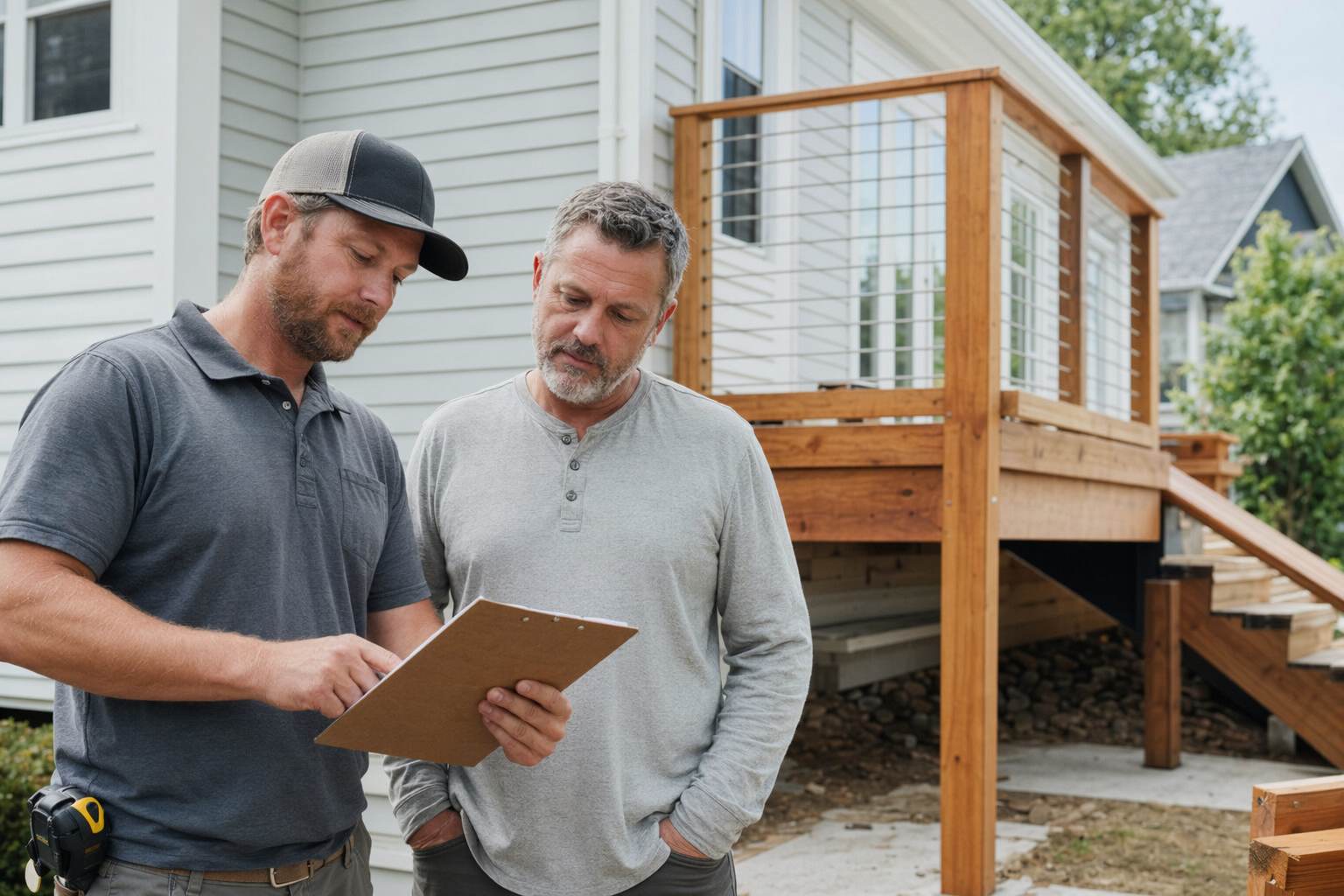
Start by figuring out the goal: more shade, weather protection, privacy, or all three. Then compare a few licensed, insured builders who have experience with outdoor structures, not just decks. The builder should measure the site, look at the existing deck or patio, check how the structure will attach, and talk through what permits may be needed.
OutDeckly helps by connecting you with local pros for estimates. You share your project details, then licensed deck builders we match you with can follow up with questions and pricing. The service is free for homeowners.
Before you sign anything, ask for the scope in writing. That should include size, materials, post locations, footing depth if needed, finish details, electrical work if any, permit responsibility, and whether the builder will handle inspections. Also verify the builder’s license and insurance yourself.
Typical cost range
Costs vary a lot, but simple pergolas are often estimated in the low thousands, while larger patio covers or custom roofed structures can run much higher. A small prefab-style pergola may start around $2,000 to $6,000 installed, while many custom wood or aluminum builds land around $6,000 to $15,000 or more. Solid patio covers, especially if they tie into the house or need more structural work, can often reach $10,000 to $30,000+.
Those are only rough ranges. Real price depends on size, material, height, footings, roof type, railings or privacy screens, stairs, flashing, electrical work, site access, and local labor rates. Permit and engineering needs can also change the number fast.
If you want a broader look at pricing factors, see /costs/. The cheapest upfront option is often pressure-treated wood, but it needs sealing and more upkeep. Cedar usually sits in the middle. Composite costs more at the start but can mean less maintenance. PVC is the most weatherproof and usually the priciest. Frame material matters too: wood is easier to repair and often cheaper upfront, while composite can reduce long-term upkeep but costs more to buy.
Timeline and what can slow it down
A straightforward pergola project may move from estimate to install in a few weeks if the builder is available and the design is simple. A more involved patio cover can take longer because of design review, permits, material ordering, and scheduling inspections.
Weather, supply delays, engineering requirements, and changes to the plan can stretch the timeline. If the project attaches to the house, affects a roofline, or needs new footings below the frost line, expect more planning before construction starts.
Ask early who is doing the permit paperwork, what inspections are needed, and whether the work pauses while waiting for approval. City and state rules vary, so don’t assume one town’s rules apply to another.
Pros, trade-offs, and what to ask before you hire
The big upside is comfort. Shade structures can make a hot deck or patio usable longer and help outdoor furniture last longer. They also add visual structure to a backyard and can make the space feel more private or finished.
The trade-off is cost and complexity. Once you add attachment details, footings, roofing, or electrical, the project starts looking more like light construction than a simple weekend build. That means the quality of the builder matters a lot.
Ask these questions before you hire:
- Are you licensed and insured in my area?
- Have you built pergolas or patio covers like this before?
- Who pulls the permit, and who meets the inspector?
- What exactly is included in the price?
- What material do you recommend for my climate, and why?
- How will the structure attach to the house or deck?
- Will you provide the scope and price in writing before any deposit?
Vet the builder before you move forward
Don’t skip the basics just because the project seems small. A shade structure still needs proper support, safe attachment, and code-compliant details. That is especially true if it is attached to an existing deck or the home.
Use our vet-a-deck-builder guide to check credentials, insurance, references, and project details. Then compare more than one estimate so you can see where the numbers and scope differ.
If you are ready to talk to local pros, get matched. OutDeckly does not build the structure itself. We simply connect homeowners with licensed, insured deck builders who can quote the work.
Pergolas and patio covers add shade and comfort, but the price, permits, and build details can change a lot, so compare licensed insured builders and get everything in writing.