Deck repair & restoration
Get matched with licensed, insured deck builders to repair or restore your deck. Learn what repairs usually cost, when replacement is safer, typical timelines, and what questions to ask before you pay a deposit.
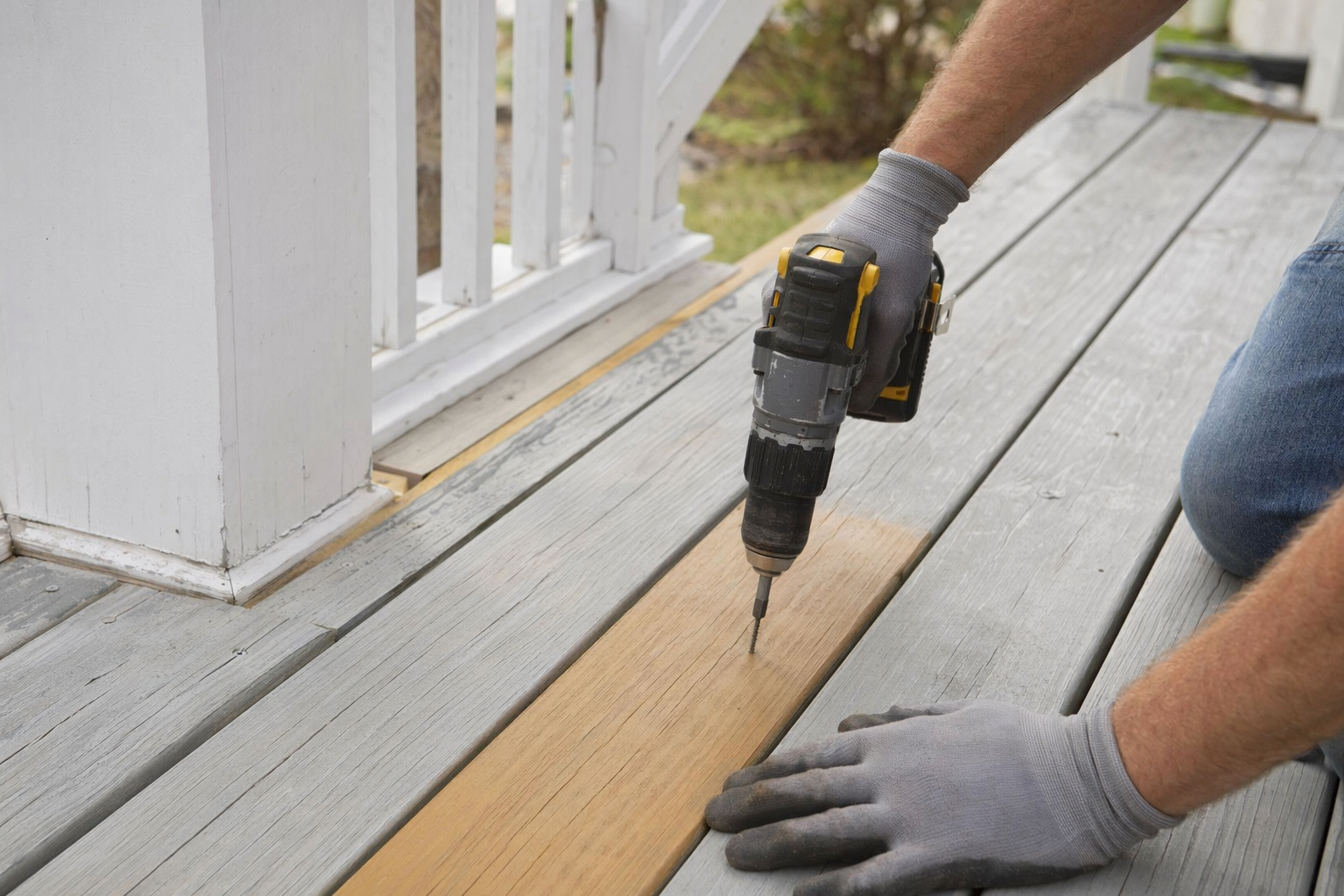
Deck repair vs. restoration vs. replacement (quick guide)
Most “deck problems” fall into a few buckets: boards that are worn, loose or damaged framing, old hardware that’s rusted, and water damage that’s worked its way deeper than you can see.
Repair and restoration usually mean you keep the existing deck structure and fix what’s failing—think replacing damaged boards, tightening hardware, upgrading flashing, sanding/restaining, and making sure water drains correctly. Replacement is safer when the structural framing or the ledger area (where the deck connects to the house) is compromised.
Before you spend money, it helps to have the builder look at the parts you can’t easily check yourself—joist ends, ledger board area, rim/beam connections, and the condition of the footings below grade. If there’s rot, loose connections, or movement, “just restain it” can turn into an expensive loop.
How OutDeckly helps (free matching, not construction)
OutDeckly is a free service that helps homeowners in the US get matched with licensed, insured deck builders near them. We don’t build decks, design structures, or pull permits—we connect you with pros so you can compare options and hire who you want.
After you share a few project details (like the deck size, the material, and what’s wrong—loose boards, sagging, staining failure, railing issues), we route your request to deck builders that handle repairs and restorations in your area. You’ll then review your options with the builders directly.
If you want a refresher on the vetting mindset, see vet-a-deck-builder.

What deck repairs & restorations typically cost (honest ranges)
Costs vary a lot by size, height, how many boards are damaged, whether footings and framing need work, railings/stairs, and how hard the site is to access. The rough ranges below are estimates and won’t replace a real on-site inspection.
Here are common “price drivers” homeowners run into:
• Replacing individual boards vs. replacing sections of decking
• Fixing joists (or replacing joists/ledger components)
• Hardware upgrades (corrosion-resistant fasteners, joist hangers, blocking)
• Railing repairs (posts, balusters, top rails)
• Water management fixes (proper flashing, gaps, drainage, sealing details)
If you’re looking for a starting point, you can also review deck costs to understand typical per-square-foot factors.
Common estimate ranges people see (not bids):
• Minor deck repairs (a few boards, fasteners, basic spot fixes): often in the low hundreds to a few thousand dollars
• Medium restoration (multiple board/rail repairs plus sanding and new stain/seal): often a few thousand to the mid range depending on scope
• Structural repair (joist/ledger/footing-related work): can jump significantly and may reach into tens of thousands if there are widespread issues
If a builder starts with a low number, ask how it accounts for hidden rot and what they include (replacement scope, hardware, flashing/waterproofing, railings, cleanup, and whether permits/inspection are part of the plan).
When repair makes sense (and when replacement is safer)
Repair/restoration often makes sense if the deck is basically sound: the framing is solid, movement is minimal, and rot is limited to a small area. Typical candidates include decks with worn decking boards, faded stain, loosened railings, or rusted hardware where the structural members are still healthy.
Replacement may be safer when there are signs that the structure has degraded. Red flags include sagging or bouncing, noticeable wobble at the ledger/connection to the house, extensive rot at joist ends, repeated staining failure that keeps coming back quickly, or damaged footings that can’t support the load as-is.
Height and code matter too. If your deck has stairs/railings that don’t meet current safety requirements, a “refresh” may not fully solve the issue. A builder should be able to explain what parts are repairable and what parts should be replaced for safety.
Timeline: what to expect from first call to finished restore
A typical path looks like this: initial scheduling, on-site inspection, a written proposal/scope, material sourcing, then work and inspection (if permits are required). For repairs and staining alone, timelines can be relatively quick. For structural work, schedules often stretch out because crews need time for demolition, frame changes, and curing/finishing.
Weather can affect staining and sealing. Many stain/seal systems require dry conditions and specific temperature/humidity ranges, and sometimes a “cure/dry time” between prep and coating.
If the builder is doing anything structural that requires permits, plan for an extra step: permit review and inspection scheduling. Ask upfront about the expected permit/inspection timeline in your city or state (rules vary).
Pros and cons of repair/restoration vs. replacement
Repair/restoration pros:
• Lower upfront cost than full replacement in many cases
• Keeps your existing footprint and layout
• Faster when damage is limited and the framing is sound
Repair/restoration cons:
• You may discover more damage once boards come up
• Short-term “looks fixed” can mask deeper structural issues
• If the deck is old or failing in multiple areas, ongoing repairs can add up
Replacement pros:
• New framing, new hardware, and a chance to address water management correctly
• Typically lower long-term hassle if done with good details
• Often easier to bring stairs/railings up to current safety expectations
Replacement cons:
• Higher initial cost
• More disruption (demo, disposal, potentially more permits)
A good builder should be able to tell you which option is safer and more cost-effective for your specific deck—not just the cheapest number.
What to ask a builder before you choose (and what to verify)
Start with requirements. Ask whether they are licensed and insured in your state, and confirm details yourself. Also ask whether permits are needed for your scope and confirm they will handle (or clearly coordinate) permits if required by local rules.
Then get specific about the scope. You want answers on what they’ll replace vs. repair, and what they’ll do to manage water. For example:
• Will you inspect joist ends, ledger connection areas, and footing condition?
• If rot is found, what’s your plan and cost range for additional replacement?
• What type of fasteners/hardware will you use (corrosion-resistant) and why?
• Will you add or improve flashing, ventilation/drainage, or sealing details?
• What brand/type of stain or sealant system are you using, and what’s the prep process?
• How many coats, and what are the dry/cure requirements?
• How will you protect plants, siding, and surrounding surfaces?
Finally, get everything in writing before any deposit: the work scope, estimated quantities, material types, timeline, payment schedule, and cleanup/disposal. If anything is unclear, ask again—before you sign.
Next step: get matched and compare options
If you’re not sure whether your deck needs repair or a bigger restoration plan, you can start by sharing your deck details and what you’re seeing. OutDeckly can connect you with licensed, insured deck builders who handle deck repair and restoration in your area.
To move faster, have ready: approximate deck size (square footage if you know it), deck material (pressure-treated wood, cedar, composite, etc.), how long it’s been since staining, what’s failing (boards, railing, sagging, leaks), and photos if possible.
When you receive proposals, use vet-a-deck-builder to sanity-check claims and confirm the work will pass inspection where applicable.
OutDeckly helps you compare licensed, insured deck builders for repair or restoration, with honest cost ranges, a clear checklist for what to ask, and guidance on when replacement is safer.