Railings & stairs
Planning deck railings and stairs? Get matched with licensed, insured deck builders who can price your options and explain what your local code requires for height, spacing, and safety.
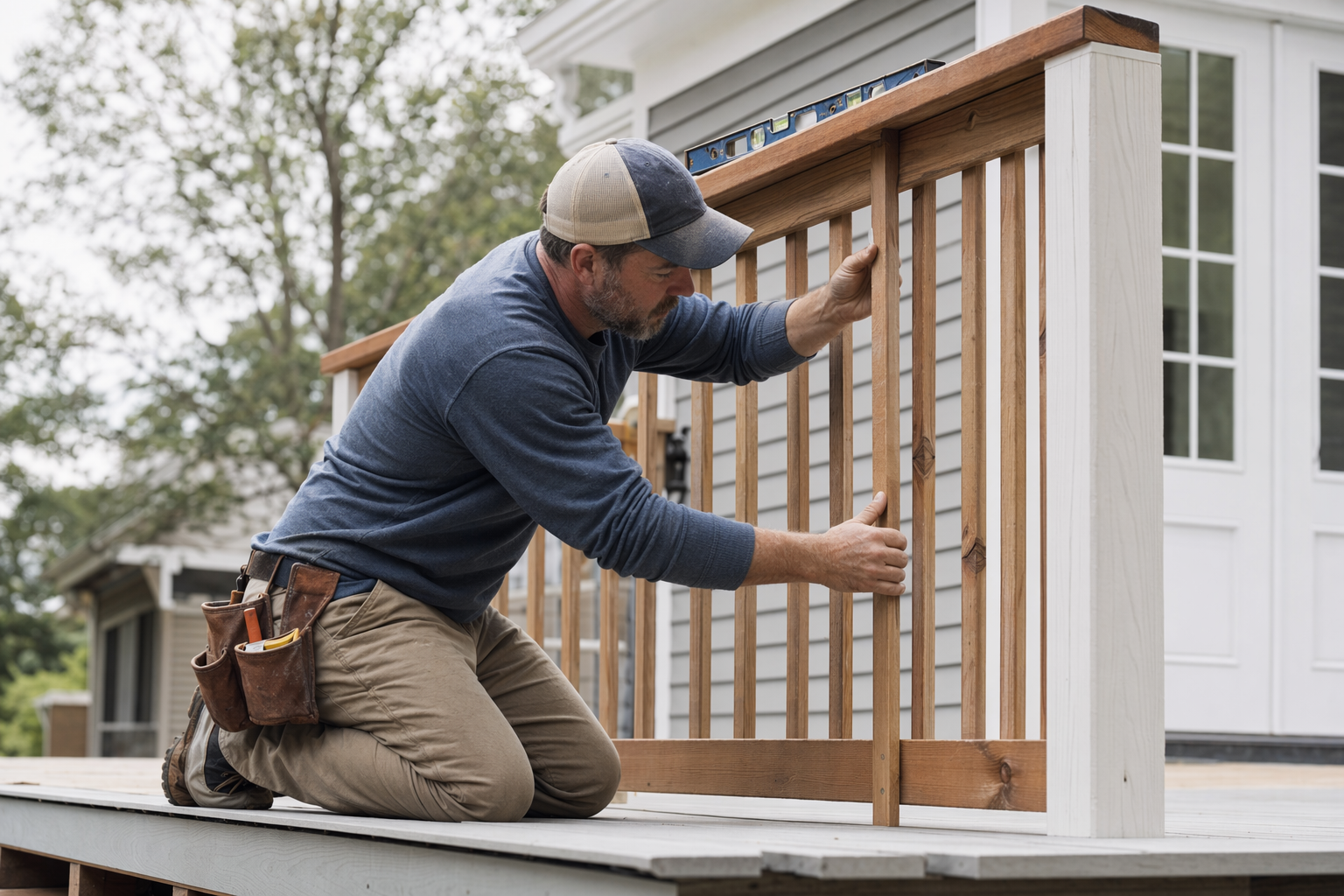
Railings & stairs: what to decide first
Railings and stairs are usually the biggest “safety and comfort” choices on a deck. They also affect cost fast—mainly because they involve code requirements, extra framing, guard posts, stairs stringers, and handrails.
Before you compare quotes, decide what you want for look and maintenance: wood, composite, metal, or cable/mesh systems. Then think about how people will move from door to yard—straight stairs, a landing, switchbacks, and whether you’ll need an ADA-friendly path (requirements vary).
If you’d like a ballpark, start with our cost guide, then use OutDeckly to get matched with licensed, insured deck builders near you to confirm scope and local code needs in writing.
Railings: common materials, trade-offs, and typical price ranges
Deck railings can be framed with wood or composite and finished with balusters (vertical rails), a top rail, and sometimes infill like cables or metal panels. The “right” choice depends on how much upkeep you want and how much weather you deal with.
Here are typical upfront ranges per linear foot for materials and systems (your final price depends on deck height, number of balusters, post spacing, length, gate/steps, and site conditions). These ranges are estimates, not quotes:
• Pressure-treated (PT) wood railings: usually the lowest upfront cost, but you’ll want sealing/staining/painting and regular checks.
• Cedar wood: mid-range upfront cost; natural beauty, but still needs staining or sealing to last.
• Composite (often wood-plastic) rail kits: higher upfront cost, usually lower upkeep (no staining), but still requires proper fastening and installation.
• Aluminum/metal: often costs more than PT, typically low maintenance; color and style options vary.
• Cable systems: premium look; cost varies based on tension system, posts, and cable type.
A builder may also adjust costs based on whether you need a “code-compliant” guard (often required when the deck surface is above a certain height). For precise numbers, ask what’s included: posts, framing, balusters/infill, top rail, brackets, and any landing/step transitions.
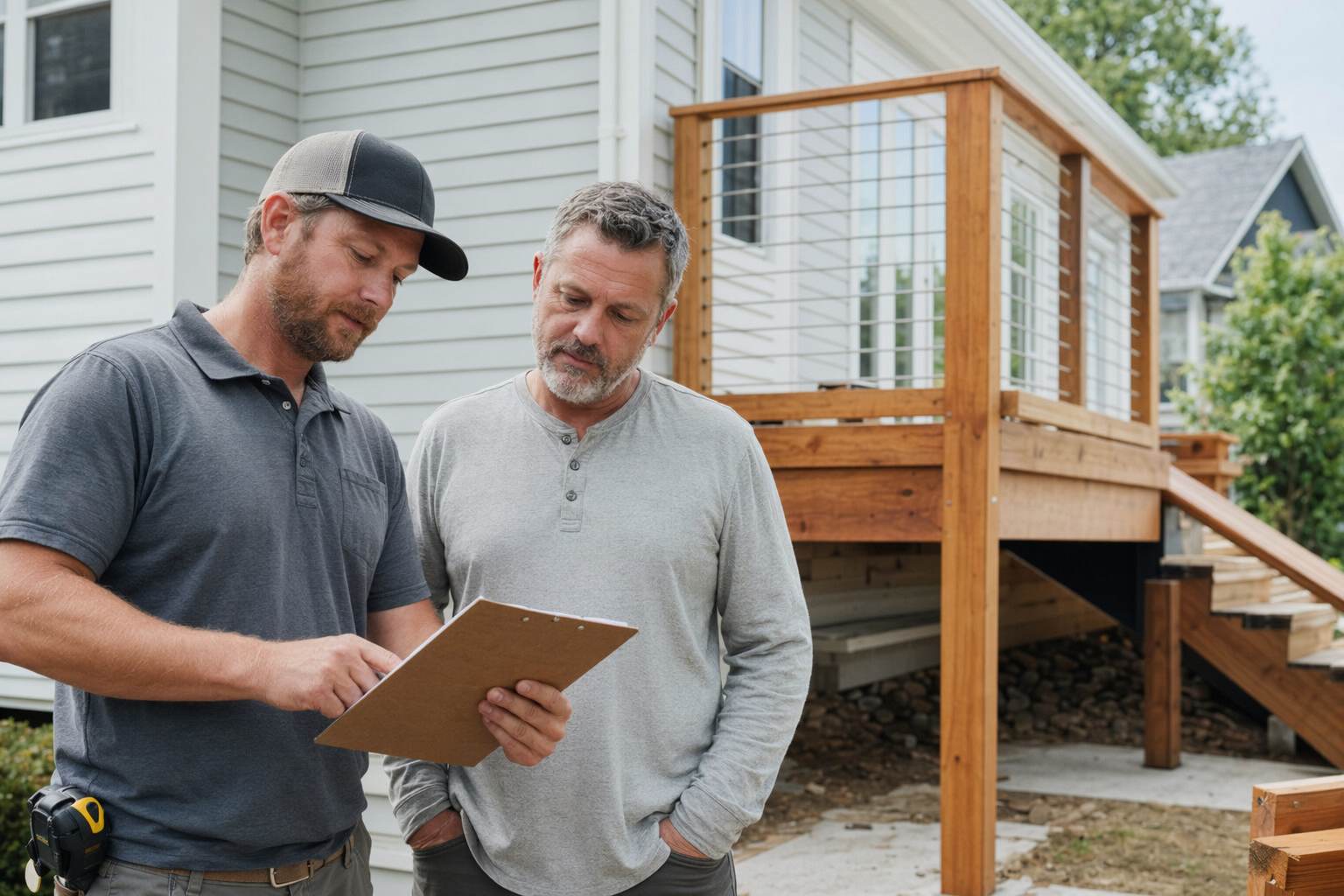
Stairs: layout options and what drives cost
Deck stairs usually cost more than people expect because they need solid framing, correct stringer cuts, safe tread depth, and handrail continuity. Cost also jumps when you add a landing or deal with slopes, tight yards, or a longer run of stairs.
Common stair layouts include straight runs (simpler, often cheaper), stairs with a mid-landing (good for width, comfort, or code/flow), and switchbacks (useful when space is limited). The builder will base stringer spacing, tread size, and handrail placement on your deck height and local code.
Typical cost estimates vary widely based on materials and configuration. For budgeting, use /costs/ as a starting point, then request a written scope that clearly lists: steps count, tread material, riser/tread approach, stringer framing, handrails, and whether any landings are required.
Code basics: railing height, baluster spacing, and safer stairs
Deck code rules vary by city/state, but many areas follow similar safety requirements. Most commonly, guards/railings are required when a deck is above a certain height, and the guard height is typically around 36 inches from the walking surface to the top of the guard (exact requirements can differ).
Spacing is a big deal. A common rule in many codes is that openings between balusters should be small enough that a 4-inch sphere cannot pass through. This affects how many balusters you need, or whether you choose cable/infill systems that meet the same intent.
Stairs also have safety requirements: handrails are often required when stairs exceed certain rises, and handrail grip sizes and heights must be set correctly. A builder should verify what your local code requires and include it in the quote. Always confirm permits are required and that the work passes inspection—OutDeckly only connects you with builders, we don’t pull permits or guarantee results.
How OutDeckly matching works (and what to ask builders)
OutDeckly is free for homeowners. You share a few project details, and we connect you with licensed, insured deck builders near you. You can compare options and hire the one you feel best about.
To get useful quotes, ask each builder the same questions:
• What railing system options do you recommend for my deck height and style?
• Does your price include posts, rails, balusters/infill, and any required blocking/framing?
• How do you meet spacing rules (e.g., baluster spacing or cable infill) for my area?
• For stairs: what layout will fit best (straight, landing, switchback), and why?
• Does your estimate include handrails, stair treads/risers, stringer framing, and any site prep?
• Will you pull permits (if required) and what inspections should I expect?
• Can you provide an itemized scope in writing before any deposit?
Then, vet-a-deck-builder style checks: verify license and insurance yourself, and don’t rely on verbal promises. If a builder won’t put the scope and pricing in writing, that’s a red flag.
Timeline: what to expect from design-to-build
A rail-and-stair project can be relatively quick or can take longer depending on permitting, material lead times, and how much structural work is needed (like adding or reinforcing stair stringers, guard framing, or support posts).
In many cases, once you approve a scope, the process looks like: site measurement and confirmation → permit step (if required) → material procurement → install → final inspection. Weather can also affect scheduling.
A realistic timeline is easier when you get a clear schedule in writing. Ask how long the builder estimates from deposit to installation, and how they handle delays for composite/metal/cable components. If you’re coordinating with new decking, confirm whether rail/stair work will be scheduled before or after deck board installation.
Pick your railing and stair style, then compare written estimates from licensed, insured builders who confirm your local code and permits—OutDeckly helps you find those builders.