What a deck contract should include
A good deck contract makes expectations crystal clear: scope, estimated price range, payment timing, permits, change orders, warranties, and what happens if there’s a delay or defect.
Start with the basics: the exact deck scope
A deck contract should clearly describe what’s being built and what materials are included. If the scope is vague, pricing and quality can drift after work starts.
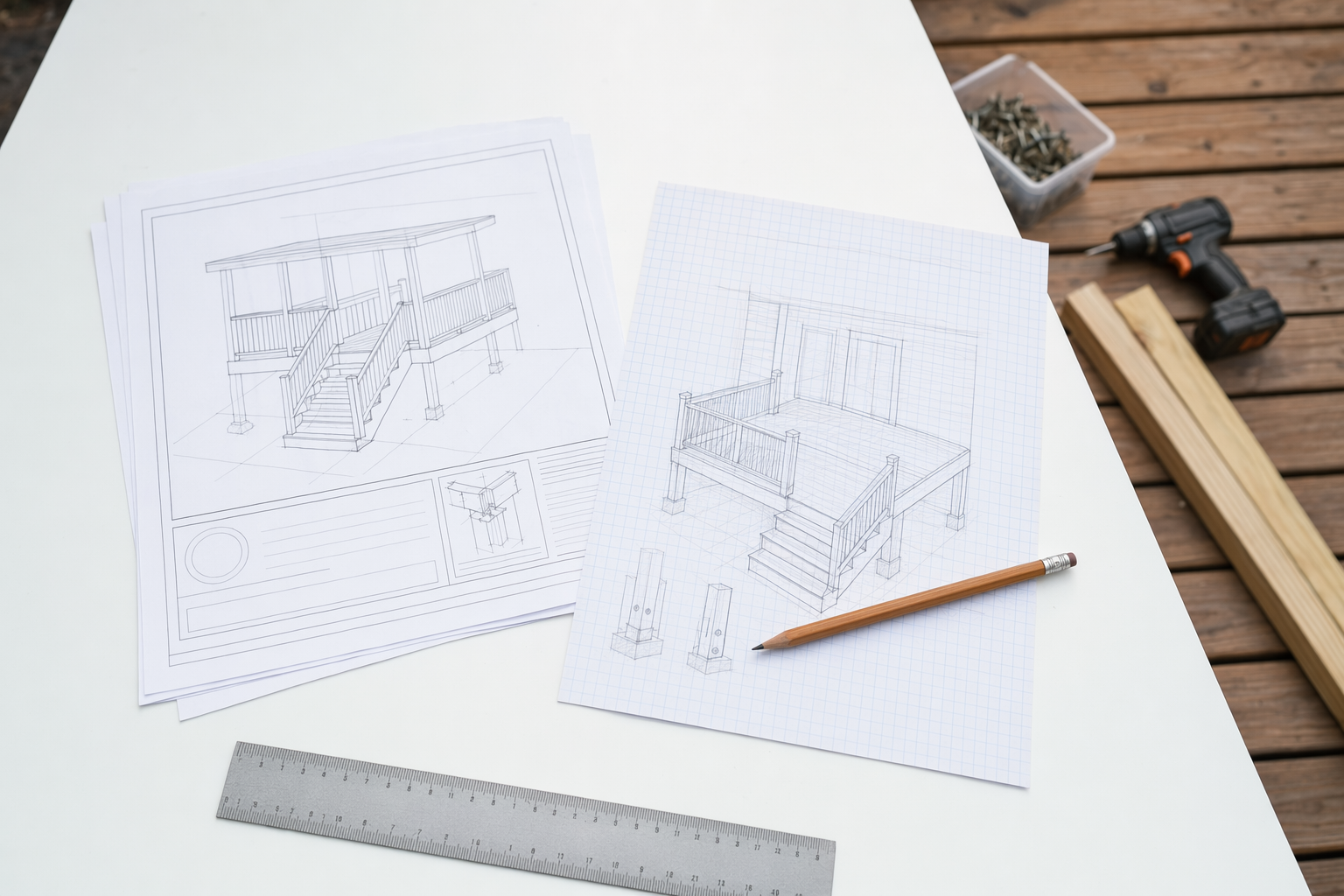
Look for details like the deck size (square feet), shape, and layout; the height from grade; the type of framing (joists, beams, ledger board); and the footings (for example, concrete piers vs. blocks). If there are stairs, railings, or a landing, those should be spelled out too—where they start, how many steps, and whether there’s a handrail.
Also check what’s *not* included. Many disputes come from “we thought that was part of it.” The contract should list exclusions such as site cleanup, hauling/disposal, electrical work, removal of old decking, or specific repairs to the house (like flashing or ledger board condition). If you want those things, they need to be explicitly added to the scope.
Materials and specs: make sure it matches your budget and your climate
Your contract should list the decking material (pressure-treated wood, cedar, composite, or PVC) and the rail/trim materials. If you chose composite or PVC, the builder should identify the brand line or at least the product category and installation method. (Composite/ PVC costs more upfront but tends to need less maintenance, while pressure-treated wood is cheaper to start but needs routine sealing.)
For the structure, ask that the contract specifies key construction items: joist spacing, beam size, ledger attachment method, and how water will be managed at the ledger (flashing/drip edge). These details matter for long-term performance and for inspection.
If the deck is above a certain height, mention that compliance will follow local code requirements—especially around guardrails and stairs. For railings, contracts should reflect the required guard height and baluster spacing limits so you don’t end up with a design that fails inspection.

Price, estimates, and payment schedule (don’t sign without a timeline)
Even if you see a single number, treat deck “prices” as an estimate or range unless the contract clearly states what’s fixed. Your contract should show the total cost and break it into parts where possible: materials, labor, footings/framing, railings, stairs, and any site work.
Payment timing should connect to milestones, not just “pay me and I’ll start.” Typical structures include an initial deposit to schedule materials, payments during construction phases (for example after footings/ framing), and a final payment only after punch list items are completed. The final payment should also be tied to inspection passing and completion of agreed clean-up.
Add a clear delivery plan for materials (especially composite/PVC, which can take longer). If weather or lead times are expected, the contract should explain how schedule adjustments will be handled and what you can reasonably expect.
Permits, inspections, and responsibility: who pulls what (and who pays if it changes)?
Deck permit rules vary by city and state, and they may depend on deck height, size, attachment method, and whether railings/stairs are included. Your contract should clearly say who will obtain the required building permits and schedule inspections.
Ideally, the contract names the builder as the party responsible for pulling permits and having the work inspected before covering concealed areas. But whichever party is responsible, you should be able to verify the permit status yourself (online or through the local permit office).
The contract should also address what happens if permit requirements change. For example, if the jurisdiction requires different guardrail height, different footings depth (often related to frost line), or additional structural bracing, you want that spelled out as a change order process—not a surprise cost added at the end.
Change orders: how changes happen, how they’re priced, and how they’re documented
A change order clause is one of the most protective sections of a deck contract. It should define what counts as a change (scope, materials, deck location, rail style, stair layout, additional site work) and how you approve it.
A good policy requires written approval before work proceeds. For pricing, the contract should say how adjustments will be calculated—commonly based on documented labor hours and material costs, with a markup or rate *for that builder’s labor*—or based on an agreed unit price list. If you don’t see a clear method, ask.
Change orders should also address schedule impact. If a change delays lead times or inspection approvals, that should affect the timeline in writing. This helps prevent “it’s late because of your decision” disagreements.
Warranties, workmanship promises, and what “final completion” means
Your contract should state what warranty coverage you get and what it applies to (materials vs. workmanship). For deck builds, workmanship-related issues—like loose fasteners, improper flashing leading to leaks, framing movement, or railing defects—should have a time window. Material warranties depend on the decking product and installation.
Warranties should also clarify how to request service. Look for details like the warranty term length, what qualifies as a defect, what doesn’t (for example normal wear or improper maintenance), and how repairs are scheduled.
Finally, define “substantial completion” vs. “final completion.” A common problem is paying the final amount after only partial cleanup. The contract should include a punch list process—what you review, what the builder fixes, and when you consider the job fully done.
Insurance, licensing, and the dispute/problem-solving process
Before anyone starts, confirm that the deck builder is licensed and insured (and that coverage is active for the project period). The contract should list the builder’s license number and insurance details (general liability at minimum; workers’ compensation is also common).
Your contract should include a clear process for handling problems: how you notify the builder, expected response time, and how disputes are resolved. Many contracts include mediation or arbitration clauses, or they outline where disputes can be filed.
Also check the termination clause: what happens if you cancel after work begins, what the builder can charge for completed or purchased items, and how deposits are handled. A fair contract protects both sides, and it should spell out the steps so cancellation isn’t a surprise.
Keep these “small but important” clauses in the contract
These details are easy to miss but help a lot if something goes wrong:
- Site conditions: how unknown issues are handled (tree roots, slope, soil softness, drainage concerns, or inaccessible areas). The scope should explain what inspections or site evaluations happen before construction starts.
- Cleanup and waste: who hauls away debris, how often the job site is cleaned, and the expected final cleanup.
- Safety and access: where materials are stored, how neighbors are handled, and any restrictions around property lines.
- Utilities: if the deck requires work near existing lines, the contract should address how locating and protection will happen.
For more on budgeting and typical ranges, use Deck costs and what affects price.
Before you hire a deck builder, make sure your contract spells out the full scope, estimated costs and milestone payments, who handles permits and inspections, how change orders work, and what warranties and problem-solving look like.