Deck Financing — Questions to Ask
Thinking about financing your new deck? This guide lists the questions to ask before you sign anything—so you understand total cost, payment terms, permits, and what your licensed, insured builder will (and won’t) handle.
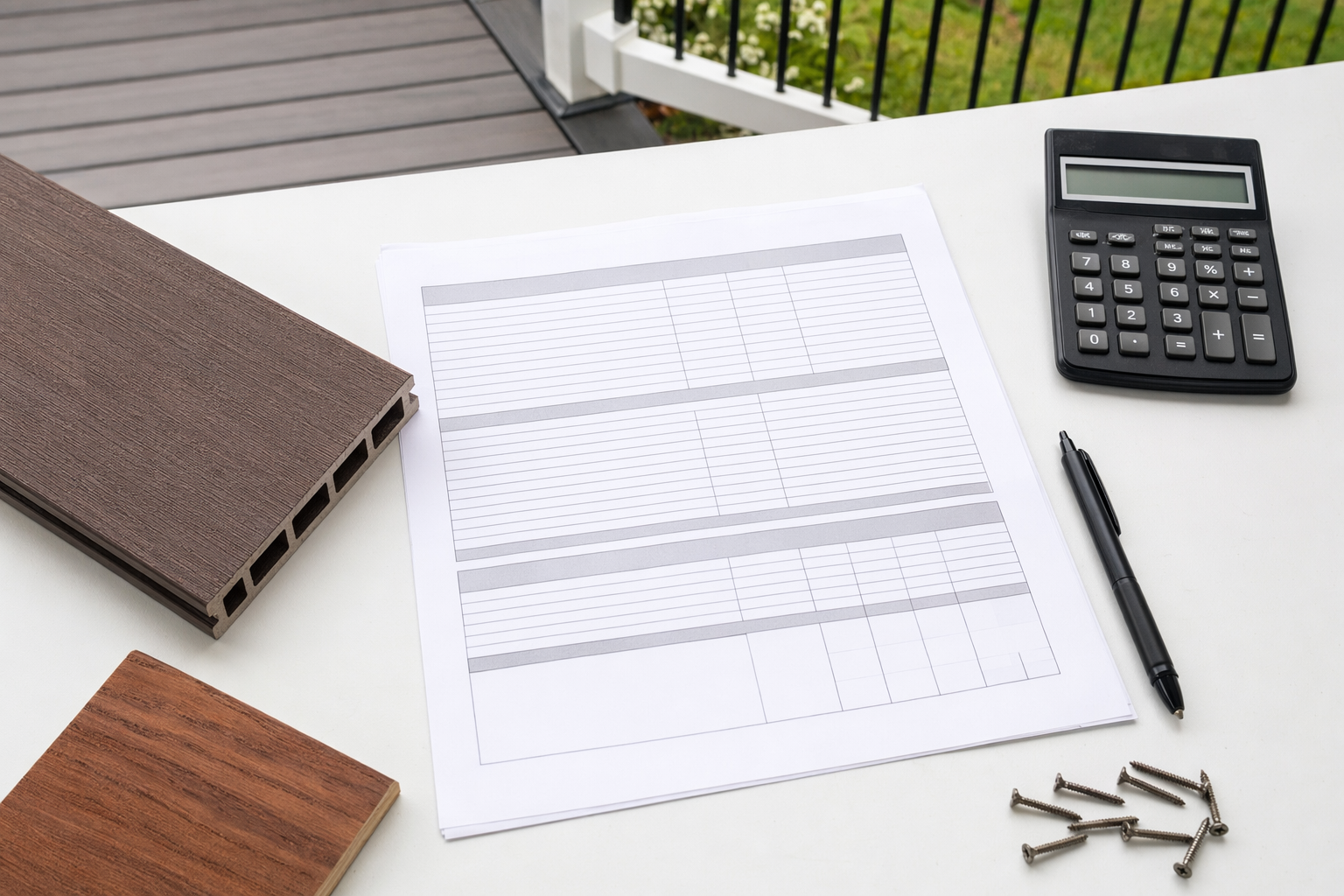
Start with the basics: what “deck financing” actually covers
Deck financing usually means you’re funding the project through a lender or a payment plan—not that the deck contractor is providing special “free money.” The best deals depend on your loan terms and the total project scope (size, materials, railings, stairs, and site work).
Before you compare offers, clarify the project first. Ask your deck builder for the full scope of work in writing: deck size (square feet), material choice (pressure-treated, cedar, composite, PVC), railing type, stairs, lighting, and whether any demo/removal is included.
OutDeckly is a free matching service that connects homeowners with licensed, insured deck builders near them. We don’t pull permits or build decks, and we can’t quote your price—so the questions below help you vet offers and stay in control of the details.
The “total cost” questions you should ask before agreeing to financing
Financing can look affordable each month, but the real story is the total cost over time. Ask for the full payment breakdown in plain language.
Make sure you understand whether your monthly payment includes taxes/fees (some lending products do, some don’t), and whether there are costs for processing, origination, or early payoff.
Also ask how changes work. If you upgrade materials (like switching from pressure-treated to composite) after approval, will it change your loan amount or your term?
Use these questions to get to the numbers that matter.

Payment schedule: when money moves and what should happen before you pay
A solid deck project is built in phases: site prep/footings, framing (joists/ledger/frame), decking boards, and then railings/stairs/finishing. Ask how the builder’s billing lines up with those phases.
You want a schedule that makes sense and protects you. For example, it’s reasonable to expect payments to tie to work completed, not to promises. Also ask what happens if weather delays certain steps.
If you’re using financing, confirm whether the lender pays the builder in one lump sum or through draws. Ask whether the builder can request funds only after inspections or key milestones.
Bring these questions to the builder and the lender—because timing matters almost as much as the price.
Permits, inspections, and code basics (don’t finance without verifying this)
Deck rules vary by city and state. Most areas require permits for things like deck height changes, structural work, footings, and railings. Inspections are also common—especially for footings/foundation and framing.
Ask your licensed, insured deck builder which permits are required for your address and who pulls them. Then ask how inspections are handled.
Financing documents won’t replace local code requirements. If the project isn’t permitted or fails inspection, you can lose time, face rework costs, and run into issues with resale or insurance later.
Before you finalize financing, ask the questions below and make sure you get clear answers in writing.
Builder vetting questions that directly affect financing risk
Financing is easiest to manage when the project timeline and quality are predictable. Ask about materials, durability, and what’s included—because those details change both your experience and the project cost.
If you’re considering pressure-treated wood vs. cedar vs. composite, ask about maintenance. Pressure-treated decks are usually cheaper upfront but need sealing/staining and ongoing care; cedar is often mid-range and still needs maintenance; composite costs more upfront but generally needs less upkeep. PVC is usually the most weatherproof option and tends to be the priciest.
Also ask about railings and stairs. Rail design affects code compliance and can add cost, especially for curved layouts, glass panels, or complex stairs.
Finally, confirm licensing and insurance. A licensed, insured builder protects you if something goes wrong—crucial when you’re financing a bigger project.
Questions about deposits, contracts, and what’s “change order” vs. included scope
Before any financing starts, focus on the contract. Ask for the full written scope and confirm what is included (and what isn’t). Deck projects often change due to site conditions—like uneven ground, unexpected soil, or decisions about railings.
Ask how deposits work. A deposit should be tied to real prep work and should not be so large that you feel exposed if the timeline slips. Then ask how you approve any extra charges.
Get clarity on change orders: whether they require your written approval, whether labor/material price changes are documented, and how long the builder typically takes to respond.
These are practical questions that prevent surprises later.
How to compare financing offers without getting lost in jargon
Deal comparisons get tricky when lenders present terms in different ways. Use a simple checklist so you can compare apples to apples.
First, compare the total cost over the full term, not just the monthly payment. Then compare the time it takes to start payments and whether there’s any deferred interest or balloon payment.
Next, make sure the loan amount matches the scope you asked for. If one option is based on an earlier estimate while your final scope changes, the payment plan may not match your real project.
If you’re not sure what to ask, start by requesting a detailed written scope from licensed, insured builders you’re comparing. You can also review general deck pricing factors here: Deck costs and price ranges.
Ask builders and lenders for the full scope, permit/inspection plan, and total loan cost in writing—so your monthly payments match your real deck project.