Deck vs Patio — Which Is Right for You?
A deck and a patio can both create usable outdoor space, but they sit differently, cost differently, and fit different yards. If you’re deciding which one makes more sense, start with your lot, your budget, and how much upkeep you want.
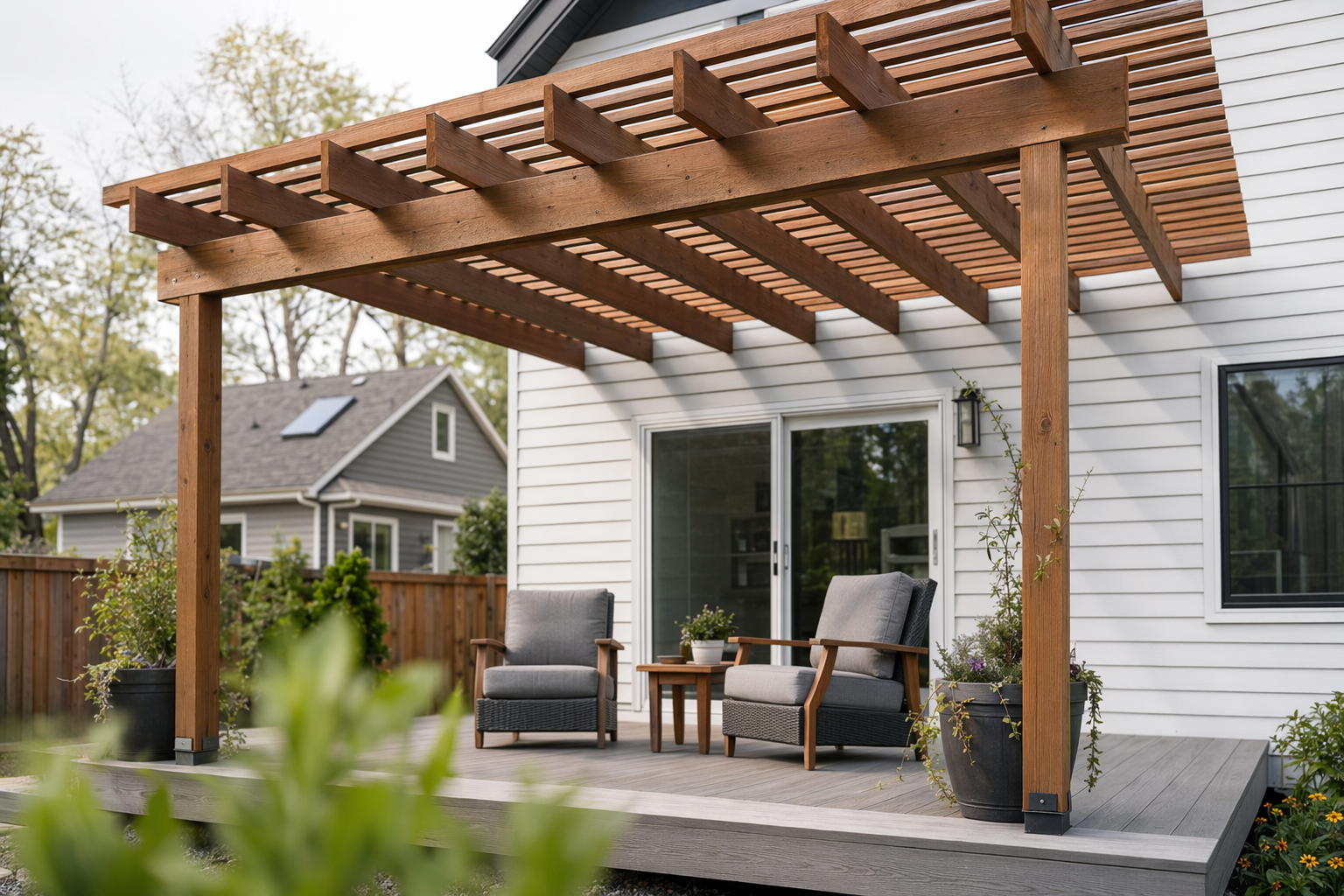
The short version
A patio is a ground-level outdoor surface, usually made from concrete, pavers, or stone. A deck is raised above the ground and built from wood or composite over a framed structure.
If your yard is flat and you want the lowest typical upfront cost, a patio often wins. If your house sits above the yard, the ground slopes, or you want a level outdoor space that meets a door without a big step down, a deck may fit better.
Both can work well. The right choice depends less on style and more on site conditions, drainage, height, and what the licensed, insured deck builders or patio pros say after looking at the property.
Cost: what usually drives the price
For many homeowners, a patio costs less per square foot than a deck. A basic concrete patio is often the lowest-cost option, while paver and natural stone patios usually cost more because the materials and labor take longer.
A deck’s price is usually higher because you are paying for framing, footings, posts, joists, ledger attachment, stairs, railings, and sometimes engineering. A small low deck may be fairly simple, but a tall deck with multiple levels, railings, and a long stair run can cost much more.
These are only typical ranges, not quotes. Real price depends on the size, material, height, footings, railings, stairs, site conditions, and your area. If you want a better idea of the numbers, see deck cost basics.

Maintenance and lifespan
A patio usually needs less day-to-day upkeep than a wood deck. Concrete can stain and crack over time, and pavers can shift or grow weeds in the joints, but there is no framing to reseal every year.
A wood deck usually needs more maintenance. Pressure-treated lumber needs regular sealing or staining if you want it to last and look decent. Cedar also benefits from upkeep. Composite and PVC decks reduce the sealing work, but they still need cleaning and good installation.
If you do not want to spend weekends on sanding, staining, and checking for soft spots, a patio or a composite/PVC deck may be the better fit. If you are okay with maintenance and want the lower upfront material cost, wood can still make sense.
Yard shape, height, and drainage matter a lot
A flat yard makes patio planning easier. A raised back door, a steep slope, or a basement walkout often makes a deck the more practical choice. If the finished walking surface has to sit several feet above the ground, a deck can solve the height problem cleanly.
Drainage is a big deal either way. A patio needs a base that drains and stays stable. A deck needs proper footings, posts, and framing that suit the soil and frost line. Local code may require specific footing depth, baluster spacing, stair details, or guardrail height.
This is one reason it helps to compare quotes from licensed, insured deck builders instead of guessing from online photos. The right builder should explain what your site needs, what permits are likely required, and what inspection steps apply in your city or state. If you are ready to compare, get matched with builders.
Style, comfort, and how you plan to use it
A patio often feels more grounded and connected to the yard. It can be a good fit for grilling, dining, fire pits, and simple seating areas. It also tends to work well when you want a wide open shape with no stairs.
A deck can give you a better view, cleaner access from the house, and a more defined outdoor room. If you want to step out from the kitchen or main living area onto a level surface, a deck can make that transition easier.
Think about daily use, not just appearance. If the space is mostly for a table and chairs on flat ground, a patio may be enough. If you want to solve a height change or create an elevated hangout spot, a deck may be the better investment.
How to decide without wasting money
Start with three questions: Is the yard flat? How high is the door above the ground? And how much upkeep do you want to live with? Those three answers usually point you in the right direction.
Then ask for written scope and price from licensed, insured deck builders or patio contractors. Make sure they spell out materials, size, railings, stairs, footings, permits, cleanup, and the inspection process before you pay a deposit. Verify the license and insurance yourself.
OutDeckly is a free matching service. We connect homeowners with licensed, insured deck builders near them so they can compare options and choose who to hire. Builders pay us a flat fee to be introduced, and the service is free for you. If you want help checking builder questions, use our vetting guide.
Patios usually cost less and need less upkeep, while decks are often better for raised doors, slopes, and better views.