Ground-Level vs Raised Deck
Choosing ground-level or raised deck affects cost, maintenance, drainage, and how long it lasts. Use this guide to understand the trade-offs, what builders consider, and how to compare quotes from the licensed deck builders we connect you with.
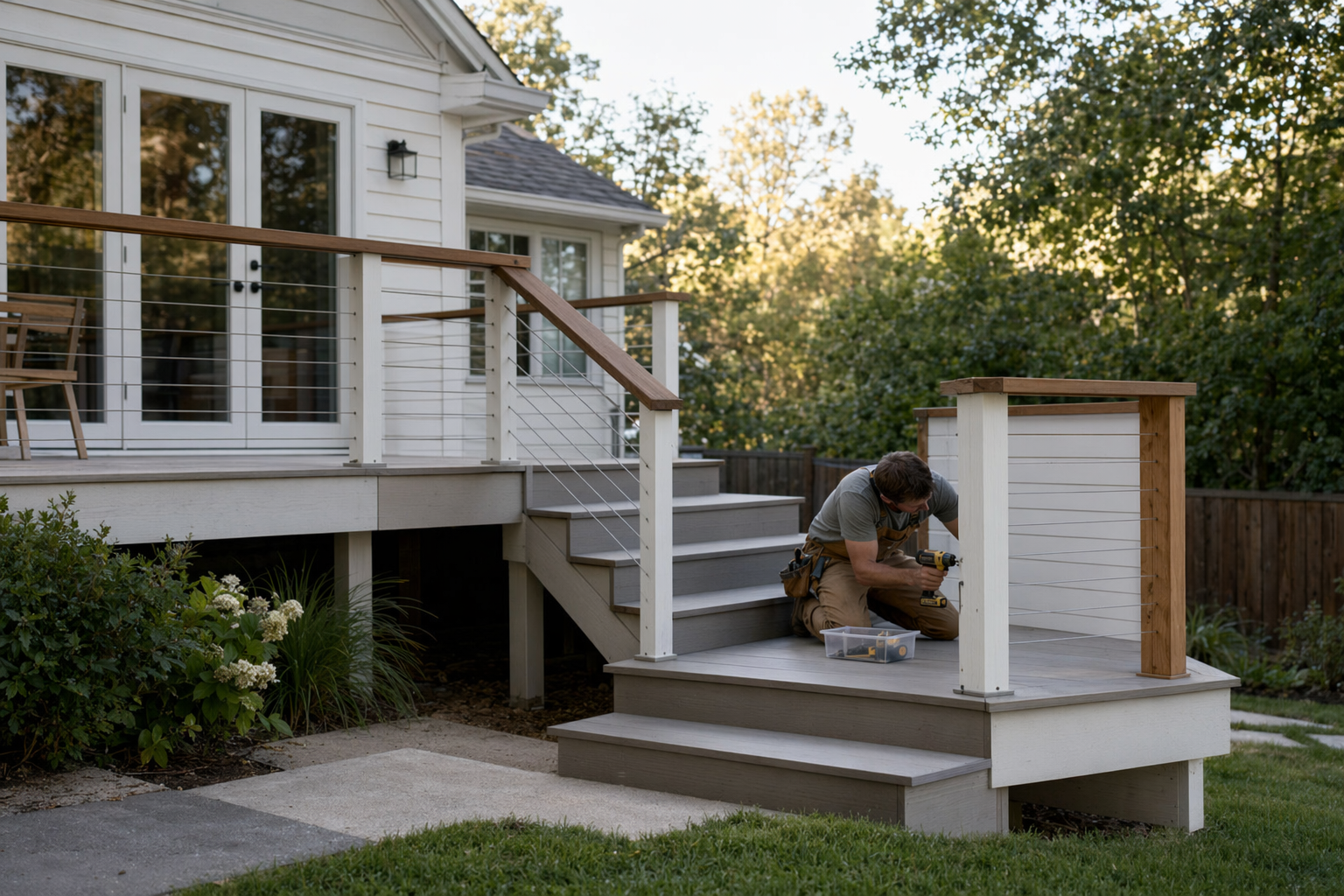
What’s the difference: ground-level vs raised deck?
A ground-level deck sits near grade (the soil level). Often, it’s low enough that you may only need short steps or even no stairs—depending on the height of your doorway and yard.
A raised deck is elevated above the ground. It needs deeper planning for support (often taller posts and stronger footings), plus railings/stairs if the deck surface is high enough. Raised decks are common when you want to access a higher door or create a more “outdoor living” look.
Either option can be safe and solid, but the biggest differences show up in support structure, drainage, and how the deck ties into your home.
Quick pros and cons (so you can choose faster)
Ground-level decks are usually simpler and cheaper to build because they often need less height clearance, fewer stairs, and shorter guard needs. They also tend to be easier to maintain from the side, since you’re not working up high.
Raised decks typically cost more because the structure has to handle more load and height. But they can feel more open, bring you above yard mud and puddles, and work better for homes with higher entrances.
Neither choice is automatically “better.” The right pick depends on your doorway height, yard slope/drainage, local code, and how the builder plans the footings, ledger, and joists.

Cost reality: what usually changes in the estimate
Deck pricing is highly site-specific. Any numbers you see online are only typical ranges, not bids. Your final price usually depends on deck size (sq ft), materials (pressure-treated, cedar, composite, PVC), height, footings, railings, stairs, and site conditions like slope or rocky ground.
In general, ground-level decks often cost less upfront because they require less height work and fewer structural “extras” like taller framing or more extensive stair/railing systems. Raised decks usually add cost for deeper/different footings, more vertical framing, and (commonly) more railing and stair complexity.
If you want a clearer estimate before you contact builders, see Deck costs: what affects your price.
Structure and safety: what builders consider (the part homeowners can’t always see)
For a ground-level deck, builders still need solid support, drainage planning, and proper framing. Even if the deck is low, the footings and beams must sit on stable ground and be set to appropriate depth for frost (where applicable). A common concern is water trapped against the structure or decking staying damp, which can shorten the lifespan of the frame.
For a raised deck, the structure has to resist higher loads and movement. Footings and posts matter a lot—especially in colder regions where frost depth can affect how deep you must go. Builders also pay close attention to the ledger board connection to the house (when the deck is ledger-attached), including flashing and water management.
If you’re comparing builders, ask how they plan for:
- Footings depth and spacing
- Beam size and joist span
- Ledger board details (if applicable)
- Guard/rail requirements based on height
- Stair layout and code-required rise/run
For practical tips on what to ask and how to verify a builder, use How to vet a deck builder.
Drainage, grading, and long-term maintenance
Deck lifespan often comes down to water management. Ground-level decks can struggle if the soil stays wet, if mulch blocks airflow, or if water runoff repeatedly hits the deck framing. If the deck sits close to grade, you may need extra attention to airflow under the deck and keeping vegetation from trapping moisture.
Raised decks typically let water drain away more easily from the framing, and they can keep the deck surface further from ground splash and standing water. But raised decks introduce their own maintenance needs: rails, stairs, and the underside of the deck are exposed to weather and will still need periodic cleaning and inspection.
Material choice changes maintenance too. Pressure-treated wood is usually the cheapest upfront but needs regular sealing/staining to help it last. Cedar is mid-priced and often favored for its look, but it still benefits from proper finishing. Composite costs more upfront and generally needs less upkeep, but it still must be installed correctly for best performance. PVC is usually the most weather-resistant and priciest, with a simpler maintenance routine.
When you review quotes, don’t just compare total price—compare what’s included: railings, stairs, joist/framing material, surface material, and any water-management details.
Permits and code: why your deck height matters
Rules vary by city and state, but deck height often affects whether you need permits, what railing height/spacing is required, and when stairs must be added. Even a small height change can change what code expects for guards.
Raised decks are more likely to trigger permit review because they are higher and can create greater risk without guards and properly built stairs. Ground-level decks may still need permits depending on size, attachments to the house, and local rules.
Before anyone starts work, confirm that the licensed deck builder will pull the correct permits and that the work will pass inspection. OutDeckly connects you with licensed, insured deck builders near you, but you should verify the license and insurance yourself and get the full scope and price in writing before any deposit. If you want to start that process, go to Get matched to deck builders.
Ground-level decks are usually simpler and cheaper, while raised decks cost more but keep you above yard water and can match higher door heights—either way, confirm permits, hire licensed/insured builders, and compare written scopes and material choices.