How to Read and Compare Deck Quotes
Deck quotes can look confusing fast. This guide shows you what to look for in a bid, how to compare builder proposals fairly, and what questions to ask before you hire.
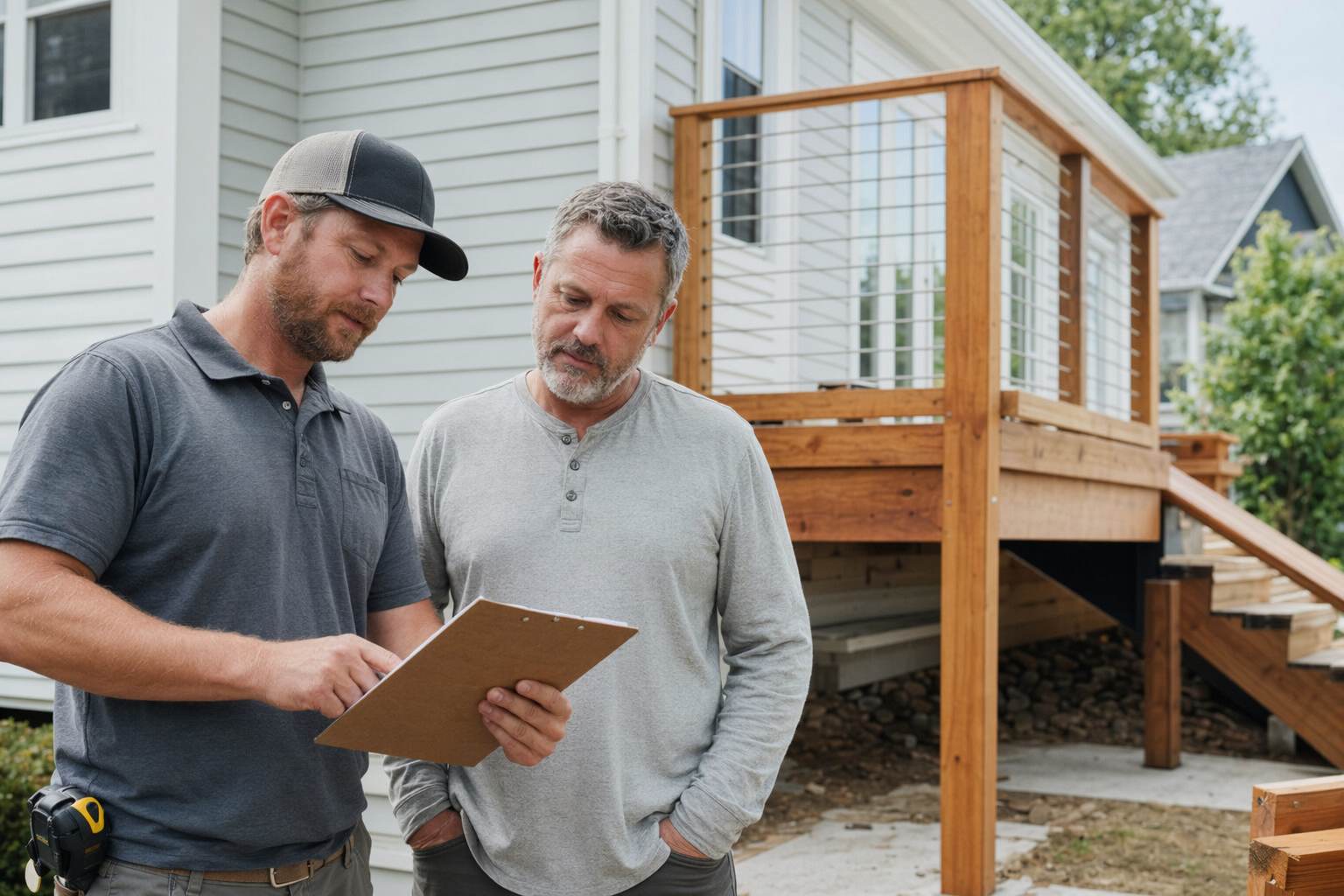
Start with what you’re actually buying (not the total price)
A deck “quote” is really a package of choices: size, height, materials, footings, structure, railings, stairs, and site work. Two quotes with the same total price can be very different in quality and long-term upkeep.
Before you compare numbers, confirm the scope is matching. If one quote includes stairs, a gate, or different railing style—and the other doesn’t—you’re not comparing apples to apples.
If you want, you can use OutDeckly to get matched with licensed, insured deck builders near you so you can request matching scopes and compare like-for-like.
Use a simple quote checklist (what should be itemized)
The best quotes are detailed. Look for line items that show what the builder is pricing—not just a lump sum. Helpful sections include the deck platform, framing, footings, ledger attachment, joists, decking boards, railings, stairs, and trim.
Pay extra attention to the parts that control safety and durability:
- Footings and foundation details (depth/diameter, concrete piers vs. other systems)
- Ledger board attachment method (and flashing plan if the deck attaches to the house)
- Joist size/spacing and how beams are supported
- Railings (height, number of rails, baluster spacing)
If a quote skips these details, ask for them. A builder who can’t clearly explain the structure is a warning sign, especially for decks that are elevated or attached to the home.

Compare structural assumptions: height, footings, and site conditions
Decks change cost quickly when height goes up. A higher deck usually needs deeper/stronger footings, more robust framing, and often different stair geometry. Confirm the stated height from grade to the deck surface and whether the builder used the right local requirements for your area (code varies by city/state).
Site conditions matter too. Builders may need to deal with slope, existing tree roots, drainage issues, or areas with poor soil. The same deck plan on firm soil vs. rocky or clay-heavy soil often prices differently.
A quote should mention how it will handle these conditions—without guessing. If you see vague wording like “allowance for site work,” ask what triggers the change and what’s included in that allowance.
Materials: understand the real trade-offs (and the cost per sq. ft. ranges)
Cost-per-square-foot can be useful only if the material and build style match. Typical ranges vary by region, but here’s the honest way to think about them:
Pressure-treated wood is usually cheapest upfront. It typically needs sealing/staining and regular maintenance to stay looking good and resist weathering.
Cedar often costs more than pressure-treated but can be a popular middle option; it still needs sealing/protection and periodic upkeep.
Composite (and similar low-maintenance materials) costs more upfront, but many homeowners choose it for less routine maintenance and better long-term appearance.
PVC is usually the most weatherproof and tends to be the priciest. Even then, you still want correct framing, proper ventilation, and good installation details.
For a deeper breakdown of typical price drivers, see deck costs and what changes the price.
Railings, stairs, and “extras” that change the price
Railings and stairs are where many quotes drift. Ask whether the quote includes:
- Railing type (wood vs. cable vs. composite, etc.)
- Rail height and infill (balusters/cable layout)
- Stair count, landing size, and handrails
- Treated vs. non-treated stair stringers
Also check for common extras: skirting/trim, lighting, bench seating, planter boxes, privacy screens, and stairs to the yard. If one quote includes these and the other doesn’t, totals won’t be comparable.
Important: confirm the plan matches your intended use. A deck with a hot tub, a large dining area, or frequent crowd flow can require stronger structure and safer railing/stair layouts.
Before you sign: permits, insurance, scope in writing, and deposit rules
Never assume permits are included. Permit rules and code requirements vary by city/state, and deck requirements can differ based on height, attachment to the home, and railings. A professional deck builder should confirm what permits are needed and that the work will pass inspection.
You should also verify that the builder is licensed and insured—then keep copies of the license/insurance info. For homeowners comparing proposals, it helps to ask: who pulls the permit, what inspections are required, and what happens if changes are needed.
Finally, require the price and scope in writing. Get details on start time, materials, warranty/coverage, and the change-order process. If a builder wants a deposit, agree on the amount and schedule in the contract.
If you’re unsure what “good vetting” looks like, read how to vet a deck builder.
Compare deck quotes by matching the scope and specs (footings, framing, railings, stairs, materials), then confirm permits, insurance, and written terms before you hire.