Planning a Deck in Your Own Language
Here’s an anonymized, illustrative story of how a non-native-English-speaking family planned a deck with help from OutDeckly—so they could understand quotes, permits, and the build plan clearly.
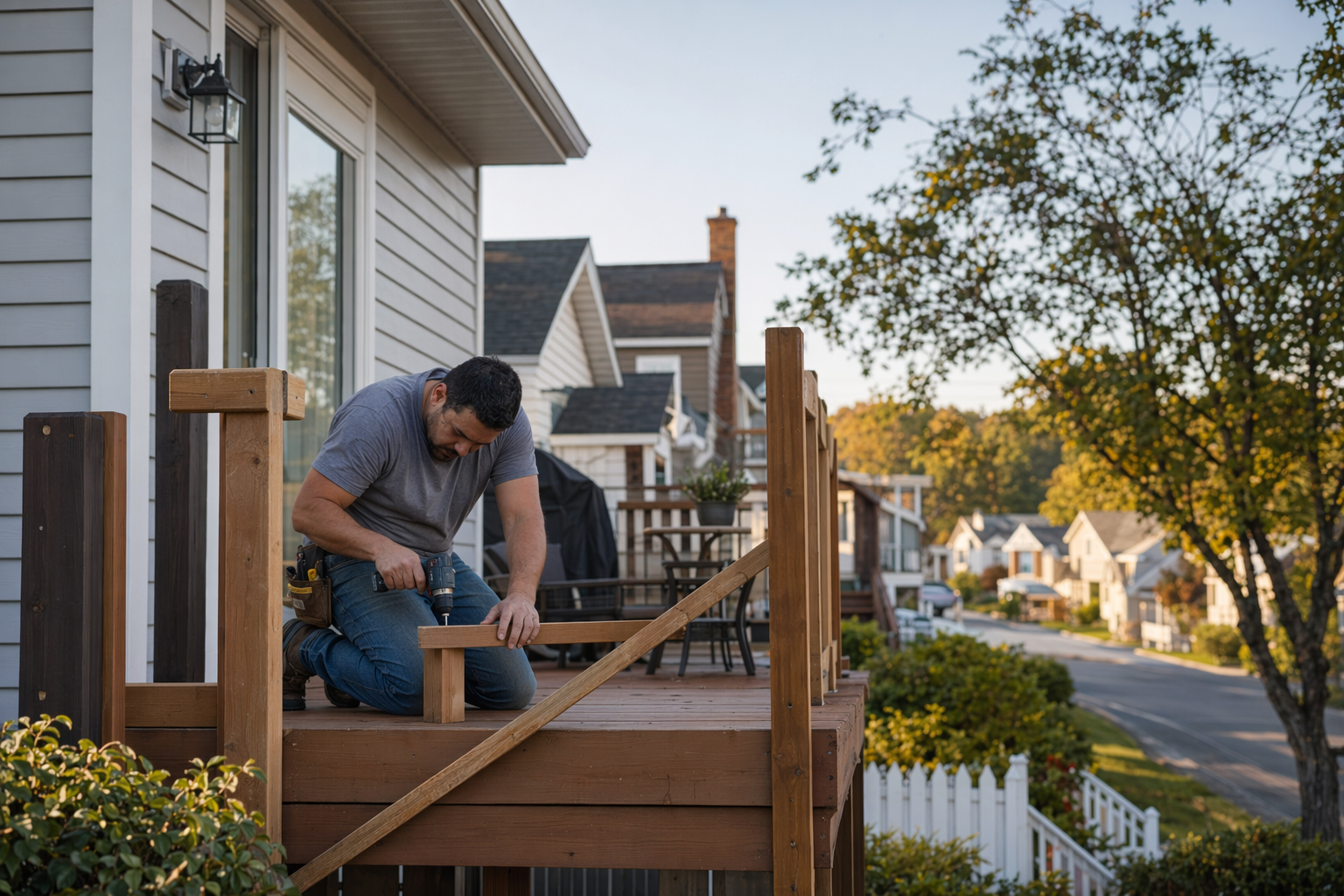
A deck plan that didn’t feel “simple”
This story is anonymized and composite—meant to show a realistic experience, not a real case. The family lived in the US with two kids and had recently moved into a home with a small, worn patio behind the house.
They wanted a safer, more usable outdoor space: a deck with stairs to the yard and railings for the kids. Their main challenge wasn’t the deck itself—it was understanding every step in English, from what to ask a builder to how permits work.
They also had a practical concern: they’d heard decks could “leak” water into the house if built wrong. So they wanted to be sure the builder explained footings, ledger boards (where the deck connects to the house), and drainage in a way they could follow.
What they did (step by step) with OutDeckly
They started with OutDeckly to get matched with licensed, insured deck builders near them. OutDeckly doesn’t build decks or pull permits—it simply connects homeowners with deck builders so they can compare options.
In the lead form, they described the basics: approximate deck size (roughly “medium,” not a number), that they needed stairs and railings, and what they liked (low maintenance). They also shared that English wasn’t their first language, so they asked for clear, plain-language explanations during quotes.
After submitting, they were contacted by matched builders. The family kept notes as they spoke: material choices, expected footing type (based on soil and local rules), and how railings would meet code requirements for spacing and height. Their goal was simple: understand the scope and get comparable written estimates.
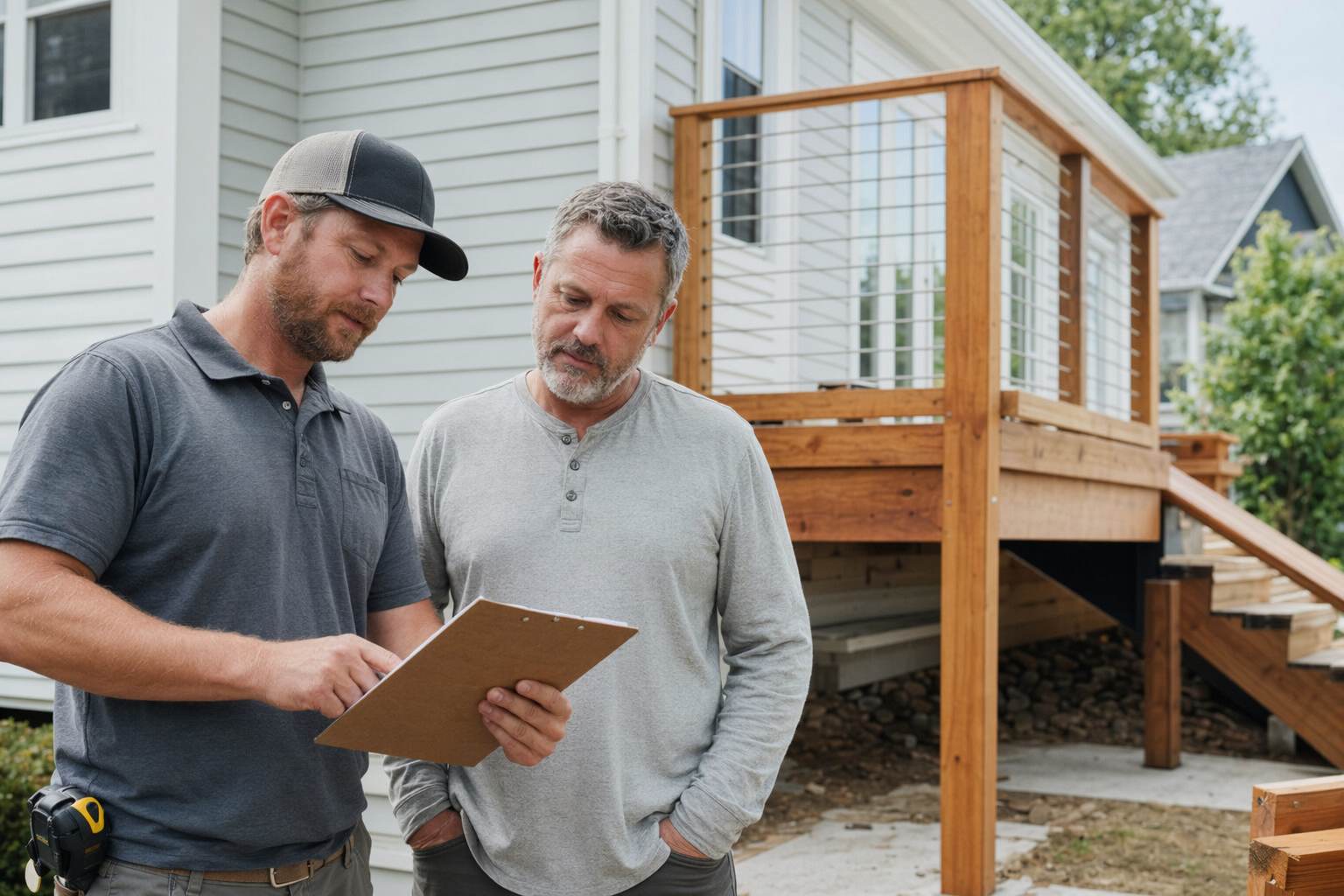
How they clarified details that usually get missed
When a builder proposed a plan, the family didn’t just ask “How much?” They asked follow-up questions to reduce confusion. For example:
They asked what the deck would sit on (footings) and how frost line depth might affect footing installation in their area. They also asked about fasteners and connections at the ledger board, since that’s a key point for water management.
They reviewed railings with specific questions: baluster spacing, height, and whether the design would be safe for kids. And they asked who would handle permits and whether the work would pass inspection—because in most cities and states, permitting and inspections are required for deck work, especially when there are stairs, railings, or any connection to the home. Local permit rules vary, so they confirmed details with the builders directly.
If you’re unsure what to ask, these questions are covered more generally in vet a deck builder and you can compare typical pricing in deck costs.
The quotes they compared (and how they stayed confident)
One builder focused on pressure-treated wood because it’s usually the lowest cost upfront. Another recommended cedar for a middle-cost option with a different upkeep plan. A third discussed composite or PVC-style boards for lower long-term maintenance, with higher upfront material costs.
They understood the trade-offs. Pressure-treated decks often require sealing or maintenance to keep them looking good. Cedar typically costs more than pressure-treated but can be less work to keep appealing. Composite and PVC boards usually cost more upfront, but many homeowners choose them for weather performance and reduced upkeep.
The family also stayed grounded on pricing: they treated all numbers as estimates, not fixed bids. The builder’s final cost could change based on exact size, height, the number of stairs, footing conditions, railing design, and site constraints. Before any deposit, they requested the scope in writing so they could see what was included—materials, stairs, railings, ledger connections, and allowance for site conditions.
They hired a licensed, insured deck builder only after verifying the builder’s license/insurance themselves and confirming that permits would be pulled and inspections would be completed.
Outcome: a deck they could actually explain to their kids
The finished deck gave the family what they wanted: a safe, usable outdoor space with stairs to the yard and railings they felt confident about. Most importantly, they felt in control of the process.
The builder used a clear, step-by-step approach. The family understood what was happening at each stage—layout, footings, connections to the house, then framing and railings. During walkthroughs, they asked questions and got answers they could repeat back in their own words.
Their takeaway wasn’t that one material was “best.” It was that they could make a solid decision because the scope, permitting, and safety details were explained plainly, and they compared estimates they could understand.
Takeaway you can use for your own deck project
Use this illustrative checklist to stay confident:
- Get matched with licensed, insured deck builders near you (OutDeckly is free for homeowners).
- Confirm permits are pulled and that the work will pass inspection in your city/state.
- Treat price numbers as estimates and ask what affects cost: deck size, deck height, footings, railings, stairs, and site conditions.
- Ask for the scope in writing before any deposit so you know what’s included.
- If English isn’t your first language, ask for clear, plain-language explanations and repeat critical details back to the builder.
If you want to start, you can begin at get matched.
An anonymized, realistic story of a family who got matched with a licensed, insured deck builder and understood materials, permits, and pricing before choosing a builder—so their deck project felt clear and safe.