A First-Time Deck Owner Who Stuck to Budget
This anonymized, illustrative story shows how one first-time homeowner used realistic cost-per-square-foot ranges to plan a composite deck and stay on budget—before choosing the licensed, insured builder for the job.
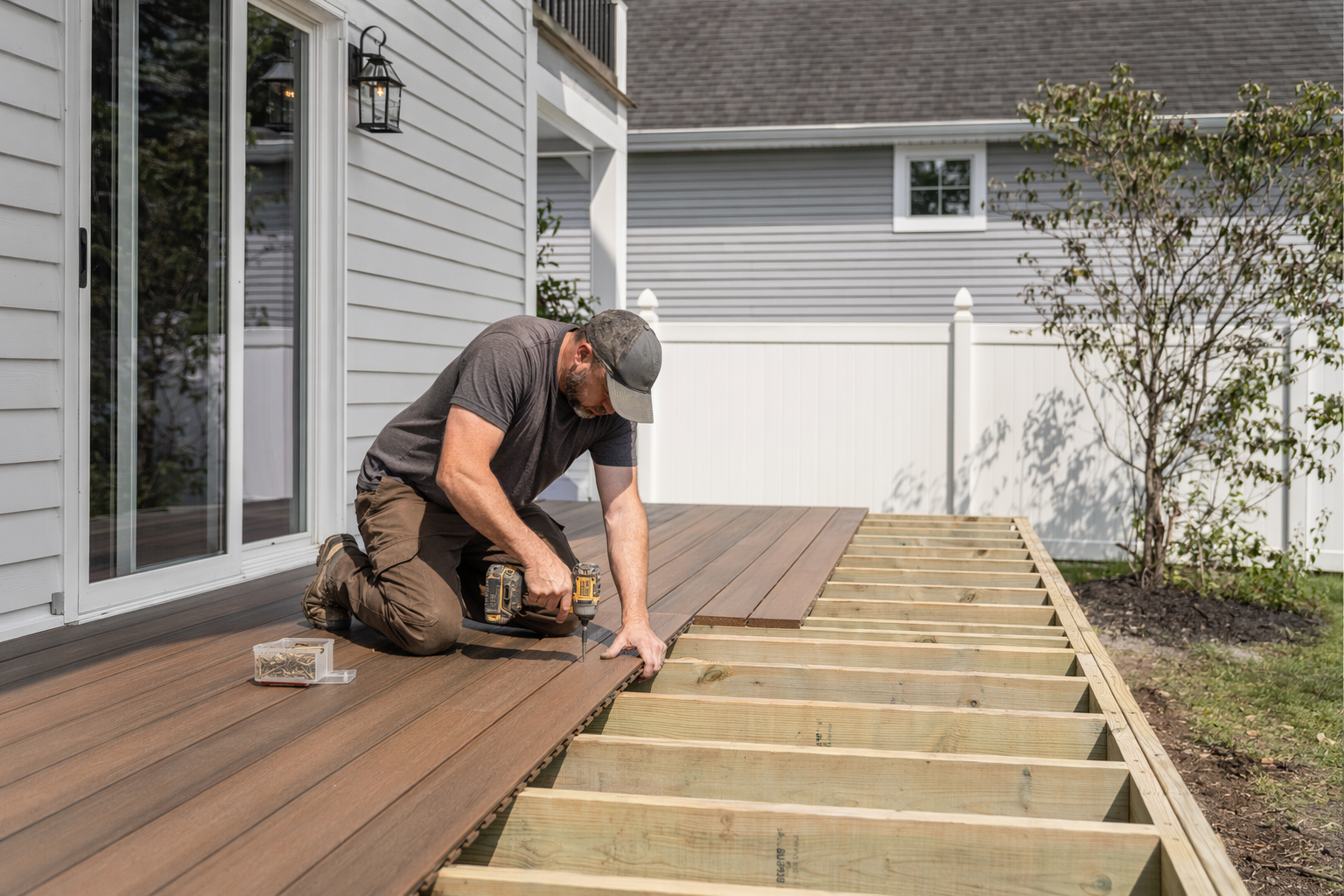
An illustrative starting point: “We want a deck, but we have to stay under a number.”
This story is anonymized and illustrative, not a real customer record. It’s the kind of situation many first-time deck owners in the US run into: they want an outdoor space that looks good and holds up, but they also need to plan around a budget.
The homeowner had a small backyard with a modest house footprint. They were tired of using the back door for short “quick” trips and wanted something they could actually enjoy—coffee in the morning, grilling in the evening, and a safe place for kids and guests to move around.
They also knew upfront they didn’t want to gamble on cost. So instead of asking for “whatever it costs,” they focused on what typical composite deck projects often run. That meant using cost-per-square-foot ranges as a planning tool—not a quote.
After they got a feel for typical pricing, they used OutDeckly to get matched with licensed, insured deck builders near them so they could compare bids and scope with someone local.
How they planned without overspending: using cost-per-square-foot ranges the right way
They started with an estimate mindset. Composite decking is usually more expensive up front than pressure-treated wood or cedar, but many homeowners choose it because it can be lower-maintenance and holds up well in different weather.
Instead of treating any number as a promise, they treated the ranges as a “budget envelope.” They asked themselves: What size deck are we really building? What height is it off the ground? Do we need stairs? Will we need railings everywhere? Those details can swing the price a lot.
They also made the common mistake early: they initially described the deck as “about the same size as our old patio area.” That was too vague. When they got more specific—rough square footage, where doors would land, and whether steps were needed—the cost expectations became more realistic.
OutDeckly’s matching step helped them collect real project conversations with licensed, insured deck builders, not just online estimates.
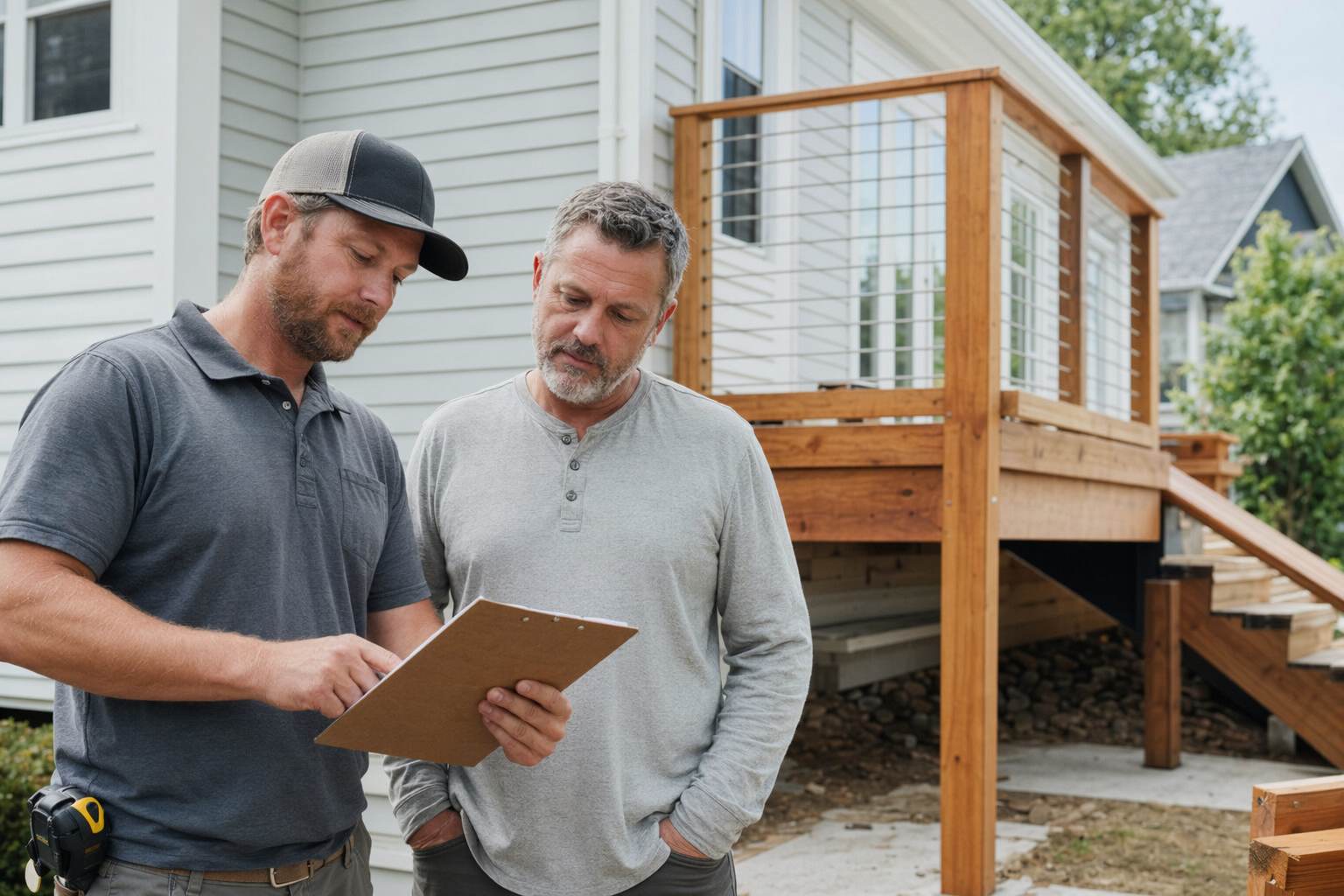
What they asked the builders (so they could compare apples to apples)
Once they had a few builder options, they avoided the “lowest price wins” trap. They made a checklist of what they needed to know in order to compare cost fairly. A deck quote can look similar on the surface but change a lot depending on materials and site conditions.
They asked for a written price/scope and made sure it included key items like: decking material type (composite brand/style if applicable), joist spacing approach, how footings would be handled, whether the deck would use a ledger board, what railings/stairs were included, and how the project would meet local code.
They also confirmed the permit plan. Permit rules and inspections vary by city/state, so the homeowner didn’t assume. They asked the builder to confirm which permits would be required and to make sure the work would pass inspection.
If anything didn’t match the budget envelope they’d planned for, they didn’t just “accept it.” They clarified options—like adjusting railing layout or rethinking the exact deck footprint—until the scope matched what they were trying to afford.
The outcome: a composite deck that fit the budget (because the scope was controlled)
In the end, the homeowner didn’t “win” by finding an unreal bargain. They won by being deliberate. They kept the deck size practical for their yard and focused on a layout that required the features they truly wanted—stairs and railings where needed for safe access.
Because they had already built a budget envelope using typical composite cost-per-square-foot ranges (and understood what variables change pricing), they were able to spot when a quote included extras they hadn’t planned for.
Their builder also handled the practical parts that affect real cost: how deep the footings needed to be for their frost line conditions, what the site required for structural support, and how the deck would tie into the house safely.
Takeaway: the homeowner still spent within reason, and the deck matched their goals—without surprise scope creep—because they planned with ranges first, then confirmed the final scope in writing.
What this story teaches first-time deck owners
If you’re building your first deck and you’re trying to avoid going over budget, focus on controllable planning steps.
Use cost-per-square-foot ranges as a planning tool, not a guarantee. Composite typically costs more upfront than pressure-treated wood, cedar is usually mid-range, and PVC is often the priciest and most weatherproof. The “best” option depends on your priorities: upfront cost vs. expected upkeep and weather resistance.
Before you pay a deposit, make sure the licensed, insured deck builders you’re considering can clearly explain what’s included—materials, footings, ledger/structure details, stairs, railings, and permit handling—and that the project passes inspection.
If you want a starting point for budgeting, review typical ranges in deck costs and then use matching to compare local, licensed, insured builders based on the actual scope you want.
This anonymized example shows how a first-time homeowner used realistic composite cost ranges to define scope, then compared local licensed, insured builders—staying on budget by getting details and permits right.