How to Maintain a Wood Deck
A wood deck lasts longer with steady care: clean it, keep water off it, and fix small problems before they turn into rot. The right routine depends on the wood, your climate, and how much sun and rain the deck gets.
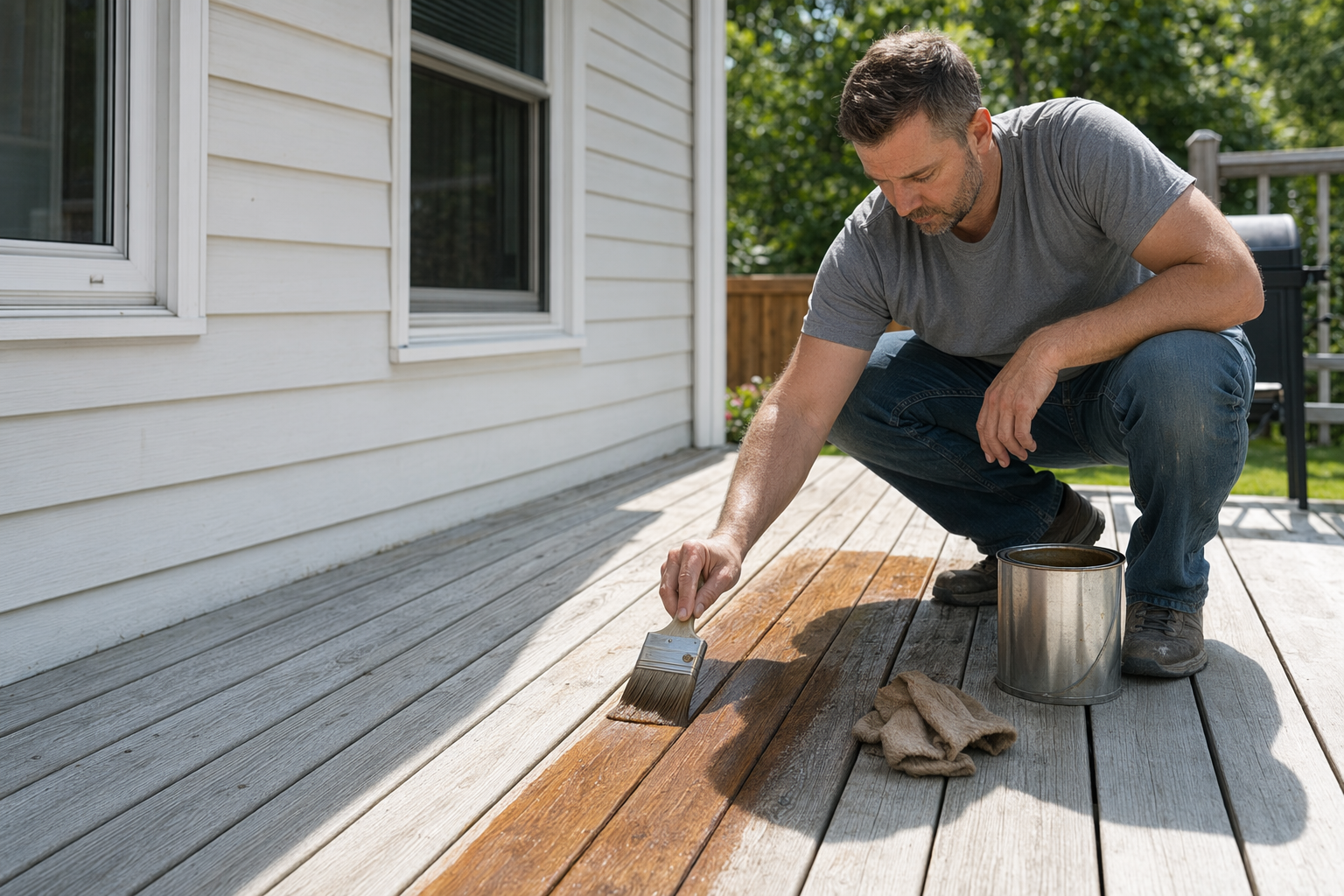
Start with the basics: clean, dry, inspect
Most wood decks do best with a simple routine. Sweep off leaves, dirt, and standing water often. Debris traps moisture, and moisture is what leads to staining, mildew, soft boards, and rot.
Wash the deck once or twice a year with a cleaner made for wood decks. Use a soft brush or low-pressure rinse, not a pressure washer on high. Too much pressure can lift wood fibers and leave the surface rough.
After cleaning, look closely at boards, stairs, railings, posts, and the area where the deck meets the house. Check for cracked boards, loose fasteners, popped nails, soft spots, peeling stain, and any sign of water damage near the ledger board.
Seal or stain it on a schedule
A wood deck usually needs a protective finish every 1 to 3 years, but the real timing depends on the product, the wood, and the weather. Sun, snow, and heavy rain wear finishes down faster.
Pressure-treated wood is usually the cheapest upfront, but it still needs sealing to help resist moisture and UV damage. Cedar often sits in the middle on cost and can look nice with the right stain, but it also needs upkeep. If a deck is left bare too long, it can gray, split, and absorb water faster.
Before you apply anything, the wood should be clean and dry. Test the surface with a few drops of water: if it beads up, the finish may still be working. If it soaks in quickly, it may be time to recoat. Follow the label directions for drying time and coverage.

Watch for the problems that cause expensive repairs
Small issues are easier to fix early. Loose deck boards can shift and trap water. Gaps that seem minor can turn into trip hazards. Soft, spongy wood around stairs, posts, or the ledger board can point to rot underneath.
Pay extra attention to fasteners and connectors. Screws, nails, joist hangers, and flashing can loosen or corrode over time. If you see rust, movement, or black staining where wood meets metal, it is worth a closer look from a licensed, insured deck builder.
Rot near the house connection is a serious warning sign. That area carries a lot of weight, and repair work there may also involve permit and inspection rules that vary by city and state.
Protect the deck between seasons
In fall, clear leaves before they sit wet on the boards. In winter, remove snow with a plastic shovel and avoid sharp metal edges that can gouge the wood. In spring, check for swollen boards, mildew, and loose railings after freeze-thaw cycles.
Furniture feet, grill mats, and planters can all trap moisture or leave marks. Use pads or spacers where needed, and lift planters now and then so water does not stay stuck underneath. Trim nearby plants so air can move around the deck.
If your deck is shaded or near trees, it may need more frequent cleaning because it stays damp longer. Sunny decks can dry out faster, but UV damage can be harder on the finish. Both conditions call for regular checks.
Know when to call a licensed deck builder
Cleaning and basic maintenance are homeowner jobs. Structural repairs are not something to guess at. If the deck bounces, sags, pulls away from the house, or has widespread rot, contact a licensed, insured deck builder for an inspection and written scope of work.
If repairs are needed, verify the builder's license and insurance yourself. Ask who will pull the permit if one is required, and make sure the work will pass inspection. Get the price, materials, and repair scope in writing before any deposit.
If you're planning bigger repairs or a rebuild, it can help to compare quotes from licensed builders near you through get matched. For a smarter comparison, review the questions in how to vet a deck builder.
Wood deck maintenance costs: what to expect
Maintenance costs are usually much lower than repair or replacement costs, but the amount depends on deck size, condition, finish type, and local labor rates. Simple cleaning and sealing materials may be a modest annual expense if you do it yourself. Hiring a pro for cleaning, sanding, and resealing will cost more.
If boards, railings, stairs, or framing need repair, the price can rise fast. A few damaged boards are very different from hidden rot at the ledger, damaged footings, or failing posts. Those larger repairs often need a site visit before anyone can give a realistic estimate.
For broader context on typical deck project pricing, see deck cost estimates. Always treat any number as an estimate, not a quote. The real price depends on size, material, height, footings, railings, stairs, site conditions, and your area.
Clean wood decks, keep them dry, reseal them on schedule, and call a licensed builder fast if you see rot, movement, or damage near the house.