Multi-level & raised decks
Raised and multi-level decks need more than a simple frame on posts. They usually mean extra footings, taller support columns, stronger lateral bracing, more railings and stairs, and a closer look at permits and inspections.
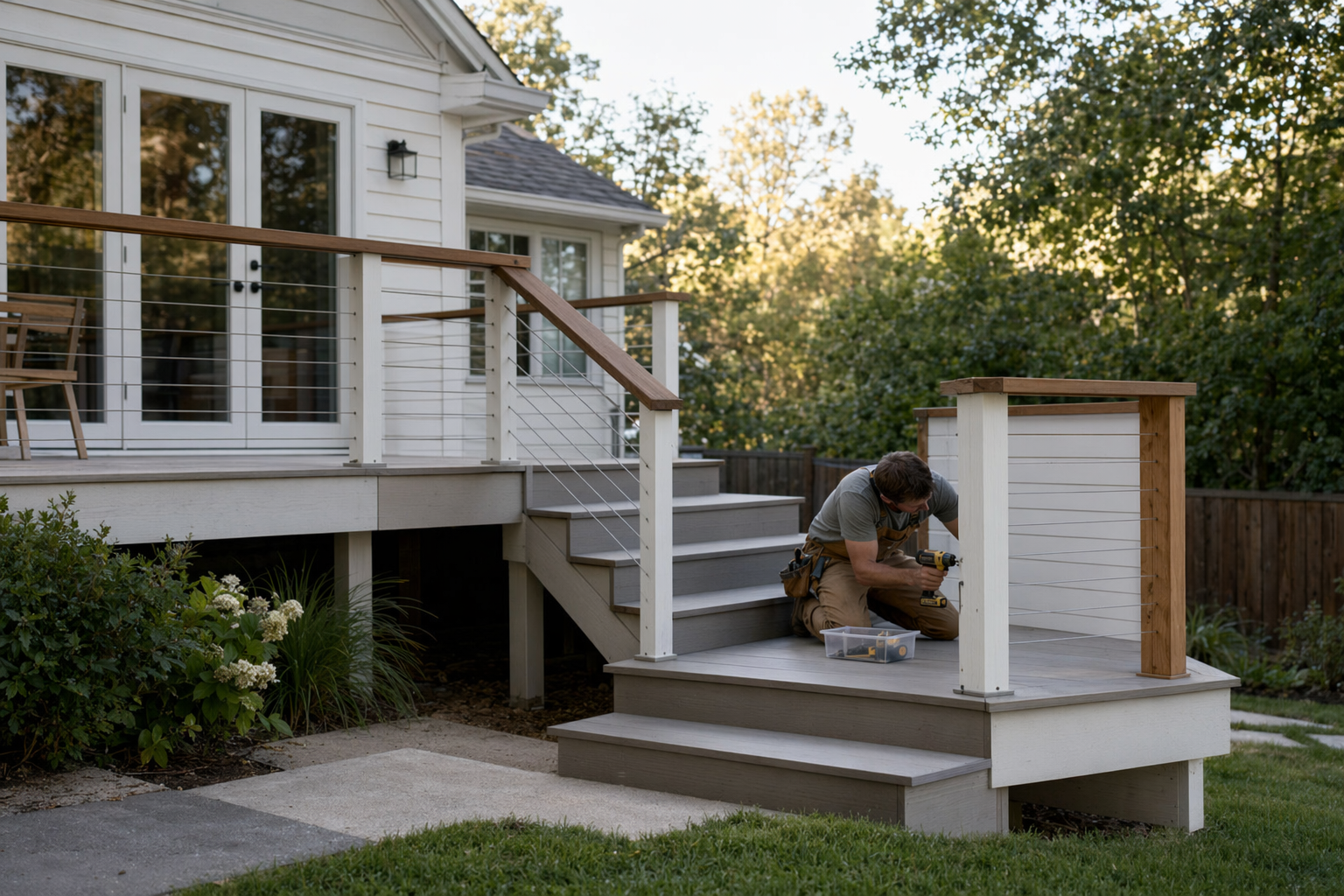
What makes a raised or multi-level deck different
A ground-level deck is usually the simplest kind of build. A raised deck sits higher off the ground, which means the structure has to do more work: deeper footings, taller posts, stronger beam and joist layout, and safer railings and stairs.
Multi-level decks add another layer. They can solve a sloped yard, create separate areas for dining and lounging, or make a walkout door feel more usable. They also add complexity fast, because each level needs its own framing, support, drainage planning, and code-compliant connections.
OutDeckly is a free matching service. We connect homeowners with licensed, insured deck builders who can look at your site and price the job. You compare quotes and choose who to hire.
How the process usually works
Start by sharing your project details: deck size, how high it sits off the ground, whether you want one level or multiple levels, and what material you’re thinking about. That helps the licensed deck builders we match you with understand the scope before they visit.
A good builder will check the house connection, the ledger board area if the deck attaches to the home, the soil and slope, drainage, frost depth for footings, and where stairs and railings will go. For elevated work, they should also talk clearly about lateral bracing and how the structure will be anchored.
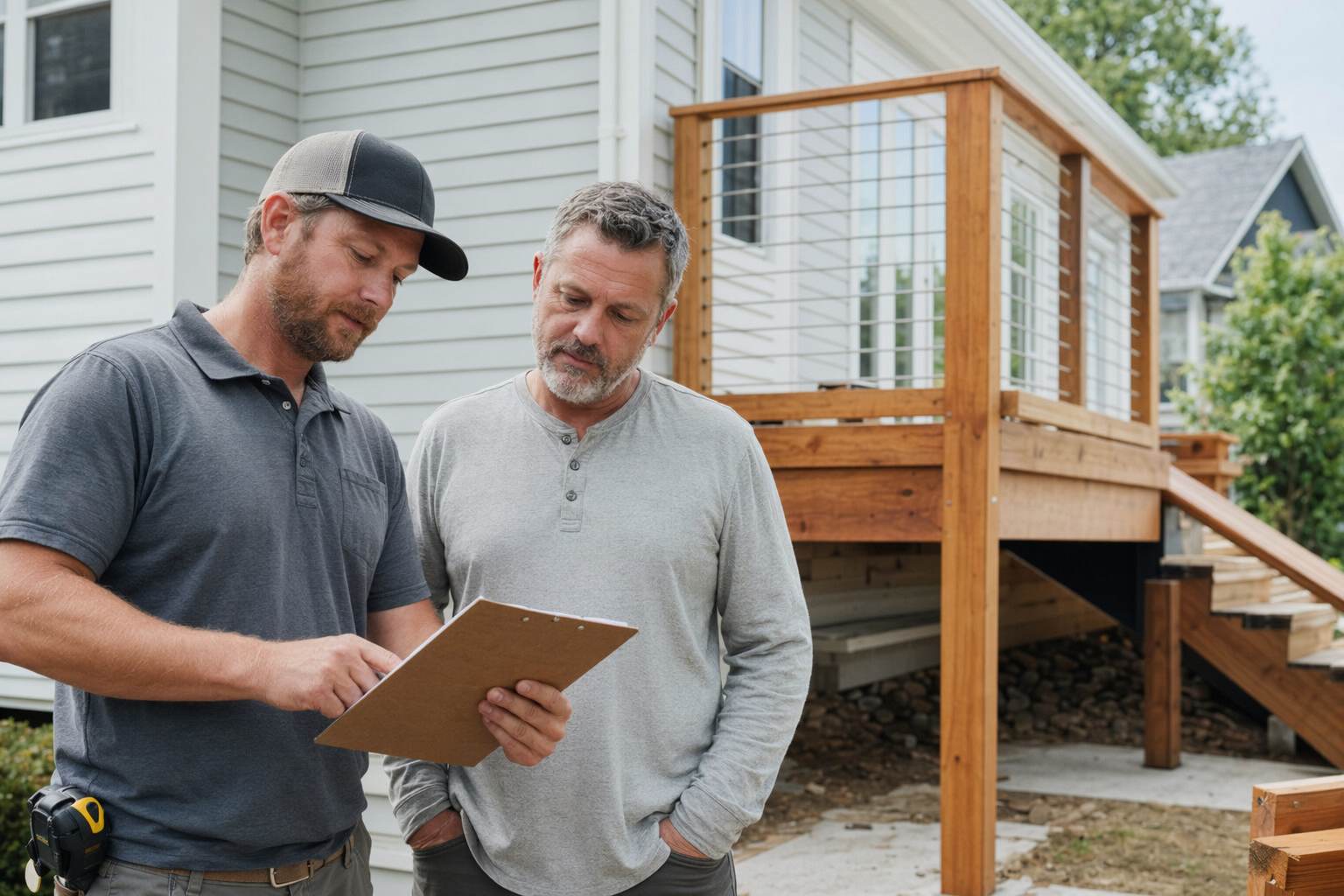
Before any deposit, get the price and scope in writing. Confirm the builder is licensed and insured, ask who pulls the permit, and make sure the work will be inspected if your local rules require it. If a proposal is vague about footings, railings, stairs, or permit responsibility, ask for details.
Typical cost range and what drives it
For a raised or multi-level deck, the real price depends on size, height, material, footings, railings, stairs, site conditions, and your local market. As a rough estimate, many projects land around $35 to $100+ per square foot, with taller or more complex builds often pushing higher.
Pressure-treated wood is usually the lowest upfront cost, but it needs regular sealing and maintenance. Cedar usually costs more than pressure-treated wood and less than many composites. Composite decking costs more up front, but it can mean less upkeep over time. PVC is usually the most weatherproof and the priciest. Frame material matters too: some jobs use wood framing under composite decking, while others use all-composite systems depending on the design and budget.
Extra height adds cost because the structure needs more material and labor. Stairs, landings, upgraded railings, hidden fasteners, custom trim, and difficult access can all raise the price. If your yard slopes or the soil needs more work for footings, that can move the number a lot.
Timeline: how long it can take
A straightforward raised deck can move fairly quickly once measurements, design, and permits are settled. A multi-level deck usually takes longer because there are more framing steps, more inspections, and more chances for the schedule to slow down.
Weather matters too. Rain, frozen ground, and permit delays can all stretch the job. If the build needs deeper footings below the frost line, that can also add time.
As a general estimate, planning and permit approval may take days or weeks, and construction can take several days to a few weeks depending on size and complexity. Large custom builds can take longer.
Pros and cons of raised and multi-level decks
The biggest advantage is usable space. A raised deck can create a better connection to an upstairs or main-floor door, while multiple levels can break up a large outdoor area into zones for cooking, dining, and relaxing.
The trade-off is complexity. More height means more structure, more safety requirements, and more ways for the project to go wrong if the framing, flashing, railings, or footings are not handled correctly. Maintenance can also be higher if you choose wood surfaces.
If you’re comparing ideas, think about how you’ll use the space most days, not just how it looks on paper. A clean, simple layout that fits the yard may be better than adding levels you won’t really use.
Questions to ask before you hire
Ask the builder how they handle footings, posts, beams, joists, railings, and stairs on raised work. Ask whether the plan includes flashing at the ledger board, how they address drainage, and what they do to meet local guardrail and stair rules.
You should also ask who pulls the permit, what inspection steps are expected, and what exactly is included in the quoted price. That includes demolition, hauling away debris, material upgrades, permit fees, and any changes if the site turns out to be harder than expected.
Get the answers in writing. Then use our guide to vet a deck builder before you sign anything.
Raised and multi-level decks need extra structure, permits, and safety details, so compare written quotes from licensed, insured builders and verify the permit plan before you hire.