Repair or Replace an Old Deck?
A small deck problem can be a quick repair, or it can be a sign the whole structure is past its safe life. The right move depends on the deck’s frame, footings, ledger board, and how much damage is really there.
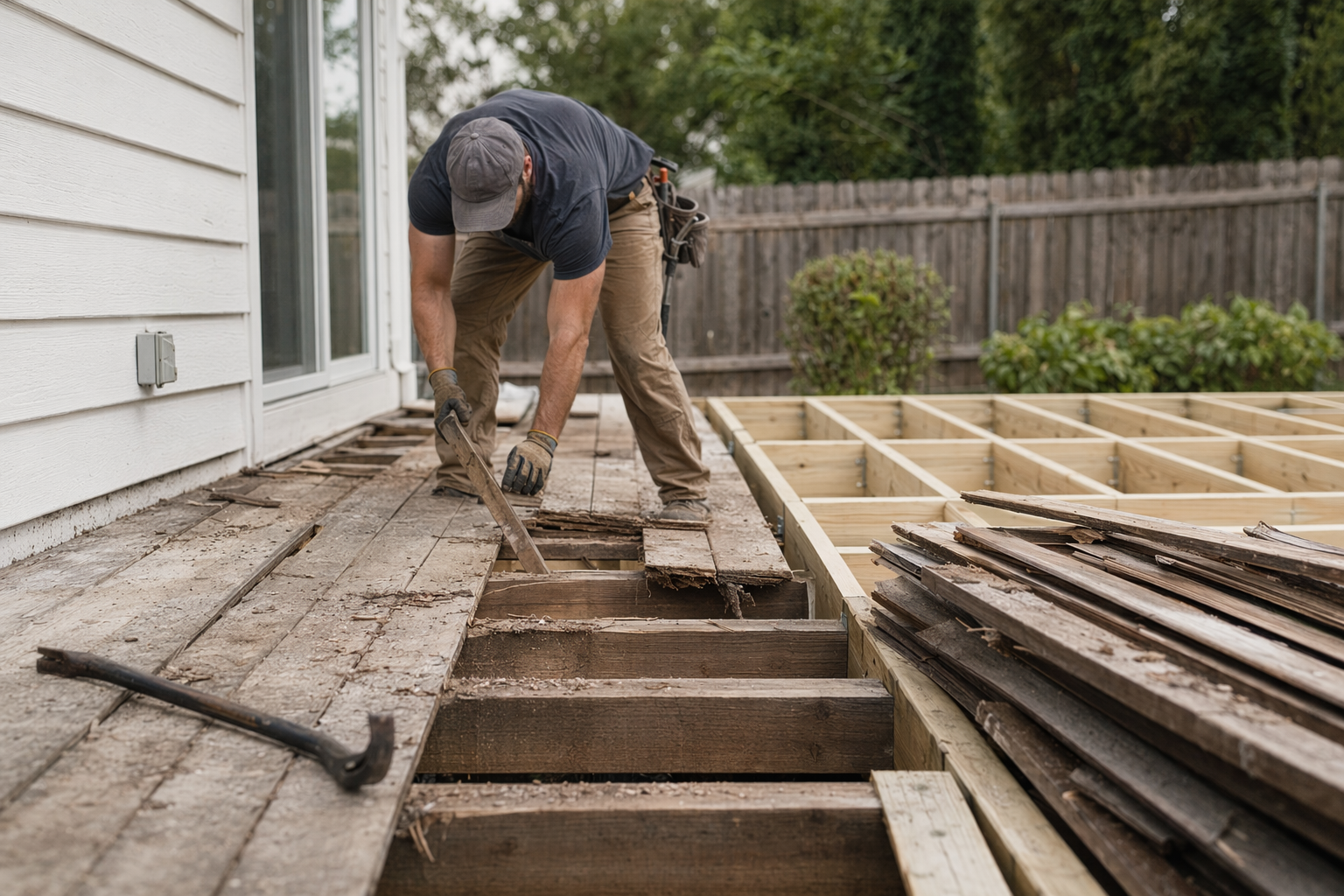
Start with the parts you cannot easily see
A deck can look rough on top and still be sound underneath. The key question is whether the damage is only on the walking surface and railings, or in the structure that holds the deck up.
Surface issues are things like faded boards, splinters, popped screws, loose railings, and a few rotten treads. Structural issues are more serious: sagging beams, cracked joists, a failing ledger board where the deck connects to the house, or footings that are settling.
If the frame is solid, repair is often the smarter choice. If the frame, posts, or footings are failing, replacement is usually the safer long-term fix.
Common signs a repair may be enough
Repairs make sense when the damage is limited and the deck is otherwise straight, firm, and well fastened. A board or two can be replaced. Railings can often be tightened or rebuilt. Fasteners can be upgraded if the old ones are rusted.
Pressure-treated wood decks often need the most maintenance. Sealing, replacing soft boards, and fixing loose hardware can stretch their life a lot. Cedar can also be repaired and refinished, but soft spots and split boards should be checked carefully.
Typical repair costs vary a lot by size and scope, but simple spot repairs are often far less than a full rebuild. The real price depends on access, material, labor rates, and how much hidden damage a contractor finds after opening things up.

Signs replacement is usually the safer call
If the deck is bouncy, sloping, pulling away from the house, or showing widespread rot, replacement is often the better answer. A deck with failing joists, posts, beams, or footings is not just a cosmetic problem.
Watch for soft wood near the ledger board, cracked or rusted connectors, water damage around the house attachment, and posts that move at the base. Widespread rot usually means the damage goes deeper than the surface boards.
Age matters too. An older deck may have been built before current code details, proper flashing, or modern connector requirements. In that case, a licensed deck builder may recommend replacement so the new work can meet current permit and inspection rules in your area.
How materials affect the decision
The deck material changes both the upfront cost and how often you will deal with repairs. Pressure-treated wood is usually the cheapest to build or replace, but it needs sealing and regular care to slow rot and checking. Cedar usually costs more upfront, but many homeowners like the look and feel.
Composite decking costs more at the start, but it usually needs less upkeep than wood and can last longer with routine care. PVC is typically the most weatherproof and the priciest. It is often chosen when low maintenance matters more than the lowest first cost.
A repair on a wood deck can be worthwhile if the frame is sound. On an older deck, switching to composite or PVC during replacement can reduce future maintenance, but only if the underlying structure is rebuilt correctly for the new material and local code.
What to ask before you decide
Get a licensed, insured deck builder to inspect the deck in person. Ask them to check the ledger board, joists, beams, posts, footings, railings, stairs, and flashing—not just the surface boards.
Ask for the scope and price in writing before any deposit. A good written estimate should say what gets repaired or replaced, what materials will be used, whether permits are included, and who is responsible for cleanup and inspection scheduling.
Also verify the builder’s license and insurance yourself. Permit rules and code vary by city and state, so confirm that the right permits will be pulled and that the work will pass inspection where required. If you want help finding licensed, insured pros, get matched here.
A simple way to compare your options
Use a rough cost check. If repairs are only a small fraction of replacement cost and the frame is healthy, repair may be the practical choice. If repairs keep adding up, or the contractor finds structural damage, replacement can be the better investment.
Typical replacement costs for decks are often quoted by square foot, but those numbers are only estimates. Real price depends on size, material, height, footings, railings, stairs, site conditions, and your local labor market. A higher deck with more stairs and railings can cost much more than a low, simple platform.
Before you decide, it can help to review the basics in our cost guide and our checklist for vetting a deck builder. OutDeckly is free for homeowners; we connect you with licensed deck builders who pay a flat fee to be introduced, and you compare quotes before choosing who to hire.
Fix small, surface-level damage; replace the deck if the frame, ledger board, posts, or footings are failing.